
A Family’s Heartbreak: Perth Dog Stabbed in Park Sparks Outcry for Safer Community Spaces
A Perth family is grieving after their beloved pet dog was fatally stabbed in a public park, prompting renewed calls for safety measures, accountability, and compassion in Western Australia’s shared community spaces.
NEWS & CURRENT AFFAIRS
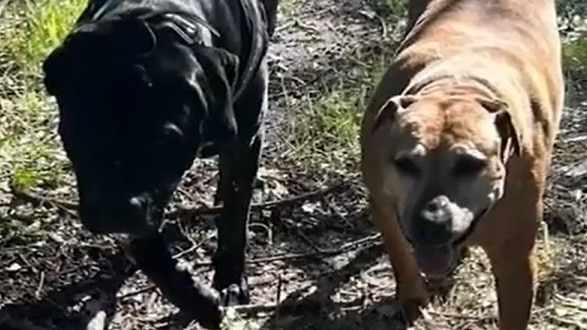
In an off-leash dog park in the West Australian town of Pinjarra (south of Perth), a man was walking his two dogs — a mastiff pup named “Chief” and an older Staffordshire Terrier named “Molly” — when a confrontation occurred with another walker and their dog. News.com.au+29News+2
According to the family, Molly and Chief approached the other person’s dog and owner in the off-leash area. The stranger allegedly used a multi-tool (an edged implement) to stab both dogs. Molly sustained catastrophic injuries including a cracked skull, a punctured lung and a deep wound in her back, and she was later put down due to the severity of her injuries and her age. News.com.au+1 Chief survived after receiving stitches and is expected to recover fully. News.com.au+1
The family have expressed deep grief and anger. The owner, Mr Marcus Norton, said he was right next to his dogs at the time. His daughter, Chevonne McNamara-Norton, described losing her childhood pet. 9News+1 Police are investigating. The use of an edged weapon without lawful excuse is illegal in Western Australia. News.com.au+1
Why this matters
A. Trust and public space
Dog parks and off-leash areas are meant to be shared spaces of enjoyment and community. Incidents like this erode trust in those spaces — for dog-owners, for families, for local communities. When safety is compromised it changes behaviour: people may stop visiting, dogs may be less socialised, owners may feel more anxious.
B. Animal welfare and human emotional bonds
Pets are often treated as family members. Losing a pet through violence is not simply a property loss—it is an emotional trauma. The severity of the injuries, the decision to euthanize Molly due to her age and condition, and the visible distress of the family all underscore how intertwined pet welfare is with human wellbeing.
C. Legal, ethical and preventative dimensions
The incident raises questions about moderation of off-leash areas, responsibility of dog-owners, bystander roles, and weapon-use in public spaces. It also highlights the need for clear pathways for reporting and responding to such events. The fact that the attacker allegedly used a multi-tool (not a conventional knife, but still an edged weapon) shows how seemingly “ordinary” tools can escalate into serious harm.
What can be done
1. Strengthening safety protocols in dog parks
Local councils and park managers should review off-leash zones: signage about dog behaviour, clear rules about interactions, and perhaps staff or volunteer patrols during busy hours. Ensuring that dog-owners keep control of their animals and that any conflict is de-escalated quickly is key.
2. Promoting responsible dog-ownership and training
Owners can do more than comply with rules—they can ensure their dogs are well socialised, recall trained, and that they intervene early if a situation becomes tense. That reduces risk of confrontation.
3. Community education and conflict resolution
Simple awareness campaigns can help: if you see dogs approaching you in an off-leash area, you can calmly ask the owner to recall, or move to a safe distance. If conflict arises, avoiding escalation is vital. Public education on how to behave in shared pet spaces might reduce future incidents.
4. Legal clarity and swift response
Clear enforcement of laws related to weapon carriage (especially in public parks) and animal cruelty can act as deterrents. Victims must feel that reporting leads to action. The ongoing investigation in this case is a reminder of the importance of follow-through.
5. Emotional support for victims
Families who lose pets in traumatic ways need support—not just for the financial cost of veterinary care, but for emotional recovery. Pet loss grief is real and often underestimated.
Our takeaway
This tragic event in Pinjarra shines a harsh light on how quickly a peaceful walk with a beloved pet can turn into trauma. It reminds us that community spaces like dog parks carry risk as well as reward, and that vigilance, respect, and prepared systems matter.
At TMFS we believe that safe environments—whether for people or their pets—are foundational to strong communities. This incident beckons local leaders, pet-owners and public agencies to act: to restore trust, to ensure prevention, and to honour the bond between humans and their animals.
If you are a dog-owner or a community member who uses off-leash spaces, take a moment today: check your dog’s recall, familiarise yourself with park etiquette, and stay aware of your surroundings. If you witness risky behaviour, speak up or report it. Because preventing the next tragedy often begins with small acts of responsibility.
All rights belong to their respective owners. This article contains references and insights based on publicly available information and sources. We do not claim ownership over any third-party content mentioned.
DAILY WA © 2025
Daily WA Online is an independent news and media platform covering Western Australia. Owned by TMFS International Pty Ltd., we publish local stories, business insights, lifestyle features, and community voices for the digital era.