
A Long Journey North: Emperor Penguin Found on Western Australia Beach
An emperor penguin has been discovered on a Western Australian beach, thousands of kilometres from its Antarctic home. The rare sighting raises urgent questions about climate change, ocean ecosystems, and our responsibility to protect vulnerable species.
PEOPLE & COMMUNITY
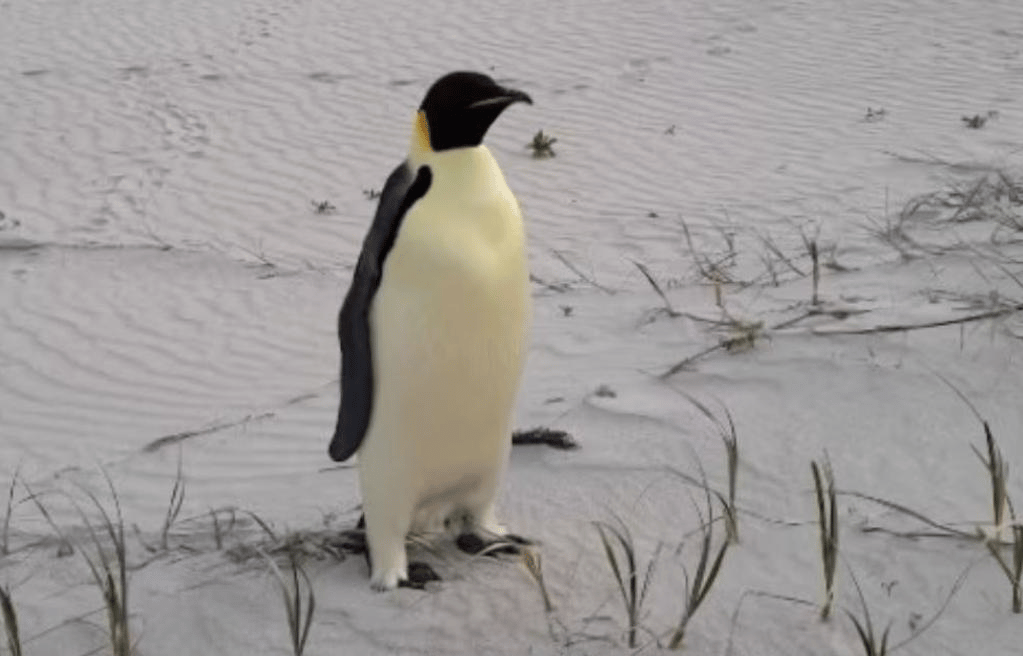

A single penguin standing alone on a Western Australian beach has captured the attention of scientists and the public alike. Not just any penguin. An emperor penguin. The tallest, heaviest, and most iconic of all penguin species. A creature built for the most extreme environment on Earth. And yet it appeared on a sandy shoreline more than three thousand five hundred kilometres away from Antarctica.
This remarkable moment tells a story that is far bigger than the bird itself. It signals the changing conditions of our oceans, the shifting behaviours of wildlife, and the powerful role Western Australia plays in global conservation. When an emperor penguin leaves the ice and arrives at a foreign shore, something in the natural order has been disrupted. The question that follows is what we will do about it.
Emperor penguins are specialists in survival. They thrive in temperatures that can plunge below sixty degrees Celsius. They endure brutal winds, freezing seas, and months of complete darkness. Their entire life cycle depends on the stability of Antarctic sea ice. They feed on fish and krill that gather in nutrient rich waters beneath frozen platforms. They raise their chicks on solid ice through the toughest winters on the planet.
Yet this lone traveller washed up on a coastline it should never have reached. Experts believe ocean currents may have carried the bird far off course. Warmer waters and unpredictable ice patterns are increasingly altering migration routes and hunting grounds for many marine species. What once was familiar territory can suddenly turn hostile. Food sources shift without warning. Risks multiply. Instincts that guided generations begin to fail.
Western Australia has become an unintentional witness to these changes. Marine researchers here have spent years documenting how warming oceans are transforming habitats. Coral reefs struggle to recover from bleaching events. Fish populations migrate further south in search of cooler waters. Now even a creature adapted to the cold of Antarctica has been forced into unfamiliar surroundings. The presence of this emperor penguin is both a scientific rarity and an environmental alarm.
Local wildlife experts responded quickly to ensure the penguin received proper care and protection. It showed signs of exhaustion and dehydration, common among animals displaced from their natural ecosystems. Specialists examined the bird and provided rehabilitation support where necessary. The ultimate goal is to assess whether it can safely return to the wild.
Moments like this remind us how interconnected our environments truly are. What happens in the remote ice fields of Antarctica does not stay isolated. Every shift in temperature, every change in ocean circulation, every human decision that affects the climate finds its way back to our shores. Western Australia is part of a global ecological system that is increasingly fragile.
According to recent studies, emperor penguin populations could decline dramatically this century if current warming trends continue. Sea ice loss directly threatens their breeding grounds and long term survival. The image of a solitary penguin on an Australian beach becomes a powerful symbol of what is at stake. It is a story that encourages us to rethink both our impact and our potential to make a difference.
At TMFS, we believe that storytelling and information can drive meaningful action. When people understand the deeper context behind a surprising event, they are more likely to support innovation and sustainability. Western Australia has a remarkable opportunity to lead through marine research, conservation partnerships, and technology that protects biodiversity. The state already supports pioneering initiatives in ocean monitoring and environmental resilience. These strategies must continue to grow, because the challenges ahead are increasingly urgent.
There is still hope in this story. The penguin arrived in a place where experts are capable of helping. Communities along the coast have shown compassion and curiosity instead of fear. The discovery has inspired renewed public interest in endangered species protection. And every conversation sparked by this extraordinary guest has the potential to shape better environmental decisions.
A world where emperor penguins remain safe on southern ice is still within reach. It requires cooperation across borders, investments in climate solutions, and a belief that the natural world is worth defending. Each individual action contributes to a collective outcome. Every policy that reduces emissions, every innovation that strengthens ecosystems, and every effort to educate and engage the public is a step toward a future where stories like this are no longer warnings but wonders.
As the penguin recovers and researchers plan the next stage of its care, we are reminded that even the smallest encounter with nature can hold great meaning. This bird’s journey tells us that the distance between Western Australia and Antarctica is shrinking, not in geography but in consequence. The ocean connects us. The climate binds us. And the responsibility to protect our planet belongs to us all.
Now is the moment to stay informed, to stay engaged, and to support the organisations and initiatives that safeguard the living world. TMFS remains committed to elevating important voices, sharing critical insights, and championing innovation that strengthens our environmental future. Together, we can ensure that the next time an emperor penguin appears in our newsfeed or on our shores, the story behind it is one of recovery and resilience.
All rights belong to their respective owners. This article contains references and insights based on publicly available information and sources. We do not claim ownership over any third party content mentioned.
DAILY WA © 2025
Daily WA Online is an independent news and media platform covering Western Australia. Owned by TMFS International Pty Ltd., we publish local stories, business insights, lifestyle features, and community voices for the digital era.