
A Warning from the Deep: WA’s Record Marine Heatwave Devastates Coral Across 1,500 km
For the first time the reefs off Western Australia have suffered a mass mortality event triggered by the longest, largest and most intense marine heatwave on record—stretching some 1,500 km and threatening both biodiversity and regional economies.
NEWS & CURRENT AFFAIRS
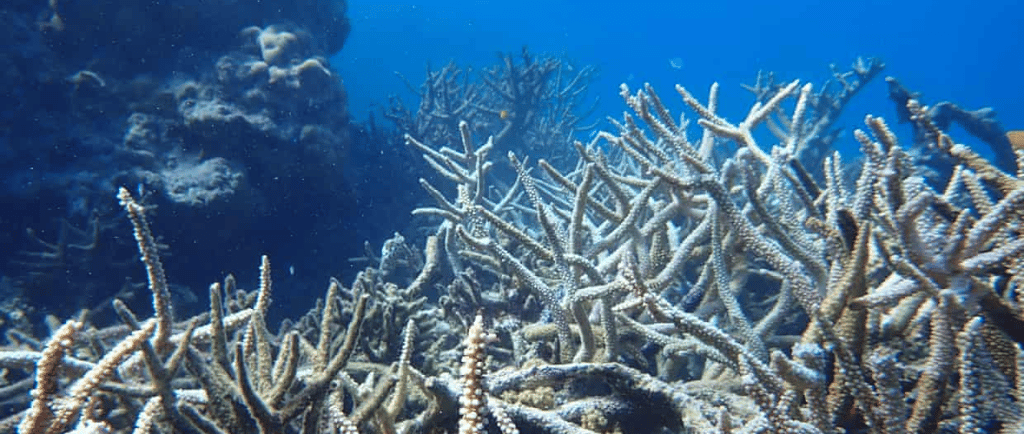
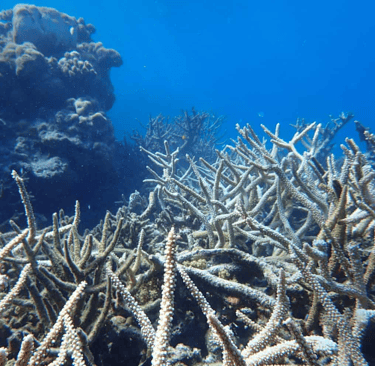
From a remote reef in the Kimberley to the famed waters of Ningaloo Reef, a silent catastrophe unfolded beneath the surface. A marine heatwave that began quietly in late 2024 would ultimately become the longest, largest and most intense on record for Western Australia. It stretched for more than 1,500 kilometres of coastline and left in its wake coral reefs bleached, dying and in many cases beyond hope of recovery. This is more than a marine science footnote. It is a major ecological, social and economic alarm bell.
The Facts Beneath the Waves
Scientists convened by the Australian Institute of Marine Science (AIMS), the WA Coral Bleaching Group and multiple government agencies report what is being described as the most severe coral bleaching and mortality event ever recorded in WA. Australian Marine Conservation Society+3Australian Institute of Marine Science+3Australian Institute of Marine Science+3 The heatwave’s reach was unprecedented: reefs from remote offshore systems like the Rowley Shoals and Ashmore Reef through to near-coastal systems southwards were affected across a 1,500 km span. Australian Marine Conservation Society+1
Measurements of heat stress—expressed as Degree Heating Weeks (DHWs)—reveal the gravity of the event. Ordinarily 8 DHWs is considered a serious threshold for coral mortality. In this event some reefs recorded upwards of 30 DHWs. Australian Institute of Marine Science+2Down To Earth+2 Survey data show coral bleaching and death ranged widely: in some areas “medium” severity (11-30 % mortality) and in others “extreme” (over 90 % of corals bleached or dead). Australian Institute of Marine Science+1
What makes it so striking is that some of the reefs that had previously shown resilience—spots considered “hope-areas” for future climate-impacted ecosystems—were hit hard. The Rowley Shoals, for example, once spared significant bleaching, saw mortality in the range of 61-90 %. Australian Institute of Marine Science+1
Why This Matters
On one level, this is about coral. On another, it is about much more. Coral reefs underpin marine biodiversity, protect coastlines, support fisheries, and fuel tourism. In the region of WA, many coastal communities depend on reef-associated tourism and fishing for livelihood. When coral dies, the ripple effects spread far.
From a scientific standpoint this event breaks new ground. It was not triggered by the usual La Niña-related warm current patterns; rather, ocean temperatures soared outside of the usual climatic drivers, making it clear that human-driven climate change is now the dominant force. Australian Institute of Marine Science+1 The data show ocean surface warming of up to 4 °C above average in some zones. Australian Institute of Marine Science+1
Recovery? Coral ecosystems typically need 10-15 years to bounce back from a major bleaching event. But at the rate these heatwaves are arriving, and with little to no holiday between stress events, the timeline may be impossible to meet. Scientists caution the intervals between big bleaching events are shrinking too far. Australian Institute of Marine Science+1
A Deeper Look: Humanly and Professionally
For the people who live and work around these reefs, this is not just an academic problem. A dive operator who once led tours showing vibrant corals and tropical fish will now point instead to skeletons. Local Indigenous marine rangers who track reef health will face new challenges of restoration work in ecosystems newly damaged. Remote and valuable marine tourism that once drew visitors for reef snorkelling may struggle to promise the same colour and life.
From a policy and leadership perspective, this casts a harsh light on commitments. If even the reefs once considered refuges for marine life are failing, then the strategy of “protect what’s still good, hope for resilience” is under severe stress. The argument now is that urgent, bold action is required—not just incremental changes.
What Must Be Done
Accelerate global greenhouse-gas reduction: The scientific consensus is clear—without major cuts in emissions, these kinds of events will become more frequent and more destructive. The WA heatwave is a far-reaching example.
Protect and restore with urgency: Local and state authorities must identify remaining resilient reef zones, impose stricter protection, restrict damaging activities, and invest in coral restoration where feasible. Monitoring must continue and expand.
Support regional communities: Economic and social programs must be designed to help reef-dependent industries adapt—tourism, fishing, Indigenous marine services. This includes diversifying income and protecting cultural values tied to reefs.
Communicate clearly and engage broadly: The broader public must understand the stakes. Reefs may seem distant, but their loss connects to food security, coastal protection, biodiversity, and the climate crisis at large. Leadership from trusted brands and institutions helps.
Takeaway
This event off Western Australia’s coast is not just another bleaching episode. It is a landmark moment. At TMFS we believe that when nature speaks—through extremes, ruptures, collapses—it demands response. Our role is to help articulate those signals, help organisations prepare, help communities adapt. The reefs off WA have sent a vivid warning: resilience has limits. Action cannot wait.
If you are involved in tourism, coastal business, marine science, government or community leadership—now is the time to move from observation to ambition. Protect what can still be saved. Equip communities for what cannot be. Speak up. Lead. Because the deep ocean is sending its message—and we must listen.
All rights belong to their respective owners. This article contains references and insights based on publicly available information and sources. We do not claim ownership over any third-party content mentioned.
DAILY WA © 2025
Daily WA Online is an independent news and media platform covering Western Australia. Owned by TMFS International Pty Ltd., we publish local stories, business insights, lifestyle features, and community voices for the digital era.