
Adelaide Writers’ Week Cancelled as Author Withdrawals Ignite Cultural Free Speech Debate
Adelaide Writers’ Week has been cancelled after dozens of authors withdrew in response to the removal of Palestinian Australian writer Randa Abdel Fattah, triggering a national debate about artistic independence, free expression, and cultural responsibility.
PEOPLE & COMMUNITY
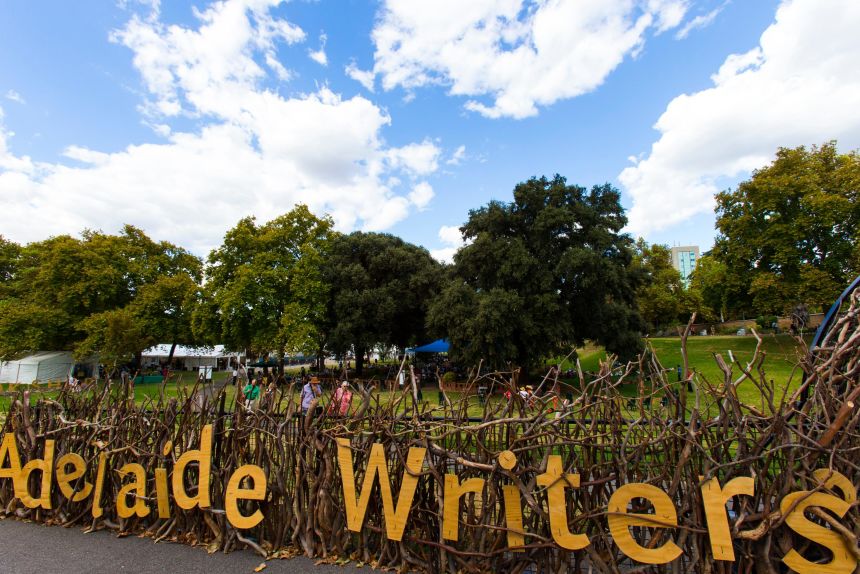
The cancellation of Adelaide Writers’ Week marks a rare and consequential moment in Australia’s cultural landscape. What began as a programming decision has escalated into a broader reckoning about freedom of expression, institutional authority, and the role of literary festivals during periods of political tension. With dozens of authors withdrawing from the event following the removal of Palestinian Australian writer Randa Abdel-Fattah, organisers confirmed the festival could no longer proceed as planned.
Adelaide Writers’ Week has long been regarded as one of the nation’s most prominent literary gatherings, valued for its openness to diverse ideas and robust discussion. Its cancellation therefore carries weight well beyond one event. It signals how deeply divided the cultural sector has become over questions of who is given a platform, who decides that threshold, and how institutions respond when artistic freedom collides with political sensitivity.
The withdrawal of authors was not a spontaneous reaction, but a collective stance. Many writers framed their decision as an act of solidarity and a defence of principle, arguing that the removal of a participant based on political pressure undermines the integrity of literary spaces. For them, the festival’s value lies precisely in its capacity to host contested ideas rather than avoid them. The scale of the withdrawals suggests that this view resonates strongly within parts of the literary community.
Festival organisers now find themselves at the centre of an uncomfortable dilemma. Cultural institutions operate within complex ecosystems of public funding, sponsorship, community expectation, and political oversight. Decisions that appear administrative can quickly become symbolic. In this case, the removal of an author from the program was widely interpreted not as neutral curation, but as a signal about acceptable boundaries of speech.
The resulting cancellation has intensified debate rather than resolving it. Supporters of the authors’ boycott argue that the outcome exposes the fragility of cultural independence when institutions face external pressure. Critics counter that festivals also carry responsibilities to consider social cohesion and the potential impact of programming choices in charged environments. The absence of consensus reflects a deeper uncertainty about how culture should function in times of polarisation.
The response from the literary community underscores how writers increasingly view cultural platforms as ethical spaces, not just artistic ones. Participation is now weighed not only in terms of exposure or prestige, but alignment with values. This shift places additional strain on festivals, which must navigate competing expectations while maintaining viability.
The cancellation also raises practical questions about the future of large scale cultural events. Writers’ festivals rely on trust between organisers and participants. When that trust fractures, recovery can be slow. Rebuilding confidence will require transparency, clear principles, and open engagement with the communities these events serve. Silence or ambiguity risks further erosion.
From a broader perspective, the situation reflects a global pattern. Cultural institutions are increasingly drawn into debates that mirror wider political and social conflicts. Literature, once seen as a refuge for nuanced discussion, is now itself a contested arena. The challenge lies in preserving spaces where disagreement can exist without forcing institutions into roles they are not equipped to sustain.
At TMFS, we observe similar pressures across sectors where public trust, legitimacy, and leadership judgement intersect. When values are tested, decisions resonate far beyond their immediate context. Long term credibility depends less on avoiding controversy and more on articulating clear, consistent principles that can withstand scrutiny.
The cancellation of Adelaide Writers’ Week is therefore not just the loss of a festival. It is a signal moment in Australia’s cultural conversation. It forces a reckoning with how artistic platforms are governed, how dissent is handled, and how freedom of expression is protected in practice rather than theory.
What follows will matter as much as what has occurred. The literary and cultural community now faces the task of deciding how dialogue continues when trust has been disrupted. Whether this moment leads to reform, retrenchment, or lasting division will shape the future of cultural engagement in Australia.
For now, the cancellation stands as a reminder that culture is not separate from politics or society. It reflects them. And when pressure mounts, the choices made by institutions and individuals alike reveal what values they are prepared to defend, and at what cost.
All rights belong to their respective owners. This article contains references and insights based on publicly available information and sources. We do not claim ownership over any third party content mentioned.
DAILY WA © 2025
Daily WA Online is an independent news and media platform covering Western Australia. Owned by TMFS International Pty Ltd., we publish local stories, business insights, lifestyle features, and community voices for the digital era.