
Albanese Links Housing Tax Reforms to Growing Political Pressure
Prime Minister Anthony Albanese says rising support for One Nation partly influenced Labor’s decision to pursue changes to negative gearing and capital gains tax arrangements.
OPINION & VOICES

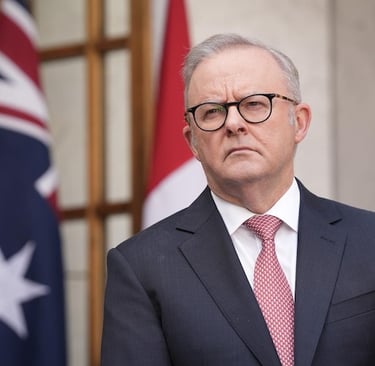
Prime Minister Anthony Albanese has acknowledged that growing support for Pauline Hanson's One Nation was one factor behind Labor's decision to revisit housing-related tax settings, including negative gearing and capital gains tax concessions.
The comments come amid an increasingly heated debate over housing affordability, property investment, and the broader cost-of-living challenges facing Australians.
Why Negative Gearing and Capital Gains Tax Matter
Negative gearing allows property investors to offset investment losses against other taxable income, while capital gains tax concessions reduce the amount of tax paid on profits from asset sales held over time.
Supporters argue these policies encourage investment and increase rental housing supply.
Critics contend they can contribute to higher property prices by favouring investors over first-home buyers.
The issue has remained one of Australia's most contentious economic and political debates for years.
Housing Affordability Remains a Major Concern
Housing affordability continues to dominate public discussion across Australia.
Rising property prices, strong population growth, limited housing supply, and increasing rents have intensified pressure on governments to respond.
Cities such as Sydney, Melbourne, and Perth continue to experience significant affordability challenges despite efforts to boost housing construction.
Political Pressure Influencing Policy
Albanese's comments suggest that changing voter sentiment has become an important consideration in the government's approach to housing reform.
Political analysts note that support for minor parties often rises when voters feel major parties are not adequately addressing economic concerns.
Housing affordability has become one of the most powerful drivers of voter frustration, particularly among younger Australians struggling to enter the property market.
The government's willingness to reconsider long-standing tax arrangements reflects growing pressure to demonstrate action on the issue.
Debate Divides Economists and Industry Groups
The prospect of changes to negative gearing and capital gains tax continues to divide economists, property industry groups, and investors.
Those supporting reform argue that adjustments could improve housing affordability and create a more balanced market.
Opponents warn that significant changes could reduce investment, tighten rental supply, and create unintended consequences for housing availability.
Many experts argue that tax reform alone is unlikely to solve Australia's housing challenges without substantial increases in housing supply.
A Broader Housing Strategy
The discussion around tax concessions comes alongside other government initiatives focused on:
Increasing housing construction
Accelerating planning approvals
Expanding infrastructure investment
Supporting first-home buyers
Improving rental market conditions
Policymakers continue to search for solutions capable of addressing both affordability and supply constraints.
Albanese's acknowledgement that political pressure contributed to Labor's policy shift highlights how central housing has become in Australian politics.
The debate over negative gearing and capital gains tax is no longer simply an economic discussion. It has evolved into a broader conversation about fairness, opportunity, and access to housing.
As affordability pressures continue to shape voter priorities, housing policy is likely to remain one of the defining political issues in Australia for years to come.
All rights belong to their respective owners. This article contains references and insights based on publicly available information and sources. We do not claim ownership over any third party content mentioned.
DAILY WA © 2025
Daily WA Online is an independent news and media platform covering Western Australia. Owned by TMFS International Pty Ltd., we publish local stories, business insights, lifestyle features, and community voices for the digital era.