
Albemarle's lithium refinery in WA's South West placed on care and maintenance
Albemarle has placed its lithium refinery in Western Australia’s South West on care and maintenance, reflecting ongoing pressure in global lithium markets and shifting production strategies.
OPINION & VOICES
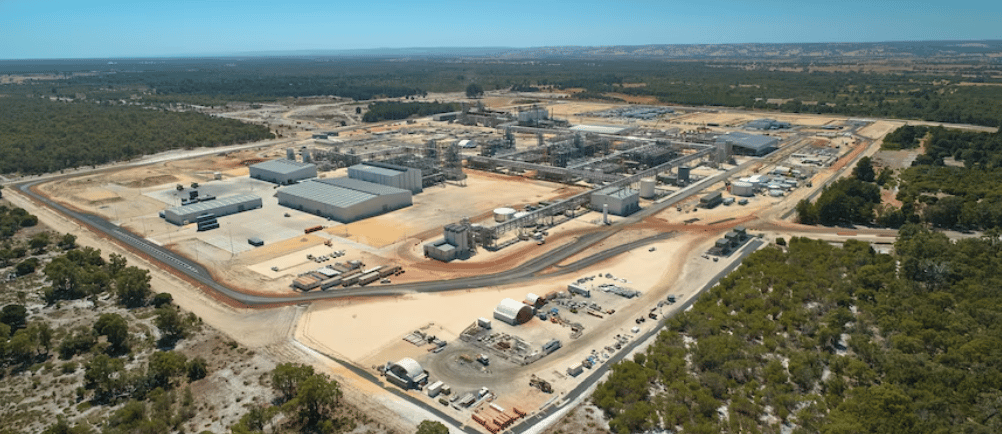
Global lithium producer Albemarle Corporation has placed its refinery in Western Australia’s South West on care and maintenance, marking a significant pause in one of the state’s key downstream processing projects.
The facility, located within the Kemerton Strategic Industrial Area, was positioned as a major step in expanding lithium processing capacity outside traditional battery manufacturing hubs. Its transition to care and maintenance reflects the volatility currently shaping global lithium markets.
Lithium prices surged during the peak of electric vehicle demand growth, encouraging rapid expansion of mining and refining capacity worldwide. However, recent price corrections and softer demand growth have pressured margins, prompting companies to reassess capital allocation and operating costs.
Placing a facility on care and maintenance does not signal permanent closure. Instead, it indicates that operations are being paused while preserving infrastructure for potential restart when market conditions improve. Staffing levels are typically reduced, and essential systems maintained to protect assets during the downtime.
For Western Australia, the move highlights both the opportunity and risk inherent in participating in fast evolving battery supply chains. The state is a major global supplier of lithium ore, and significant investment has been directed toward building local refining capability to capture greater value domestically. Market cycles, however, can interrupt these ambitions.
Industry analysts note that lithium markets remain structurally linked to long term electric vehicle and energy storage demand. Short term price corrections do not necessarily undermine long term projections, but they do influence immediate production decisions and investment timelines.
The refinery’s pause also carries regional economic implications. Construction and operational phases support local employment, contractors, and service providers. Care and maintenance status reduces activity, affecting workforce planning and regional business confidence.
At the same time, companies operating in commodity sectors must navigate cycles with discipline. Maintaining production during periods of weak pricing can erode financial resilience. Strategic pauses are often used to manage supply and preserve balance sheets.
In Western Australia, policymakers have emphasised the importance of diversifying mineral processing and building sovereign capability in critical minerals. Developments such as Kemerton were central to that strategy. The refinery’s status will likely prompt renewed discussion about how to balance ambition with market reality.
From a global perspective, lithium remains a cornerstone of energy transition strategies. Electric vehicles, grid storage, and portable electronics all depend on stable supply. Volatility reflects the rapid scaling of an industry still finding equilibrium between supply expansion and demand growth.
At TMFS, we observe that emerging industries often experience pronounced cycles before stabilising. Early investment builds capacity and expertise, but timing remains critical. Resilience depends on aligning long term vision with disciplined response to short term shifts.
Albemarle’s decision underscores the dynamic nature of the lithium market. While the refinery is currently paused, its infrastructure remains in place, positioned for potential reactivation when conditions support renewed production.
The development serves as a reminder that energy transition industries, though future focused, are still subject to traditional commodity forces. Strategic patience may prove as important as rapid expansion in shaping Western Australia’s role in the global battery economy.
All rights belong to their respective owners. This article contains references and insights based on publicly available information and sources. We do not claim ownership over any third party content mentioned.
DAILY WA © 2025
Daily WA Online is an independent news and media platform covering Western Australia. Owned by TMFS International Pty Ltd., we publish local stories, business insights, lifestyle features, and community voices for the digital era.