
Anchoring the Future: Rio Tinto’s $733 Million Commitment to Pilbara’s Next Phase
With a $733 million investment in West Angelas, Rio Tinto and partners double down on iron ore sovereignty, workforce resilience, and strategic continuity Article by DailyWAOnline Writer
NEWS & CURRENT AFFAIRS
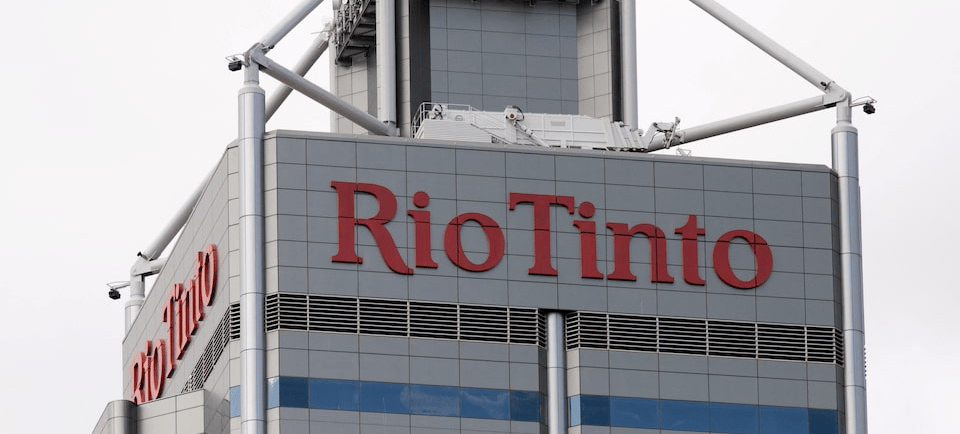
The moment Rio Tinto and its partners revealed a $733 million investment plan for the Pilbara’s West Angelas hub, the industry world paused to reckon with more than numbers. The announcement does not merely signal expansion. It frames a deeper narrative: in an era of supply chain fragility and shifting demand, major mining houses are staking their legacy on selective renewal and strategic foresight. The true question now is not how much they invest, but how effectively that capital anchors long-term resilience.
From the outset, the stakes are high. Rio Tinto will shoulder $389 million of the total. The West Angelas Sustaining Project has secured both state and federal approvals and aims to preserve an annual output of 35 million tonnes—effectively extending the operational life of the hub.
The work will generate about 600 construction jobs and sustain roughly 950 full-time roles once production steadies.
Autonomous trucking of ore is scheduled to begin in 2027, a telling signal that modernization will accompany expansion.
This is not a one-off bet. Rio Tinto positions this project within a broader “replacement” scheme across Pilbara, meant to maintain total capacity of around 130 million tonnes per annum.
At the same time, the company is pushing ahead on a pre-feasibility study for Rhodes Ridge, targeting an initial 40 million tonnes of output by 2030.
In short, the investment at West Angelas is a hinge point in a multi-pronged strategy to future-proof core capacity.
Why this matters beyond Australia’s red earth: the world is watching to see who supplies steelmaking with certainty, not just with volume. The iron ore sector, long a backbone of Australian exports, now faces intensifying pressure: lower grades, energy cost escalation, stricter emissions rules, competition from new producers, and the imperative to add value closer to end markets.
In that light, $733 million is not a cost. It is a statement of intent—to defend commercial relevance and sovereign positioning.
Real people anchor this ambition. The construction jobs in the Western Pilbara region, often remote and resource-dependent, bring downstream ripple effects into local housing markets, small business ecosystems, transport, health services, and community morale. Sustaining 950 full-time roles after ramp up means continuity not just for mineworkers but for towns and families that have long counted on this hub.
Rio Tinto’s disclosure also emphasizes collaboration with traditional owners—the Yinhawangka and Ngarlawangga Peoples. Together they co-designed social and cultural heritage plans to preserve ongoing land stewardship and cultural integrity.
Rio Tinto
This is not cosmetic compliance. In mining’s contested footprint, legitimacy will be won as much through consent and care as through capital.
Yet questions remain. Can the project deliver returns given cost pressures and commodity cycles? Will automation reduce roles over time, or complement the workforce? Can Rio and its partners sustain disciplined execution, environmental rehabilitation, and community trust simultaneously? These are not ancillary concerns but central to whether the investment becomes legacy or liability.
For TMFS, this development underscores a broader credo: strategic investment is not just about capturing market share. It is about preserving optionality when disruption threatens. Every capital decision today ripples into decades. Leaders must assess not only internal rate of return but the insurance value of scale, sovereignty, and modernization against an uncertain future.
As investors, policy makers, and industrial stakeholders reflect, a few guiding principles emerge. First, conditional continuity beats short bursts of expansion. Rio Tinto’s choice to anchor new deposits at an existing hub rather than stretch into wholly new geographies reflects this. Second, embedding stakeholder legitimacy and environmental foresight cannot be deferred until after cost overruns. Third, automation and efficiency must walk hand in hand with job sustainability, not against it.
Beyond Australia, the Pilbara move ripples into global iron ore balances. Major steelmaking nations and emerging economies will judge which mining firms survive and thrive—and which become relics of old orders. In that contest, the ability to fund and deliver disciplined replacement projects is as much a competitive moat as geology or logistics.
For readers attuned to supply chains, resource diplomacy, or transformation strategy, the implications are stark. This is not just mining. It is a test of whether industrial capital can be repurposed, renewed, and reoriented for the uncertainties of the next half-century.
Let the West Angelas investment be a signal: in a world where materials are power, only those who rebuild with vision will anchor their relevance. If you would like TMFS to explore how such resource strategies apply in Southeast Asia, Africa, or global downstream sectors, we welcome the opportunity to align our insight with your ambition.
All rights belong to their respective owners. This article contains references and insights based on publicly available information and sources. We do not claim ownership over any third-party content mentioned.
DAILY WA © 2025
Daily WA Online is an independent news and media platform covering Western Australia. Owned by TMFS International Pty Ltd., we publish local stories, business insights, lifestyle features, and community voices for the digital era.