
Angus Taylor to Challenge Sussan Ley for Liberal Leadership as Israeli President Arrives in Melbourne
Angus Taylor will challenge Sussan Ley for the leadership of the Liberal Party, while the Israeli President has arrived in Melbourne for an official visit amid heightened political attention.
OPINION & VOICES
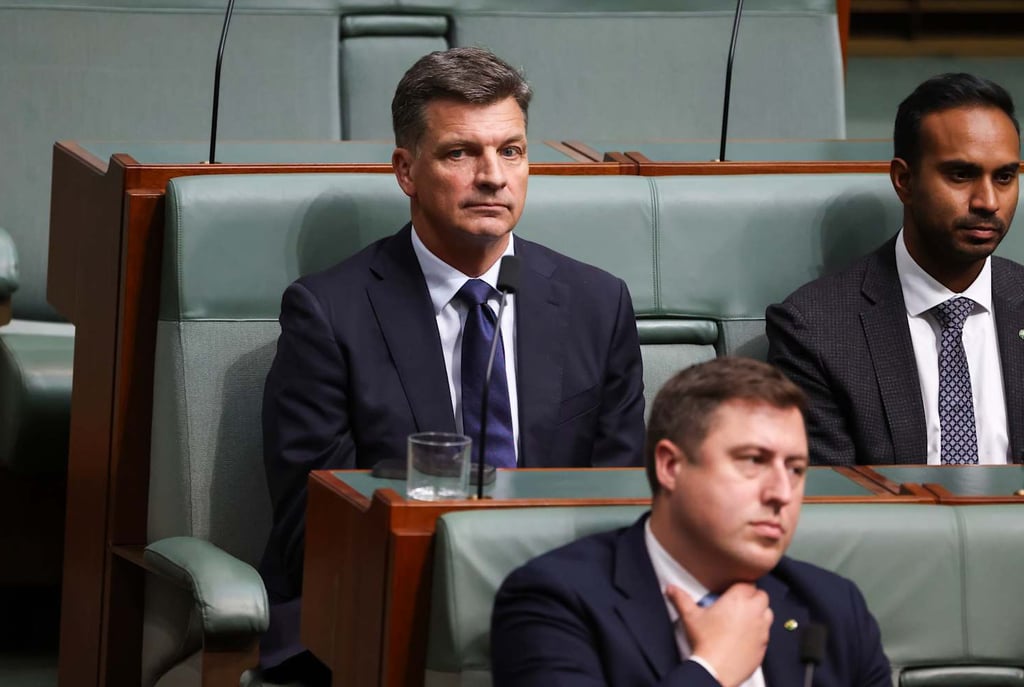
Federal politics is set for a decisive moment, with Angus Taylor confirming he will challenge Sussan Ley for the leadership of the Liberal Party of Australia. The contest, scheduled for tomorrow, comes at a critical juncture for the party as it seeks to define its direction and rebuild internal unity.
Leadership contests within major parties often signal more than a change in personnel. They reflect debates over strategy, policy emphasis, and electoral positioning. Taylor’s move to contest the leadership suggests a push for recalibration, while Ley’s candidacy represents continuity within the party’s senior ranks.
The outcome will shape the opposition’s approach to economic management, climate and energy policy, and relations with key constituencies. Party room votes are typically influenced by a combination of factional alignment, policy priorities, and perceptions of electability. With public scrutiny high, the result is likely to have immediate political implications.
Meanwhile, diplomatic focus has turned to Melbourne, where the Isaac Herzog has arrived for an official visit. The arrival of the Israeli President comes amid ongoing global tensions and heightened domestic debate around international affairs.
Security has been visible as official engagements commence, with authorities coordinating closely to ensure safety. High level visits often carry both symbolic and practical significance, reinforcing bilateral ties while also attracting public attention and, at times, protest.
The convergence of domestic leadership manoeuvring and international diplomacy underscores the dynamic nature of Australia’s political landscape. Leadership stability within major parties can influence how Australia projects itself globally, particularly in periods of geopolitical complexity.
For the Liberal Party, tomorrow’s leadership vote will determine who carries the responsibility of opposition strategy in federal parliament. Leadership transitions can energise party bases but also risk internal division if margins are narrow. Unity following the vote will be closely watched.
In Australia, leadership contests are conducted internally, with elected members determining the outcome. Public opinion, while influential indirectly, does not formally decide party leadership. The process highlights the interplay between internal party democracy and broader national politics.
At TMFS, we observe that leadership shifts often mark inflection points rather than endpoints. The direction set in the days following a contest can be as significant as the vote itself. Messaging, policy clarity, and organisational cohesion determine whether change translates into momentum.
As events unfold, attention will remain fixed on both the internal ballot within the Liberal Party and the diplomatic engagements taking place in Melbourne. Together, they reflect a moment of transition and visibility on both the domestic and international stage.
The next twenty four hours are likely to shape not only party leadership but also the tone of political discourse in the weeks ahead.
All rights belong to their respective owners. This article contains references and insights based on publicly available information and sources. We do not claim ownership over any third party content mentioned.
DAILY WA © 2025
Daily WA Online is an independent news and media platform covering Western Australia. Owned by TMFS International Pty Ltd., we publish local stories, business insights, lifestyle features, and community voices for the digital era.