
Audible Anti Homeless Devices Spark Debate in Perth Public Spaces
Reports of audible devices being used in Perth to deter rough sleepers have triggered public debate over urban design, social policy, and how cities respond to homelessness.
NEWS & CURRENT AFFAIRS
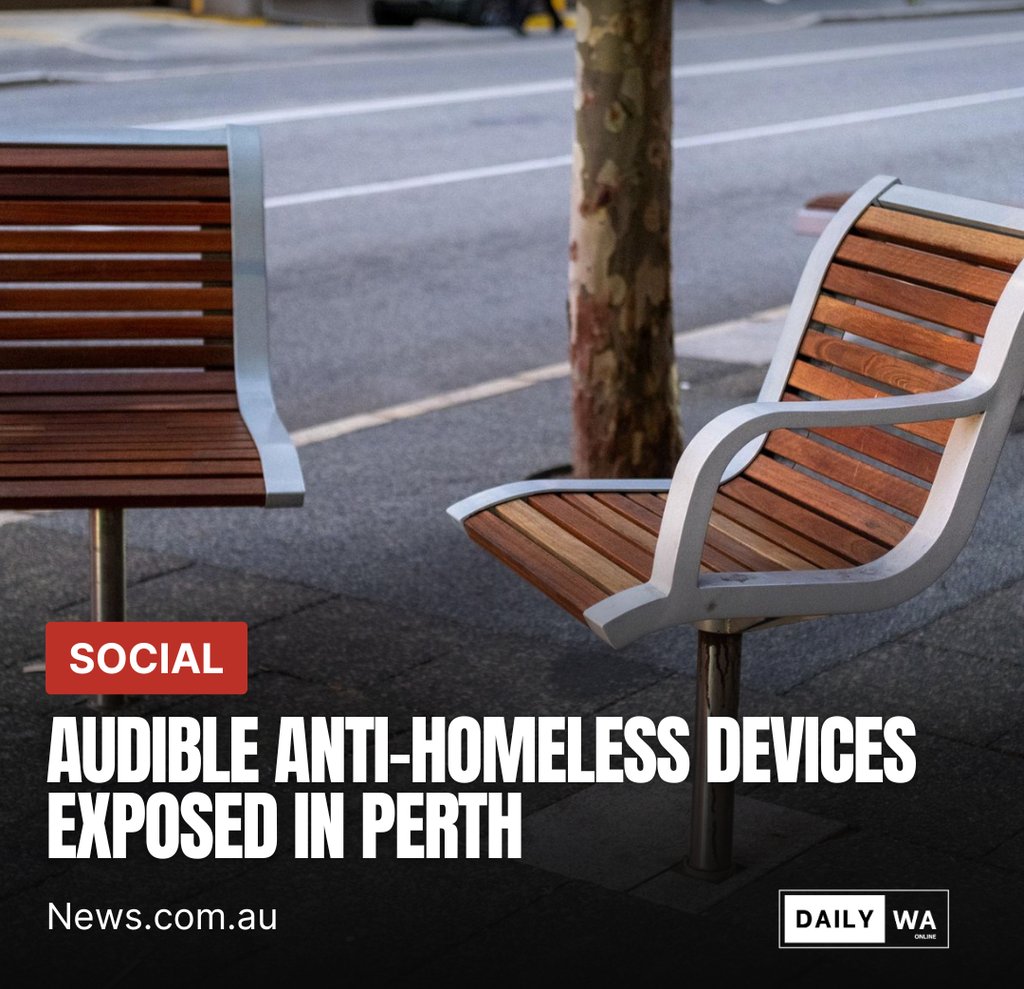
A growing debate is unfolding in Perth after reports revealed the use of audible devices in public areas allegedly intended to deter people experiencing homelessness.
The devices, described as emitting high frequency or uncomfortable sounds, are reportedly installed in certain locations to discourage individuals from remaining in specific spaces for extended periods. While not illegal in themselves, their purpose and placement have raised ethical and social questions.
Critics argue that such measures represent a form of hostile urban design. Rather than addressing underlying causes of homelessness, they say the approach focuses on displacement. Moving people from one location to another does not reduce the number of individuals without stable housing. It simply relocates visibility.
Supporters of property owners using deterrent measures often cite concerns about safety, business viability, and public amenity. In busy commercial districts, tensions can emerge between the rights of private property holders and the needs of vulnerable populations seeking shelter.
Homelessness in Western Australia has intensified alongside housing pressures and rising rental costs. Service providers report increasing demand for crisis accommodation, outreach support, and long term housing solutions. Against this backdrop, the use of audible deterrents has become a symbol of broader systemic strain.
Urban design choices shape who feels welcome in public spaces. Benches with dividers, gated alcoves, bright lighting, and sound emitting devices all influence behaviour. When design prioritises exclusion over inclusion, it reflects policy priorities as much as architectural decisions.
Advocacy groups have called for a shift toward supportive solutions. Housing first models, expanded crisis services, and mental health support are frequently cited as more effective long term responses. They argue that deterrent devices may exacerbate distress for already vulnerable individuals.
Legal experts note that while businesses may seek to protect premises, measures that intentionally target specific groups can attract scrutiny if they infringe upon rights or create public nuisance. The debate therefore extends beyond ethics into regulatory oversight.
Community reaction has been mixed. Some residents express discomfort at the idea of devices used to repel people rather than assist them. Others emphasise the challenges faced by businesses operating in high foot traffic areas where social issues intersect with commerce.
In Western Australia, homelessness policy remains a complex intersection of housing supply, mental health services, employment pathways, and social welfare frameworks. Technological deterrents sit at the surface of a deeper structural issue.
At TMFS, we observe that sustainable urban resilience depends on addressing root causes rather than symptoms. Public spaces function best when safety and compassion are aligned rather than positioned as opposing values.
The exposure of audible anti homeless devices has prompted a broader conversation about what kind of city Perth aims to be. Whether the response centres on deterrence or support will shape not only the urban landscape, but also the social fabric within it.
The debate continues, reflecting a city grappling with visibility, responsibility, and the balance between public amenity and human dignity.
All rights belong to their respective owners. This article contains references and insights based on publicly available information and sources. We do not claim ownership over any third party content mentioned.
DAILY WA © 2025
Daily WA Online is an independent news and media platform covering Western Australia. Owned by TMFS International Pty Ltd., we publish local stories, business insights, lifestyle features, and community voices for the digital era.