
Beyond the Siren: The Critical Need for Network Resilience in Times of Crisis
Discover how the new AusAlert platform uses precision technology to provide 160-meter hazard accuracy.

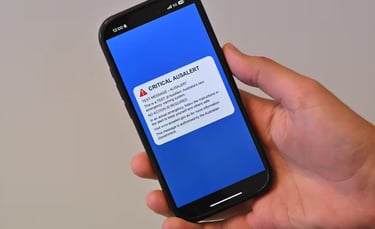
Australians are about to experience a nationwide synchronized sound this July. On the 27th at exactly 2:00 PM, nearly every mobile device across the country will emit a high-pitched sonic alert. This isn't a cause for panic, but rather the first major trial of the new national emergency notification framework known as AusAlert. Unlike standard text messages, this signal is designed to override silent modes and Do Not Disturb settings, ensuring that critical information reaches users regardless of their phone's status. The test will last for ten seconds, serving as a baseline for how the government communicates during life-threatening scenarios. By making this system mandatory, authorities aim to bridge the gap in communication that often occurs during rapidly escalating situations like bushfires or flash floods. It is important for residents to be aware that there is no "opt-out" feature for these critical alerts, as they are deemed essential for public safety and disaster management.
The evolution of public safety technology in Australia has reached a significant milestone with the introduction of a sophisticated new warning system. For years, the country relied on an SMS-based emergency alert infrastructure that, while functional, often faced limitations during peak congestion or network instability. The transition to the $120 million AusAlert platform represents a shift toward more robust, real-time communication. This system provides granular details about the type of hazard, its severity, and the specific actions citizens should take to stay safe. Whether it is a natural disaster or a localized security threat, the ability to push data directly to compatible devices ensures a higher success rate for evacuations and safety protocols. While the project saw its budget swell from an initial $10 million estimate and faced several years of delays, the final implementation aims to provide a unified voice during Australia’s most challenging moments.
While the launch of a new national emergency alert system is a step forward for public safety, it has reignited conversations regarding the reliability of Australia's telecommunications infrastructure. Recent parliamentary reviews have highlighted significant concerns about the ability of major carriers to maintain service during times of crisis. The inability to make a call or receive data during an outage can render even the most advanced warning system ineffective. Experts have pointed to a "culture of lack of care" within some sectors of the industry, emphasizing that the $120 million investment in technology must be matched by network resilience. For the new emergency framework to truly protect the population, there must be a guarantee that the digital backbone of the country won't buckle when it is needed most. As the nation prepares for the upcoming system test, the focus remains not just on the loud siren coming from the phones, but on the invisible networks that power them.
All rights belong to their respective owners. This article contains references and insights based on publicly available information and sources. We do not claim ownership over any third party content mentioned.
DAILY WA © 2025
Daily WA Online is an independent news and media platform covering Western Australia. Owned by TMFS International Pty Ltd., we publish local stories, business insights, lifestyle features, and community voices for the digital era.