
BHP Secures Two Billion Dollar Funding Deal to Transform WA Iron Ore Power Network
A major two billion dollar funding agreement will modernise Western Australia’s iron ore power network, strengthening energy security, operational efficiency, and long term mining resilience.
BUSINESS & ECONOMY
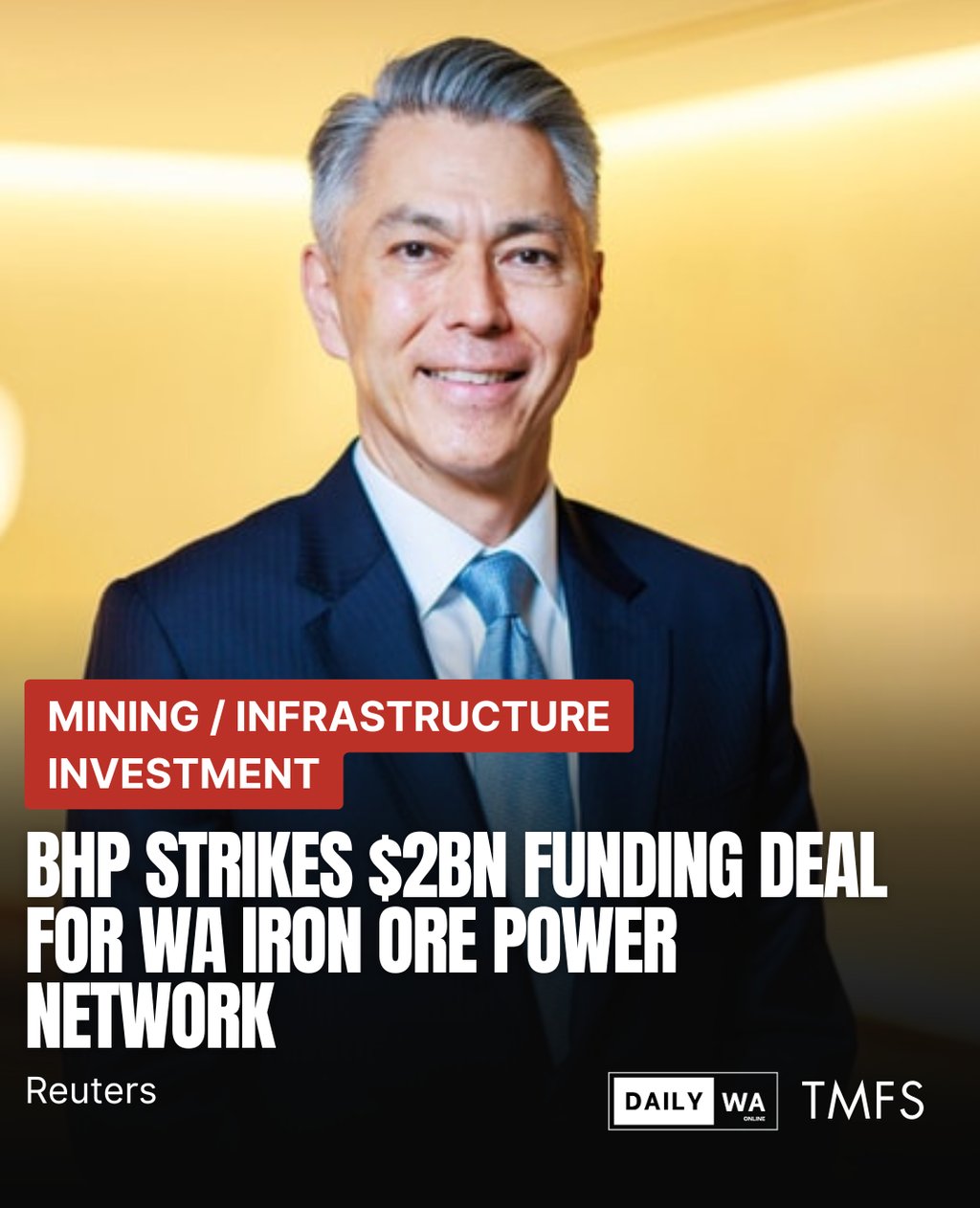
Infrastructure investment is often the quiet force that determines whether industries merely operate or truly endure. While production volumes and commodity prices dominate headlines, it is power, connectivity, and reliability that ultimately sustain large scale resource operations. BHP’s newly announced two billion dollar funding deal to support the Western Australian iron ore power network represents exactly this kind of foundational commitment. It is a strategic move that reinforces confidence in the state’s mining future while signalling a decisive shift toward stronger, more resilient energy systems.
The iron ore sector in Western Australia depends on vast, interconnected power networks to sustain continuous operations across remote and demanding environments. Power interruptions are not minor inconveniences in this context. They carry significant operational, financial, and safety consequences. By securing long term funding to upgrade and stabilise the power network that supports its iron ore assets, BHP is addressing one of the most critical risk factors in large scale mining. This decision primes the industry to view energy infrastructure not as a background utility but as a strategic asset.
The funding arrangement will support the modernisation and expansion of power generation and transmission infrastructure across the Pilbara. These upgrades are designed to improve reliability, reduce exposure to outages, and enable more efficient energy distribution across mine sites, rail operations, and port facilities. Industry research consistently shows that infrastructure reliability is directly linked to productivity and cost control in resource operations. Investments of this scale therefore generate value well beyond their initial capital outlay.
Global mining operations are operating in an increasingly complex environment. Energy systems must now balance reliability with evolving expectations around sustainability, emissions reduction, and long term efficiency. BHP’s investment reflects this reality. Strengthening the power network creates a platform for future integration of cleaner energy sources, advanced storage solutions, and digital monitoring systems. It positions the company and the region to adapt as energy technologies and regulatory frameworks continue to evolve.
From a broader perspective, the funding deal underscores confidence in the longevity of WA’s iron ore sector. Commitments of this magnitude are not made for short term cycles. They are underpinned by long horizon forecasts and strategic planning that anticipate decades of continued operation. This signals to suppliers, workers, and regional communities that the industry’s foundation remains strong and that supporting infrastructure will keep pace with operational demand.
The economic implications are substantial. Infrastructure upgrades of this scale create employment opportunities during construction and commissioning phases while supporting long term operational roles in maintenance, engineering, and energy management. Local contractors, service providers, and technical specialists all stand to benefit as the network evolves. For regional communities in the Pilbara, sustained infrastructure investment contributes to stability and confidence, reinforcing the region’s role as a cornerstone of the state economy.
This initiative also reflects a broader shift in how major resource companies approach risk management. Rather than relying solely on redundancy or reactive responses, leaders are investing upstream to reduce systemic vulnerabilities. Power networks represent one of the most complex and interdependent elements of mining operations. Strengthening them requires coordination across financiers, regulators, engineers, and operators. The successful execution of such a deal demonstrates the organisational maturity required to manage complexity at scale.
There is also a strategic lesson embedded in the timing of this investment. As global supply chains face disruption and energy markets experience volatility, securing stable power infrastructure becomes a competitive advantage. Operations that can maintain consistent output despite external pressures are better positioned to meet customer demand and protect market share. BHP’s approach reflects a recognition that resilience is no longer optional. It is a defining feature of industry leadership.
From an environmental and governance perspective, modernised power infrastructure also enables better performance monitoring, efficiency gains, and emissions management. Improved systems allow companies to track energy use more precisely and identify opportunities for optimisation. Over time, this supports more transparent reporting and aligns operational performance with evolving stakeholder expectations. Strong infrastructure becomes a catalyst for broader operational improvement.
At a state level, the deal reinforces Western Australia’s reputation as a jurisdiction capable of supporting world class resource infrastructure. Reliable power networks, regulatory certainty, and investment scale all contribute to the state’s global standing. This reputation attracts further capital, strengthens partnerships, and ensures WA remains competitive as other resource regions vie for investment.
For TMFS, developments such as this highlight a fundamental principle. Sustainable success in complex environments depends on investing in systems that underpin performance long before challenges arise. Whether in mining, infrastructure, or critical services, organisations that prioritise resilience at the structural level are better equipped to navigate uncertainty and deliver long term value.
As the funding agreement moves toward implementation, focus will shift to execution, coordination, and delivery. The true measure of success will be the network’s ability to support safe, efficient, and uninterrupted operations over decades. This is where disciplined planning and strong governance prove essential.
BHP’s two billion dollar funding deal sends a clear signal to the market and the community. Western Australia’s iron ore industry is not standing still. It is reinforcing its foundations, strengthening its systems, and preparing deliberately for the future. TMFS will continue to support leaders and organisations committed to building resilience through strategic infrastructure investment and long range thinking.
All rights belong to their respective owners. This article contains references and insights based on publicly available information and sources. We do not claim ownership over any third party content mentioned.
DAILY WA © 2025
Daily WA Online is an independent news and media platform covering Western Australia. Owned by TMFS International Pty Ltd., we publish local stories, business insights, lifestyle features, and community voices for the digital era.