
BOM Long Range Outlook Signals Warmer Than Average Autumn for WA
The Bureau of Meteorology’s long range forecast indicates Western Australia is likely to experience above average temperatures throughout autumn, raising implications for water use, fire conditions, and seasonal planning.
BUSINESS & ECONOMY
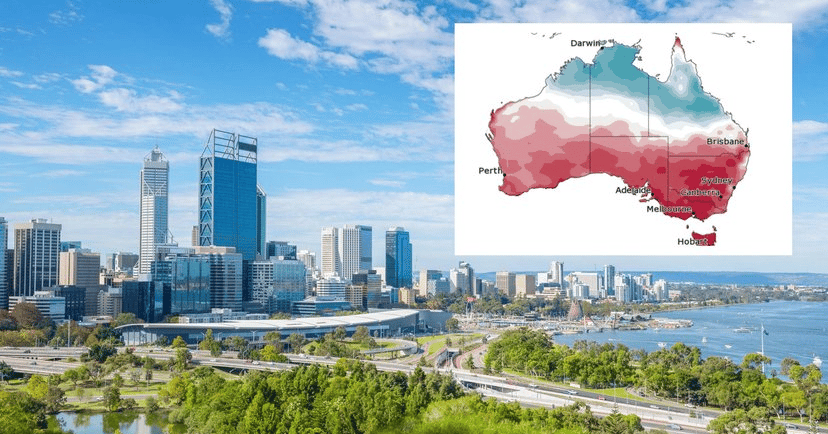
Western Australia is set to experience a warmer than average autumn, according to the latest long range outlook from the Bureau of Meteorology. Seasonal modelling suggests temperatures across much of the state are likely to remain above historical averages in the coming months, continuing a broader pattern of elevated warmth.
Long range forecasts assess climate drivers and probability trends rather than daily weather events. In this case, climate indicators point toward increased odds of sustained higher temperatures across large parts of WA. While variability remains possible, the signal toward warmth is consistent across multiple models.
For households, a warm autumn can feel like an extension of summer. Cooling demand may persist longer than usual, influencing energy use and household costs. Gardeners and agricultural producers may also need to adjust irrigation strategies, particularly if rainfall does not offset evaporation rates.
The agricultural sector will be watching closely. Autumn typically marks a transitional period for planting and soil preparation in many regions. Warmer conditions can affect soil moisture retention and crop timing, requiring adaptive management.
Fire authorities are also attentive to extended warmth. Although autumn generally brings easing fire conditions compared with peak summer, above average temperatures can prolong dry vegetation and elevate risk in certain districts. Preparedness messaging often continues well into the season when heat lingers.
Water management remains another consideration. Extended warmth can influence dam inflows, evaporation levels, and overall supply planning. In a state where climate variability is a defining feature, seasonal outlooks help agencies anticipate demand and adjust accordingly.
It is important to note that long range forecasts describe probability rather than certainty. Above average temperatures do not mean every day will be hot, but that the overall seasonal trend is weighted toward warmer conditions compared with historical medians.
In Western Australia, climate patterns have shown increasing variability in recent decades. Seasonal outlooks are becoming more central to planning across energy, agriculture, emergency services, and infrastructure sectors.
At TMFS, we observe that forward looking data strengthens resilience. When businesses and communities interpret seasonal forecasts proactively, they are better positioned to manage cost, risk, and resource allocation.
As autumn approaches, the forecasted warmth serves as both information and opportunity. It allows households, farmers, and policymakers to prepare rather than react. In a climate defined by extremes, anticipation remains one of the most effective tools available.
All rights belong to their respective owners. This article contains references and insights based on publicly available information and sources. We do not claim ownership over any third party content mentioned.
DAILY WA © 2025
Daily WA Online is an independent news and media platform covering Western Australia. Owned by TMFS International Pty Ltd., we publish local stories, business insights, lifestyle features, and community voices for the digital era.