
Budget 2026: Chalmers Unveils Sweeping Tax and Economic Reform Agenda
Treasurer Jim Chalmers has delivered the 2026 federal budget, outlining major tax reforms and structural changes aimed at reshaping Australia’s economy amid global uncertainty.
BUSINESS & ECONOMY
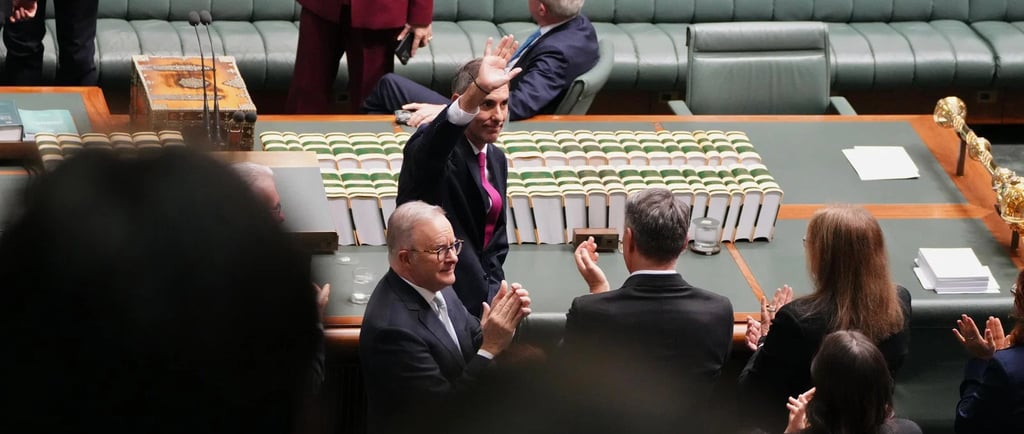
Australia’s 2026 federal budget has been presented as more than a standard spending plan. According to Treasurer Jim Chalmers, it represents a broader attempt to “reform” the economy through significant changes to taxation, housing, energy, and productivity policy.
Delivered in Canberra, the budget arrives at a time of rising global instability, persistent inflation pressures, and growing concern over housing affordability and living costs.
The government says the package is designed to balance immediate economic pressures with longer term structural change across Australia.
Among the most closely watched measures are major adjustments to the tax system, with reforms aimed at reshaping incentives, improving revenue stability, and addressing economic inequality.
The budget also places heavy emphasis on housing supply, including new planning reforms and technology driven approval systems intended to accelerate residential construction.
Energy policy remains another central focus. Measures aimed at shielding households from volatile international gas prices form part of the government’s broader effort to reduce cost of living pressures while supporting energy transition goals.
The budget is being delivered against a difficult economic backdrop. Inflation remains elevated, interest rates have risen multiple times in 2026, and households continue to face financial strain from higher mortgage repayments and living expenses.
At the same time, the government is benefiting from strong commodity revenues linked partly to global energy disruptions and export demand. Rather than directing all of that additional revenue into immediate spending, the budget appears to prioritise fiscal restraint in some areas to avoid worsening inflation.
Economic analysts say the budget reflects a shift toward structural reform rather than short term stimulus. The government is attempting to address long standing issues such as housing shortages, productivity growth, and tax sustainability while navigating immediate economic pressures.
Business groups and economists are expected to closely examine how the reforms affect investment, labour markets, and consumer confidence over the coming months.
Opposition parties are already signalling political battles over elements of the package, particularly around taxation and government intervention in housing and energy markets.
For households, the practical impact of the budget will likely depend on how quickly reforms translate into lower costs, improved housing access, or economic stability.
At TMFS, we observe that modern budgets increasingly serve two purposes at once: responding to current economic stress while trying to reshape long term national direction.
The 2026 budget appears designed with that dual objective in mind. It is not simply a statement of spending priorities, but an attempt to reposition the Australian economy during a period of global uncertainty and domestic pressure.
Whether the reforms succeed will depend not only on policy design, but on how effectively they are implemented in an environment where inflation, housing, and geopolitical instability continue to test economic resilience.
All rights belong to their respective owners. This article contains references and insights based on publicly available information and sources. We do not claim ownership over any third party content mentioned.
DAILY WA © 2025
Daily WA Online is an independent news and media platform covering Western Australia. Owned by TMFS International Pty Ltd., we publish local stories, business insights, lifestyle features, and community voices for the digital era.