
Cattle Boom: An In Depth Look at the Unprecedented Success of Western Australia’s 2026 Agricultural Season
Western Australia’s cattle industry is experiencing a standout 2026 season, driven by strong prices, favourable conditions, and strategic decision making that is reshaping confidence across the agricultural sector.
BUSINESS & ECONOMY
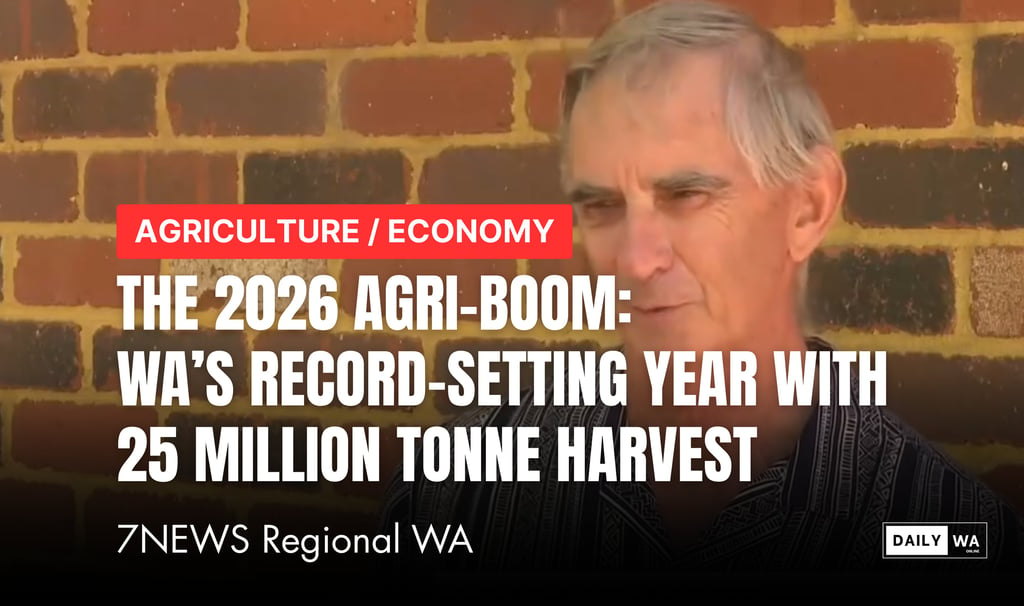
Agricultural cycles are shaped by patience, risk, and an enduring connection to land and climate. Yet every so often, a season emerges that redefines expectations and resets confidence across an entire sector. For Western Australia, the 2026 agricultural season is becoming one of those defining moments. The state’s cattle industry is experiencing a surge in performance that few could have predicted just years ago, marking an extraordinary convergence of market strength, environmental recovery, and disciplined management.
At the heart of this cattle boom is a sharp rise in prices that has delivered meaningful returns to producers across the state. Strong domestic demand, sustained export interest, and tightening global supply have combined to push cattle values to levels not seen in recent memory. Producers who weathered years of volatility are now seeing their long term decisions rewarded. This shift primes the industry to think beyond survival and toward strategic growth.
Seasonal conditions have played a critical role. Above average rainfall across key grazing regions has improved pasture quality and increased carrying capacity. Healthier feed conditions have reduced input costs and supported better weight gains, lifting productivity across herds. In an industry where margins are often dictated by climate, the return of reliable conditions has restored operational balance and allowed producers to focus on herd quality rather than crisis management.
Restocking strategies implemented after previous drought cycles are now delivering results. Many producers adopted conservative herd rebuilding plans, prioritising genetics, animal health, and sustainability over rapid expansion. As market conditions strengthened, these herds were well positioned to meet demand without compromising long term resilience. Industry data shows that operations with disciplined restocking approaches are among the strongest performers this season.
Export markets have further amplified the boom. Western Australian cattle are benefiting from renewed demand across Asia and the Middle East, where supply constraints and population growth continue to support strong protein consumption. WA’s reputation for quality, traceability, and biosecurity has reinforced buyer confidence, particularly in premium markets. Export driven price support has provided stability and reduced exposure to short term domestic fluctuations.
The success of the 2026 season also reflects structural improvements across the supply chain. Investments in transport infrastructure, digital livestock tracking, and processing efficiency have reduced bottlenecks and improved market access. These systems level improvements often go unnoticed during difficult seasons but become powerful multipliers when conditions align. Producers are now seeing the cumulative benefit of years of incremental progress.
There is a broader economic impact as well. Strong cattle performance flows through regional communities, supporting employment, local services, and investment confidence. Rural towns dependent on agricultural activity are reporting increased spending and renewed optimism. Economic studies consistently show that agriculture led upswings generate some of the most widely distributed benefits across regional economies, reinforcing the social importance of seasonal success.
Workforce confidence has also improved. Better cash flow allows producers to invest in staff retention, training, and workplace safety. Younger generations are showing renewed interest in agricultural careers as the industry demonstrates viability and opportunity. This shift matters deeply for the long term sustainability of the sector, which relies on skilled people as much as land and livestock.
Sustainability considerations remain central to the conversation. Producers are increasingly aware that strong seasons must be managed carefully to avoid overextension. Many are reinvesting profits into land care, water management, and emissions reduction strategies. These decisions reflect a growing understanding that environmental stewardship and commercial performance are inseparable. Strong seasons create the capacity to invest in resilience rather than simply extract value.
From a strategic perspective, the 2026 cattle boom illustrates the power of alignment. When market demand, seasonal conditions, infrastructure readiness, and disciplined leadership converge, industries can outperform even optimistic forecasts. At TMFS, we observe similar dynamics across sectors facing complex risk environments. Long term success is rarely accidental. It is built through patience, planning, and the ability to capitalise when opportunity emerges.
There are also lessons in humility. Agriculture remains exposed to forces beyond control, from weather patterns to global markets. The current boom should not be mistaken for permanence. Producers and policymakers alike recognise the importance of using this period to strengthen buffers against future downturns. Investment in water security, data driven decision making, and diversified income streams will determine how well the industry performs when conditions inevitably shift again.
As the 2026 season continues, confidence across Western Australia’s cattle industry is unmistakable. Sale yards are active. Export channels are strong. Producers are planning with optimism rather than caution alone. This moment represents more than financial success. It reflects the resilience of an industry that has adapted, endured, and emerged stronger.
The cattle boom is a reminder of what is possible when preparation meets opportunity. It reinforces the value of long term thinking in sectors defined by uncertainty. TMFS will continue to support agricultural and regional stakeholders as they translate seasonal success into lasting capability, ensuring that today’s gains become the foundation for tomorrow’s resilience.
All rights belong to their respective owners. This article contains references and insights based on publicly available information and sources. We do not claim ownership over any third party content mentioned.
DAILY WA © 2025
Daily WA Online is an independent news and media platform covering Western Australia. Owned by TMFS International Pty Ltd., we publish local stories, business insights, lifestyle features, and community voices for the digital era.