
Commentary: Rising Energy Costs Are Reshaping Daily Life for WA Families
Rising energy costs across Western Australia are placing growing pressure on household budgets, forcing families to make difficult choices as essential living expenses continue to climb.
OPINION & VOICES
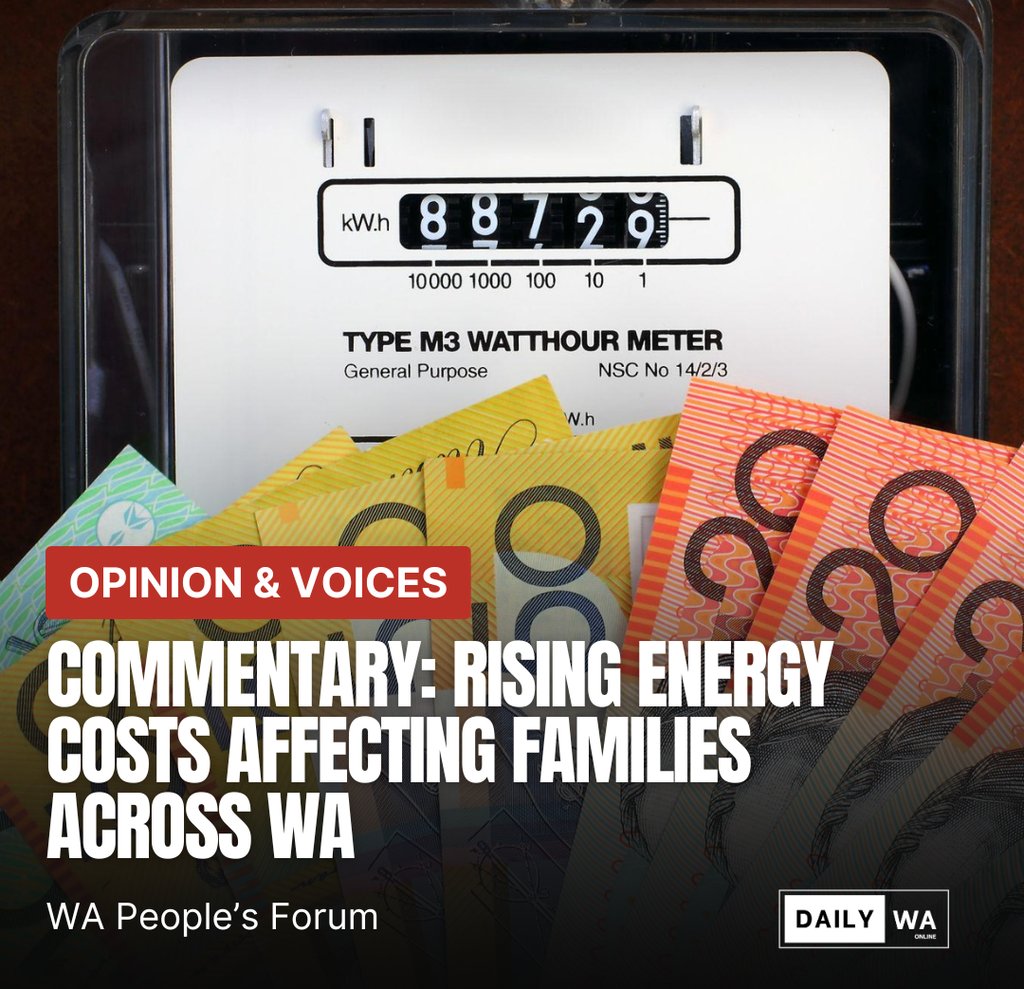
For many families across Western Australia, energy bills have become a defining feature of the cost of living conversation. What was once a manageable household expense is now a recurring source of stress, shaping daily decisions about heating, cooling, and overall financial security. As prices rise, the impact is being felt unevenly but deeply, particularly among low and middle income households.
Electricity and gas costs sit at the centre of this pressure. Energy is not discretionary. It powers homes, preserves food, supports health, and enables work and study. When prices increase sharply, families have limited ability to reduce consumption without sacrificing comfort, safety, or wellbeing. This reality is forcing many households to make trade offs between energy use and other essentials.
The effects are most visible during periods of extreme weather. Hotter summers and colder winters intensify reliance on heating and cooling, pushing bills higher just as demand peaks. For households already managing tight budgets, these periods amplify financial strain and anxiety. Energy poverty, once considered marginal, is becoming a broader concern.
Regional households face additional challenges. Larger homes, limited access to gas networks, and fewer energy alternatives can mean higher reliance on electricity. In some areas, energy efficiency upgrades are harder to access, leaving families locked into higher ongoing costs. Distance from service centres can also limit options for advice or assistance.
Rising energy costs also intersect with housing quality. Older homes, rental properties, and poorly insulated buildings require more energy to maintain safe temperatures. Renters, in particular, often bear the cost of inefficiency without the ability to invest in improvements. This imbalance highlights how energy affordability is linked to broader housing and policy issues.
Government relief measures and rebates provide some support, but many families report they offer only temporary relief rather than long term stability. Assistance can help smooth immediate shocks, yet does not address underlying exposure to rising prices. The gap between short term relief and structural solutions remains a point of frustration for many households.
There is growing discussion about the role of energy efficiency and renewable options in easing pressure. Solar uptake has helped some families offset costs, but upfront installation remains out of reach for many, particularly renters and apartment dwellers. Without inclusive access, benefits remain unevenly distributed.
From a social perspective, sustained cost pressure affects more than finances. It influences mental health, family dynamics, and participation in community life. When households are forced to limit heating or cooling, the effects ripple through health outcomes, especially for children, older people, and those with chronic conditions.
In Western Australia, energy costs are becoming a lens through which broader affordability challenges are viewed. Food, housing, transport, and utilities are converging, narrowing the margin for error in household budgets. Energy is one of the most visible and unavoidable elements of that equation.
At TMFS, we observe that systemic cost pressures require systemic responses. Household resilience improves when policy, infrastructure, and market design align to reduce exposure rather than manage crisis. Energy affordability is not simply a pricing issue. It is a question of access, efficiency, and long term planning.
Community voices are increasingly clear. Families are not asking for luxury. They are asking for predictability, fairness, and the ability to meet basic needs without constant trade offs. Addressing rising energy costs requires moving beyond stopgap measures toward solutions that reduce vulnerability over time.
As energy markets continue to evolve, the choices made now will shape household security for years to come. Ensuring that energy remains accessible and affordable is not just an economic challenge. It is a social one that touches every corner of the state.
The lived experience of rising energy costs is already reshaping daily life across Western Australia. Whether it becomes a permanent strain or a managed transition depends on how decisively and thoughtfully the issue is addressed.
All rights belong to their respective owners. This article contains references and insights based on publicly available information and sources. We do not claim ownership over any third party content mentioned.
DAILY WA © 2025
Daily WA Online is an independent news and media platform covering Western Australia. Owned by TMFS International Pty Ltd., we publish local stories, business insights, lifestyle features, and community voices for the digital era.