
Community Opinion: Should Perth Make Green Space a Higher Urban Priority
As Perth continues to grow and densify, community voices are asking whether enough is being done to protect and expand green spaces that support liveability, health, and long term resilience.
OPINION & VOICES
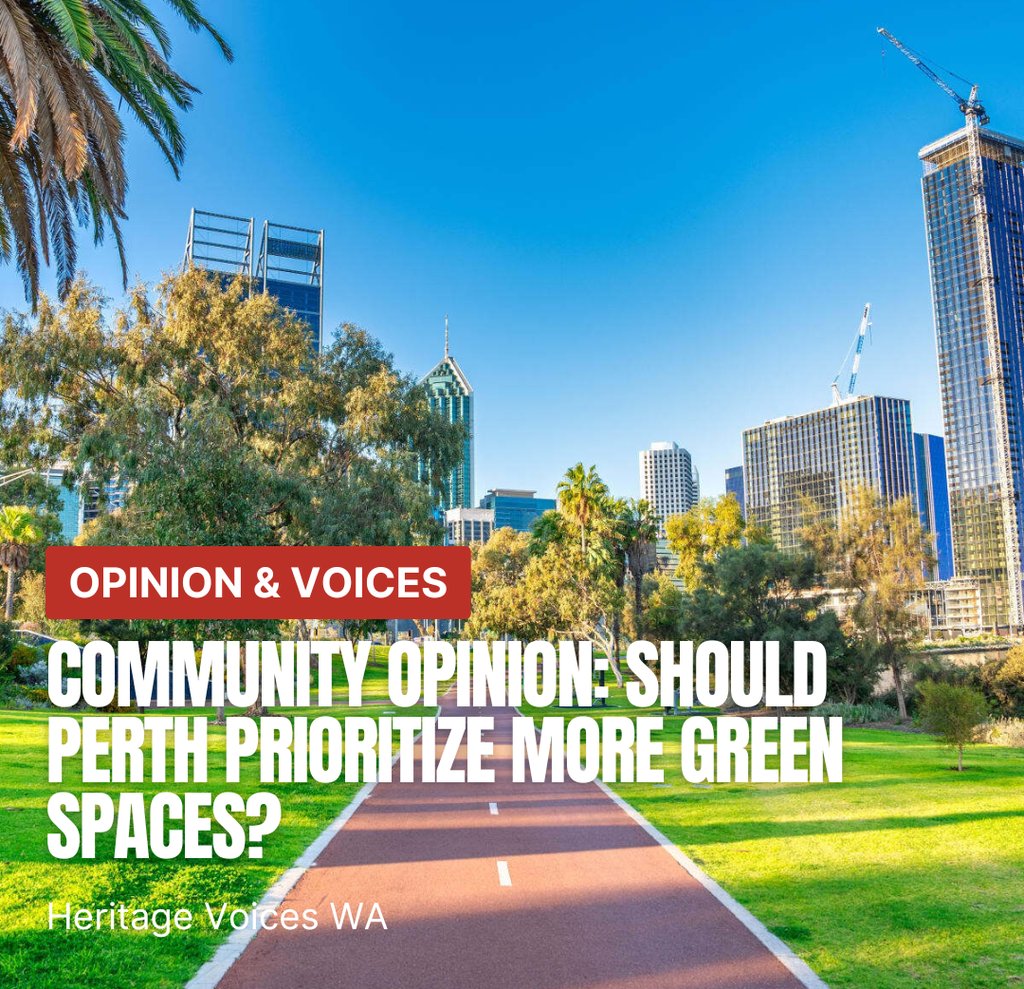
As Perth grows outward and upward, a quieter question is gaining urgency. Should green space be treated as essential infrastructure rather than a planning afterthought. The debate is not about aesthetics alone. It is about how a rapidly expanding city protects health, liveability, and environmental resilience as density increases.
Green spaces play a foundational role in urban life. Parks, tree canopies, river corridors, and shared open areas provide relief from heat, improve air quality, and offer places for recreation and connection. In a city facing hotter summers and longer heatwaves, these functions are no longer optional. They are protective.
Community concern is being driven by visible change. In many suburbs, infill development has reduced private gardens while public green space has not expanded at the same pace. Tree loss, shrinking verges, and reduced canopy cover are becoming common features of redevelopment. Residents are questioning whether planning frameworks are keeping pace with the lived experience of a denser city.
The health implications are well documented. Access to nearby green space is linked to improved mental wellbeing, lower stress, and increased physical activity. For children and older residents, safe outdoor spaces are critical. When parks are distant, overcrowded, or poorly maintained, those benefits diminish, particularly for households without private outdoor areas.
Urban heat adds another layer of urgency. Trees and vegetation reduce surface temperatures, provide shade, and mitigate heat island effects. Without sufficient greenery, cities absorb and retain heat, increasing energy demand and health risk. Green space becomes a form of climate adaptation, reducing pressure on infrastructure and emergency services during extreme weather.
There is also a social dimension. Shared green spaces support community interaction in ways built environments often cannot. They create neutral ground where different age groups, cultures, and incomes intersect. As Perth becomes more diverse and compact, these spaces help maintain social cohesion.
Critics of expanded green space often point to land scarcity and cost. Housing demand is real, and urban land carries significant value. But this framing presents a false choice. Well planned cities integrate density and greenery rather than sacrificing one for the other. International examples show that compact living can coexist with accessible, high quality green networks when prioritised early.
From a planning perspective, green space is often easier to reduce than to restore. Once land is developed, reclaiming it for public use becomes expensive and politically difficult. This makes early commitment critical. Treating green infrastructure with the same seriousness as roads, schools, and utilities changes decision making from reactive to deliberate.
In Perth, the conversation is also about equity. Not all suburbs have equal access to parks or tree cover. Lower income and high density areas often experience the greatest shortfall, compounding disadvantage. Prioritising green space is therefore also a question of fairness and health equity.
Local governments face competing pressures, but community voices are increasingly clear. Growth without greenery erodes the very qualities that attract people to the city in the first place. Liveability is not preserved by accident. It is designed.
At TMFS, we observe that resilient cities plan for human needs alongside economic growth. Green spaces are not decorative extras. They are systems that support physical health, mental wellbeing, and environmental stability. When these systems are underinvested, costs reappear elsewhere in healthcare, energy, and social services.
The question is not whether Perth can afford to prioritise green spaces. It is whether it can afford not to. As population growth accelerates and climate pressures intensify, the value of accessible, well designed green areas will only increase.
Community opinion is shifting toward a clear expectation. Green space should be planned, protected, and expanded as the city grows, not negotiated away parcel by parcel. The choices made now will shape how Perth feels, functions, and copes for decades to come.
Urban growth is inevitable. The character of that growth is not. Prioritising green spaces is one of the clearest ways to ensure Perth remains a city built for people, not just numbers.
All rights belong to their respective owners. This article contains references and insights based on publicly available information and sources. We do not claim ownership over any third party content mentioned.
DAILY WA © 2025
Daily WA Online is an independent news and media platform covering Western Australia. Owned by TMFS International Pty Ltd., we publish local stories, business insights, lifestyle features, and community voices for the digital era.