
Construction Confidence Lifts Across WA as Housing Project Pipeline Expands
Construction confidence is rising across Western Australia as an increasing number of housing projects move into planning and delivery, signalling renewed momentum in the state’s residential building sector.
BUSINESS & ECONOMY
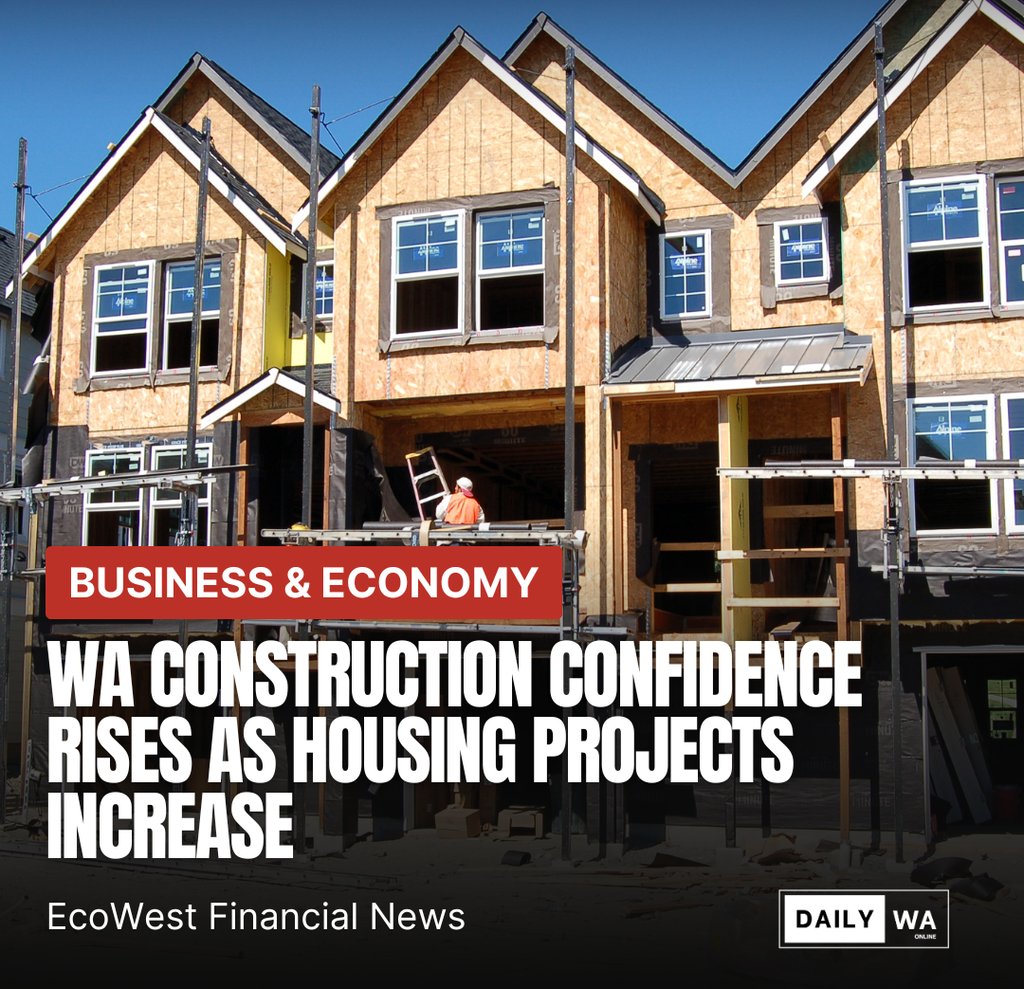
Confidence is returning to Western Australia’s construction sector as a growing pipeline of housing projects begins to take shape. After a period marked by uncertainty, cost pressure, and labour constraints, industry participants are reporting improved sentiment driven by rising demand, clearer project pipelines, and stabilising conditions.
The increase in housing projects reflects sustained population growth and ongoing pressure on housing supply. As demand continues to outpace availability in many parts of the state, residential construction has emerged as a priority area for both public and private investment. Builders and developers say project activity is becoming more predictable, allowing planning and workforce allocation to improve.
Residential construction plays a critical role in the broader Western Australia economy. It supports employment across trades, materials supply, transport, and professional services. When housing activity rises, the flow on effects are felt quickly through regional and metropolitan economies alike.
Industry groups note that while challenges remain, conditions are easing compared with previous years. Supply chains have become more reliable, and material availability has improved, reducing the likelihood of severe delays. Although costs remain elevated, greater certainty is helping builders manage risk and commit to new projects.
Government incentives and planning reforms have also contributed to the uplift in confidence. Efforts to accelerate approvals and unlock land supply are beginning to translate into increased construction starts. These measures aim to address housing shortages while supporting sector stability after a prolonged period of disruption.
Labour availability remains a key issue, particularly for skilled trades. However, rising project volumes are encouraging renewed investment in apprenticeships and training, supporting longer term workforce sustainability. Industry leaders say confidence is closely tied to visibility. When work is clearly coming, businesses are more willing to invest in people and capability.
The geographic spread of new housing projects is also notable. Growth is occurring not only in established metropolitan suburbs, but across outer growth corridors and regional centres. This diversification reduces reliance on any single market segment and strengthens overall sector resilience.
From a market perspective, rising construction activity signals improving alignment between demand and delivery. While housing affordability remains a challenge, increased supply is viewed as a necessary step toward easing pressure. Developers caution that sustained confidence depends on maintaining consistent policy settings and avoiding sudden regulatory shifts.
At TMFS, we observe that confidence in construction is built gradually. It reflects trust that projects can be delivered within reasonable timeframes and cost parameters. When uncertainty recedes, momentum follows.
As housing projects continue to progress, attention will turn to execution. Delivering quality outcomes on time will be essential to sustaining the current uplift in sentiment. The sector’s recent experience has reinforced how quickly confidence can erode when conditions destabilise.
The rise in construction confidence marks a positive signal for Western Australia’s housing market and broader economy. While challenges have not disappeared, the increase in project activity suggests the sector is regaining its footing. In a state where growth depends on both people and place, renewed momentum in housing construction supports stability, opportunity, and long term resilience.
All rights belong to their respective owners. This article contains references and insights based on publicly available information and sources. We do not claim ownership over any third party content mentioned.
DAILY WA © 2025
Daily WA Online is an independent news and media platform covering Western Australia. Owned by TMFS International Pty Ltd., we publish local stories, business insights, lifestyle features, and community voices for the digital era.