
Crane Collapse onto Moving Train Kills at Least 22 in Thailand as Investigation Begins
At least 22 people have been killed and dozens injured after a construction crane collapsed onto a moving train in Thailand’s Nakhon Ratchasima province, triggering a major emergency response and urgent safety investigations.
OPINION & VOICES
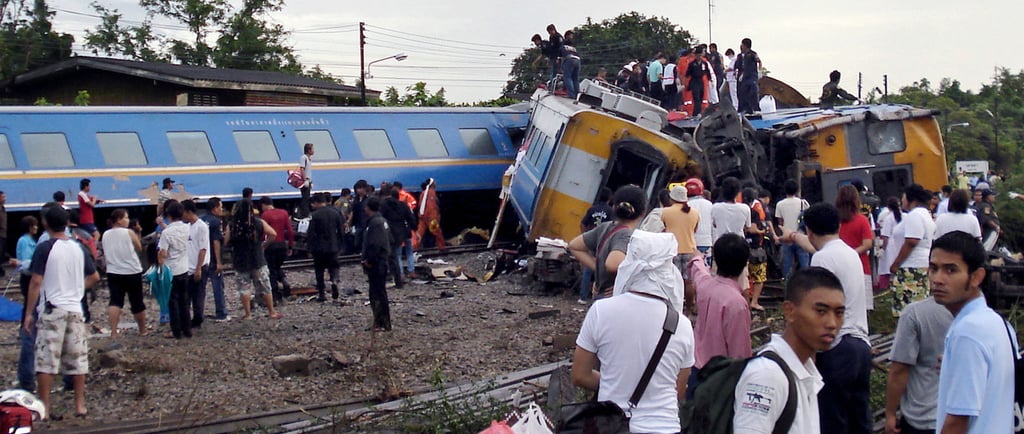
Infrastructure failures rarely allow for margin or warning. In Thailand, a devastating reminder of that reality unfolded when a construction crane collapsed onto a moving passenger train, killing at least 22 people and injuring dozens more. The incident occurred in Nakhon Ratchasima, north of Bangkok, plunging the country into mourning and prompting immediate scrutiny of construction and rail safety practices.
According to emergency officials, the crane fell directly onto the train as it passed through the construction zone, crushing carriages and trapping passengers inside. Rescue teams were deployed within minutes, working through twisted metal and unstable debris to reach survivors. The scale of the response reflects the severity of the impact, with medical teams, police, and disaster response units continuing operations well into the aftermath.
Rail corridors are often among the most complex environments for construction activity. They combine live transport, heavy machinery, tight clearances, and strict timing requirements. Any failure within that system can have catastrophic consequences. Early reports suggest the crane was part of nearby infrastructure works, though authorities have not yet confirmed what caused the collapse. Investigators are now examining whether structural failure, human error, or safety protocol breaches played a role.
The loss of life has renewed focus on construction oversight and risk management in high traffic zones. Cranes are among the most powerful and dangerous pieces of equipment used in urban and transport projects. When they fail, the results are often severe. International safety studies consistently highlight that crane collapses are rarely isolated incidents. They are usually linked to systemic issues such as inadequate inspection, overloading, poor ground conditions, or insufficient exclusion zones.
For passengers aboard the train, the incident unfolded without warning. Survivors have described moments of sudden impact, darkness, and confusion as carriages were crushed or derailed. Such events underscore the vulnerability of public transport users when failures occur beyond their control. Trust in transport systems is built on the assumption that layers of safety protect against exactly these scenarios.
The broader implications extend beyond this single tragedy. Thailand, like many rapidly developing economies, is balancing large scale infrastructure expansion with public safety. Rail upgrades, urban construction, and transport connectivity projects are essential for economic growth. Yet each project increases the complexity of managing overlapping systems. When coordination breaks down, the cost is measured in human lives.
Authorities have pledged a full investigation, with outcomes expected to inform both accountability and reform. Public attention will focus not only on the immediate cause, but on whether warning signs were missed and whether safeguards were sufficient. Families of victims are now seeking answers, and confidence in infrastructure governance will depend heavily on transparency and follow through.
From a systems perspective, tragedies of this scale often expose deeper weaknesses. Safety cultures are tested not when everything works, but when multiple pressures converge. Effective systems anticipate failure modes, enforce strict separation between live operations and construction risk, and empower workers to halt activity when conditions become unsafe.
At TMFS, we observe similar patterns across sectors where infrastructure, safety, and human trust intersect. Catastrophic failures are rarely the result of a single moment. They are usually the endpoint of accumulated risk. Learning from them requires more than assigning blame. It requires addressing structural gaps before they are repeated elsewhere.
As rescue efforts continue and investigations proceed, the focus remains on supporting victims and preventing further harm. The tragedy in Nakhon Ratchasima stands as a stark reminder that progress without protection carries unacceptable cost.
For Thailand and the global construction and transport community, the incident reinforces a simple but critical truth. Safety systems must be as robust as the structures they are meant to protect. When they fail, the consequences are immediate, irreversible, and shared far beyond the site of impact.
All rights belong to their respective owners. This article contains references and insights based on publicly available information and sources. We do not claim ownership over any third party content mentioned.
DAILY WA © 2025
Daily WA Online is an independent news and media platform covering Western Australia. Owned by TMFS International Pty Ltd., we publish local stories, business insights, lifestyle features, and community voices for the digital era.