
Emergency Crews Mobilised as Bushfire Threat Grows Near Northern Pastoral Areas
Emergency services have been deployed to respond to a bushfire threat near northern pastoral areas of Western Australia, as crews work to contain fires and protect remote properties under challenging conditions.
NEWS & CURRENT AFFAIRS
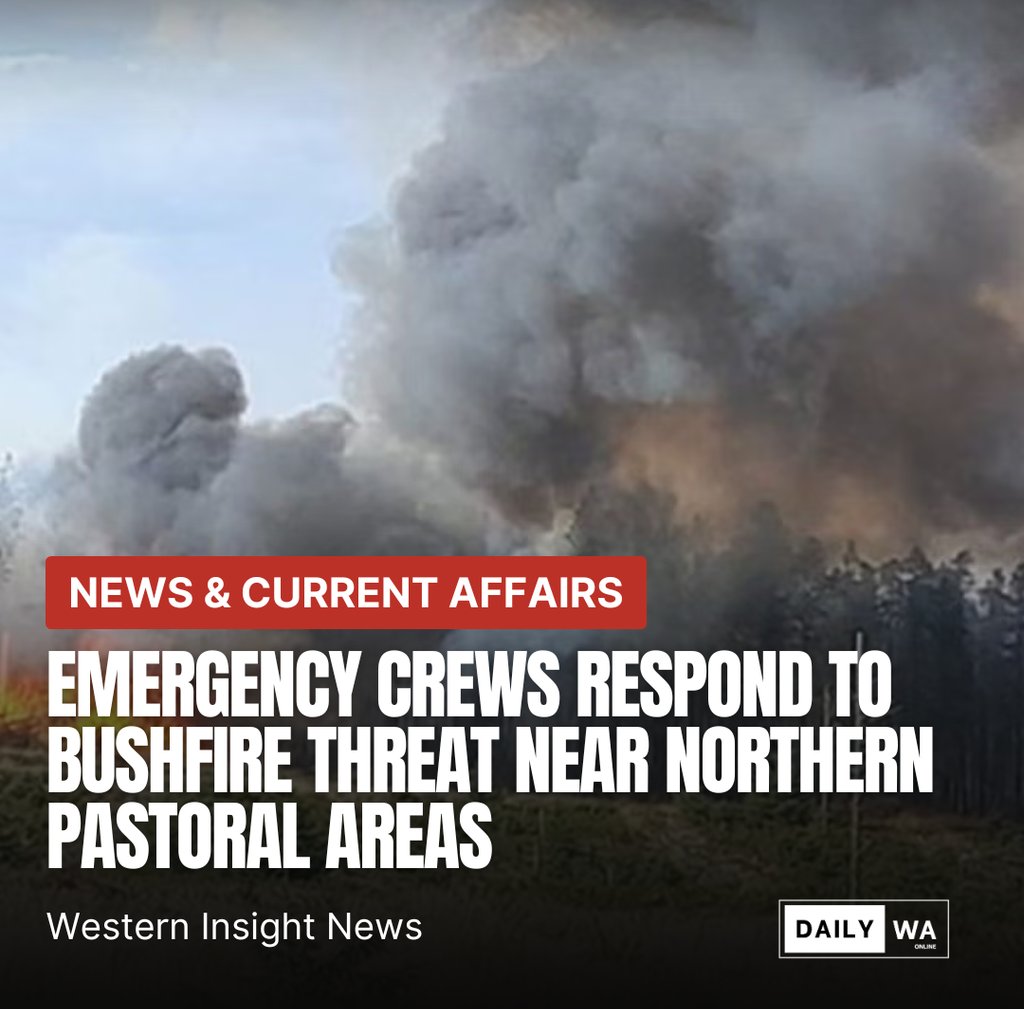
Emergency crews are responding to a developing bushfire threat near Western Australia’s northern pastoral regions, where dry conditions, wind, and vast terrain are complicating containment efforts. Authorities say the situation remains dynamic, with fire behaviour being closely monitored as crews prioritise asset protection and community safety across remote areas.
Fire activity in the northern pastoral zones presents unique challenges. Properties are spread across large distances, access can be limited, and response times are longer than in populated areas. Crews from Department of Fire and Emergency Services have been deployed alongside local brigades, working to establish containment lines and prevent the fire from threatening stations, livestock, and critical infrastructure.
Officials say weather conditions are a key concern. Even moderate winds can cause rapid changes in fire direction, while dry grasses and scrub provide abundant fuel. In pastoral regions, fires can travel significant distances before detection, increasing the importance of aerial surveillance and early intervention.
Landholders in affected areas have been advised to enact bushfire survival plans and remain in close contact with authorities. For pastoral operations, the stakes are high. Fires can result in loss of livestock, damage to fencing and water infrastructure, and long term disruption to operations that depend on stable land conditions. Emergency services are working with station owners to prioritise protection of high value assets where possible.
The response also highlights the critical role of coordination in remote fire management. Local knowledge from pastoralists and volunteer brigades is being integrated with state level resources, including aircraft and specialist crews. This collaboration is essential in regions where professional responders cannot be everywhere at once.
Bushfire risk in northern Western Australia is influenced by seasonal conditions that differ from the south of the state. While peak fire season often receives greater attention in southern regions, northern pastoral areas face their own cycles of risk driven by vegetation growth and drying patterns. Authorities have stressed that preparedness remains vital year round.
From a broader perspective, incidents like this underscore the vulnerability of remote communities to natural hazards. Limited infrastructure and distance from major centres mean resilience depends heavily on planning, communication, and rapid mobilisation. Each response tests the capacity of systems designed to operate across some of the most sparsely populated landscapes in the country.
At TMFS, we observe that risk management in remote environments requires anticipation rather than reaction. Fires in pastoral regions rarely threaten large populations, but their economic and environmental impact can be severe. Protecting these areas supports food supply chains, regional livelihoods, and ecological balance.
Emergency services continue to assess conditions and adjust tactics as the situation evolves. Residents and landholders are urged to stay informed through official channels and avoid unnecessary travel in affected areas to allow crews clear access.
As containment efforts continue, the focus remains on preventing escalation and minimising damage. The bushfire threat near northern pastoral areas is a reminder that vigilance and coordination are essential, even far from population centres. In remote landscapes, preparedness is often the strongest line of defence.
All rights belong to their respective owners. This article contains references and insights based on publicly available information and sources. We do not claim ownership over any third party content mentioned.
DAILY WA © 2025
Daily WA Online is an independent news and media platform covering Western Australia. Owned by TMFS International Pty Ltd., we publish local stories, business insights, lifestyle features, and community voices for the digital era.