
FIFO Earnings Underscore Scale of WA Mining Boom
New figures on FIFO workers’ earnings are highlighting the financial impact of Western Australia’s mining boom, reinforcing the sector’s influence on household income and the broader state economy.
NEWS & CURRENT AFFAIRS
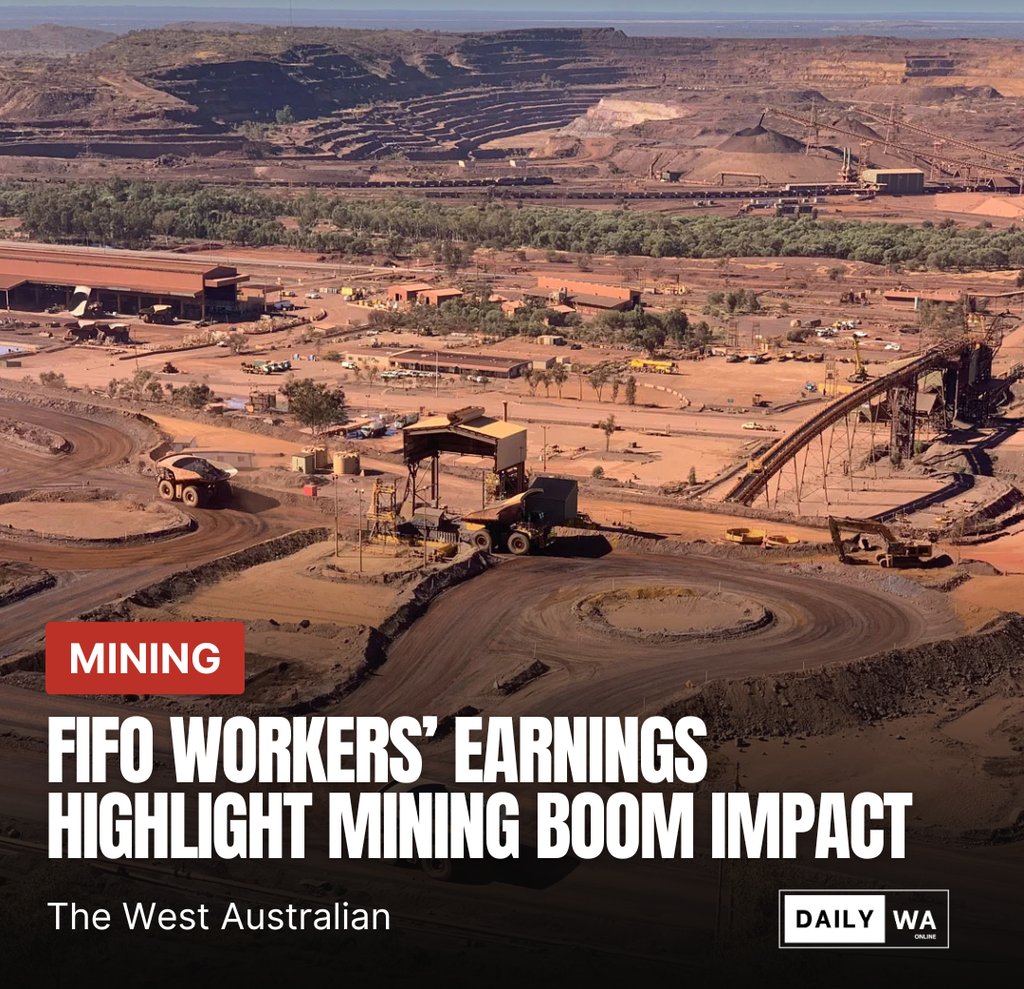
The scale of Western Australia’s mining boom is once again in focus, with new data revealing the substantial earnings of FIFO workers across the sector.
Fly in fly out employment has become a defining feature of the state’s resource economy. Workers travel from metropolitan hubs such as Perth to remote sites in the Pilbara and other regions, undertaking rostered shifts that can stretch for weeks at a time.
Recent figures indicate that many FIFO roles command salaries significantly above state averages, reflecting both the technical skill required and the demanding conditions associated with remote operations. High base pay, site allowances, and extended shift structures contribute to elevated income levels.
The earnings highlight the economic engine that mining continues to represent in Western Australia. Resource exports underpin government revenue, infrastructure investment, and employment across multiple industries linked to extraction and processing.
For individual households, FIFO income can provide accelerated financial opportunity. Mortgage repayment, savings accumulation, and investment capacity often increase with sustained high wages. At the same time, the lifestyle demands of rostered work carry trade offs, including extended time away from family and social networks.
The mining boom’s influence extends beyond pay packets. Strong wages in the sector can shape labour markets more broadly, influencing recruitment challenges in other industries that struggle to compete with resource sector compensation.
Economic analysts note that elevated FIFO earnings also feed into regional and metropolitan spending patterns. Property markets, retail activity, and service industries can feel the impact of sustained high income cycles tied to commodity demand.
However, mining remains subject to global price fluctuations. Commodity cycles can shift rapidly in response to international demand and supply changes. While current earnings reflect robust market conditions, sustainability depends on ongoing export strength and investment discipline.
Industry leaders frequently emphasise the importance of training and workforce development to maintain competitiveness. Skilled operators, engineers, and technicians remain essential to sustaining production levels and operational safety.
For communities hosting FIFO workers, social dynamics also evolve. The rostered lifestyle influences local infrastructure use, school enrolments, and service demand. Balancing economic benefit with community stability remains an ongoing conversation.
At TMFS, we observe that resource driven economies generate both opportunity and complexity. High earning sectors can elevate living standards while simultaneously reshaping labour distribution and cost structures across regions.
The spotlight on FIFO earnings underscores a broader reality. Western Australia’s mining sector continues to exert significant influence over income patterns and economic confidence.
As long as global demand for iron ore and other commodities remains resilient, FIFO roles will remain central to the state’s financial landscape. The challenge lies in ensuring that prosperity translates into long term economic resilience rather than short cycle dependence.
All rights belong to their respective owners. This article contains references and insights based on publicly available information and sources. We do not claim ownership over any third party content mentioned.
DAILY WA © 2025
Daily WA Online is an independent news and media platform covering Western Australia. Owned by TMFS International Pty Ltd., we publish local stories, business insights, lifestyle features, and community voices for the digital era.