
Fremantle Volunteers Unite to Launch New Coastal Clean Up Program Strengthening Community Stewardship
A grassroots clean up initiative led by Fremantle volunteers aims to protect coastal ecosystems, deepen community pride, and inspire long term environmental responsibility.
PEOPLE & COMMUNITY

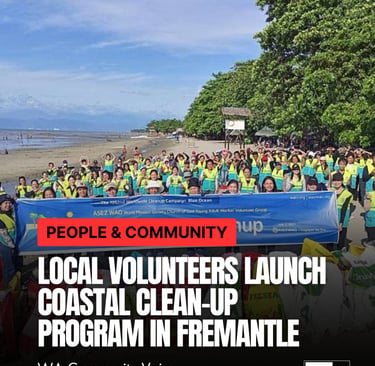
Coastal regions hold a unique ability to shape identity. They offer a sense of calm, connection, and continuity that anchors communities to place. Yet these same coastlines are vulnerable to pressures that accumulate quietly over time. Litter, erosion, and pollution can gradually erode their health and beauty, challenging the balance between natural environments and human activity. This is why the launch of a new volunteer driven coastal clean up program in Fremantle represents more than a community initiative. It is a statement of collective responsibility and a renewed commitment to preserving the landscapes that define Western Australia’s coastal heritage.
Fremantle has long been known for its strong sense of community, where local action often sparks broader momentum. The volunteers leading this program embody that spirit. Their decision to formalise a regular cleaning effort across beaches, dunes, and foreshore areas signals a shift from reactive clean ups to proactive stewardship. It primes residents to see environmental care not as an occasional activity but as a shared practice that strengthens community identity and protects future generations.
Early participation numbers have already exceeded expectations, highlighting a growing awareness of coastal pressures. Studies from environmental agencies indicate that even small pieces of marine debris can have outsized impacts on wildlife, water quality, and beach stability. By removing waste before it enters marine systems, volunteers are helping prevent damage that would otherwise require extensive and costly rehabilitation. The program’s leaders are also collaborating with local environmental groups to track patterns in debris accumulation, allowing the community to better understand the sources and lifespan of coastal waste.
To appreciate how transformative volunteer action can be, consider the impact of similar programs in other coastal towns. Regular clean ups have been shown to reduce shoreline litter by up to seventy percent over sustained periods. This not only improves environmental health but also enhances the experience for local residents, tourism operators, and visitors who rely on clean beaches as part of Fremantle’s cultural and economic appeal. Cleaner shorelines contribute to stronger biodiversity, safer swimming environments, and more resilient ecosystems capable of withstanding seasonal weather changes.
Education is set to play a central role in the Fremantle initiative. Organisers aim to introduce school partnerships, community workshops, and local awareness campaigns to build understanding of how everyday choices influence coastal wellbeing. When environmental education is supported at a community level, behavioural change becomes easier to sustain. Young people, in particular, develop a deeper connection to place and a personal sense of responsibility for its care. Research consistently shows that communities with strong environmental literacy produce long term improvements in conservation outcomes.
The program also highlights the value of collaboration. Local businesses have already expressed interest in supporting volunteer efforts through sponsorships, equipment donations, and employee participation days. These partnerships create a multiplier effect, strengthening the program’s reach while embedding environmental stewardship into broader community culture. When volunteers, businesses, and local authorities work together, the path to lasting environmental improvements becomes clearer and more achievable.
From a strategic perspective, initiatives like this demonstrate the power of community mobilisation. Large scale environmental challenges can feel overwhelming, but coordinated local action creates immediate results and builds momentum for broader policy discussions. This alignment of grassroots energy with long term planning reflects the principles that guide TMFS in our work with organisations across Western Australia. Collective resilience begins with clear purpose, shared ownership, and the ability to translate intention into meaningful action.
The launch of Fremantle’s coastal clean up program is more than an environmental effort. It is a reminder that community leadership often emerges from those closest to the challenge. It encourages residents to recognise their role in shaping the places they love and to participate in a movement that protects natural assets for generations to come. It also reflects a growing understanding that sustainability is not a single decision but a continuous commitment built through consistent actions.
As the program expands, Fremantle will benefit not only from cleaner coastlines but from strengthened social bonds and a renewed sense of shared purpose. This initiative invites all members of the community to contribute, whether through hands on participation, advocacy, or everyday decisions that reduce environmental impact. TMFS will continue to support approaches that build resilient communities, foster environmental respect, and champion the power of local leadership.
All rights belong to their respective owners. This article contains references and insights based on publicly available information and sources. We do not claim ownership over any third party content mentioned.
DAILY WA © 2025
Daily WA Online is an independent news and media platform covering Western Australia. Owned by TMFS International Pty Ltd., we publish local stories, business insights, lifestyle features, and community voices for the digital era.