
Geraldton Ignites Major Sustainability Shift with Advanced Methane Capture Project
A deep dive into the engineering behind the new methane flare system and its role as a bridge toward more comprehensive community recycling and waste-reduction programs.
PEOPLE & COMMUNITY
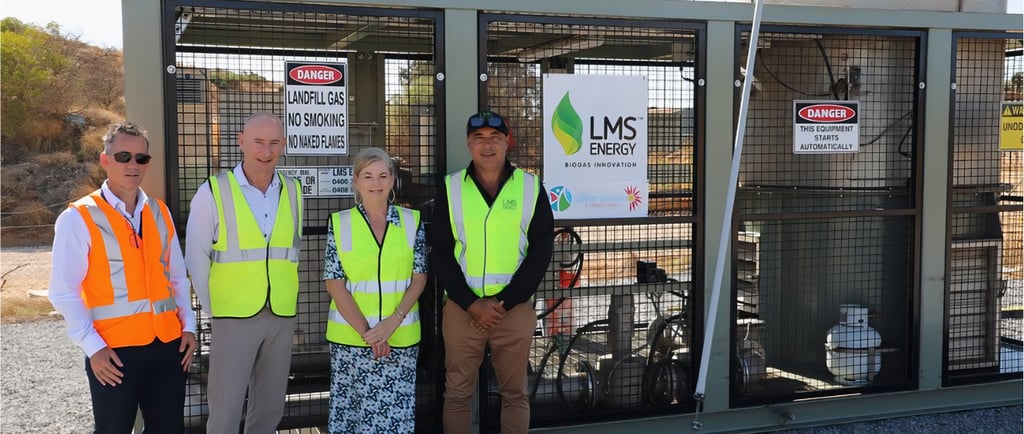
Geraldton is embarking on a significant environmental shift as the city implements new technology to manage its carbon footprint at the local level. At the heart of this initiative is a sophisticated methane flare system recently installed at the Meru Waste Facility, designed to tackle the significant volume of greenhouse gases produced by decomposing organic matter. During the last financial year, the facility was responsible for more than 35,582 tonnes of emissions, marking it as the area’s primary contributor to atmospheric pollution. By capturing and burning the methane generated within landfill pits, the city aims to reduce its total emissions by approximately 50%. While $CO_2$ is frequently the focus of climate discussions, methane is a far more aggressive greenhouse gas, estimated to be approximately $28 \times$ more potent in its heat-trapping capabilities over a century. By converting this methane into $CO_2$ through a controlled combustion process, the project significantly mitigates the immediate environmental impact. This move serves as a critical pillar for the region’s broader strategy to reach net-zero targets, even as it sparks a wider community conversation regarding the balance between large-scale industrial solutions and the need for enhanced local waste management services like curbside recycling.
The infrastructure of waste management in Western Australia is evolving with the expansion of the Meru Waste Facility, which is now integrating advanced gas capture technology to meet modern sustainability standards. As waste breaks down in anaerobic landfill environments, it releases high concentrations of unodourised methane. The newly commissioned flare is scheduled to be fully operational by the middle of the year, providing a technical bridge toward a more sustainable future for the region. This infrastructure represents a shift toward active mitigation, where trash tailings are used to fuel a flare that slashes the potency of the site's environmental output. While physical expansion is also underway—with a new landfill site expected to be completed in the coming months—the project underscores the complex technical challenges of modern urban planning. The installation of this biogas innovation is a disciplined approach to sustainability, ensuring that even as the community grows, its environmental legacy is managed through the systematic reduction of high-impact gases. Transitioning from raw methane release to controlled $CO_2$ emissions is a practical, science-backed method for reducing the carbon footprint of municipal operations while the city continues to develop its long-term recycling and waste-reduction strategies.
All rights belong to their respective owners. This article contains references and insights based on publicly available information and sources. We do not claim ownership over any third party content mentioned.
DAILY WA © 2025
Daily WA Online is an independent news and media platform covering Western Australia. Owned by TMFS International Pty Ltd., we publish local stories, business insights, lifestyle features, and community voices for the digital era.