
Historic 49°C Peak: Western Australia Endures World’s Hottest Day
Western Australia swelters through historic January highs, authorities warn of "catastrophic" conditions and urge residents to seek immediate cooling.
NEWS & CURRENT AFFAIRS
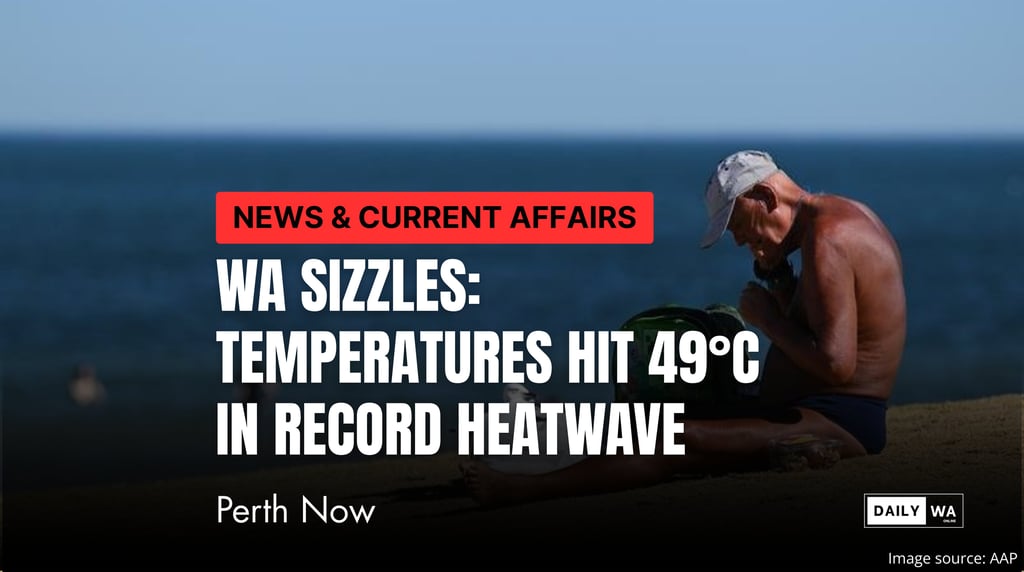
The extreme temperatures currently sweeping across Western Australia have reached a staggering 49 degrees Celsius, marking one of the most intense heat events in the region's recorded history. This thermal surge is not just a temporary spike but a prolonged period of oppressive heat that is testing the limits of infrastructure and the endurance of the local population. As the mercury climbs toward the 50-degree mark, the atmospheric conditions have become increasingly volatile, with dry winds and clear skies exacerbating the intensity of the sun’s rays. This level of heat poses a significant challenge for the environment, leading to increased evaporation rates and a heightened risk of fire across the state's vast landscapes. Residents are being warned that these conditions are exceptional even by Australian standards, and the sheer scale of the heatwave is affecting everything from transport networks to local ecosystems that are struggling to adapt to such rapid and extreme fluctuations in temperature.
Beyond the immediate physical discomfort, the 49-degree heatwave in Western Australia is placing an immense strain on the power grid as air conditioning units work overtime to maintain habitable indoor environments. Energy providers are monitoring the situation closely, urging citizens to be mindful of their consumption while prioritizing safety. The economic impact of such weather events is often overlooked, but the cessation of outdoor labor and the disruption to agricultural sectors during these peak temperatures can be significant. Throughout the state, from the northern coastal towns to the southern interior, the narrative is the same: a relentless sun and a landscape that feels as though it is under a magnifying glass. Emergency services are on high alert, and the public is being encouraged to stay indoors during the peak UV hours to avoid the most dangerous effects of the thermal peak, which usually occurs in the mid-afternoon.
The scientific community is closely observing these record-breaking figures in Western Australia, as they align with broader trends of increasing frequency and severity in heatwaves across the continent. A temperature of 49 degrees Celsius is a critical threshold that moves beyond "very hot" into the territory of extreme environmental stress. This phenomenon is a stark reminder of the changing climate patterns that are redefining the Australian summer. As the heat persists, the focus remains on long-term resilience and how urban planning and public health strategies must evolve to protect citizens from future events of this magnitude. For now, the priority remains hydration, cooling, and community vigilance. The resilience of Western Australians is being showcased as they navigate this historic weather event, waiting for the eventual reprieve that a shift in wind patterns or a coastal breeze might finally bring to the parched and sun-baked terrain.
All rights belong to their respective owners. This article contains references and insights based on publicly available information and sources. We do not claim ownership over any third party content mentioned.
DAILY WA © 2025
Daily WA Online is an independent news and media platform covering Western Australia. Owned by TMFS International Pty Ltd., we publish local stories, business insights, lifestyle features, and community voices for the digital era.