
Inside Queensland’s Energy Storage Technology Hub Driving Australia’s Battery Future
An inside look at Queensland’s Energy Storage Technology Hub reveals how local innovation, research, and manufacturing are being positioned to strengthen Australia’s growing energy storage industry.
TECHNOLOGY & INNOVATION
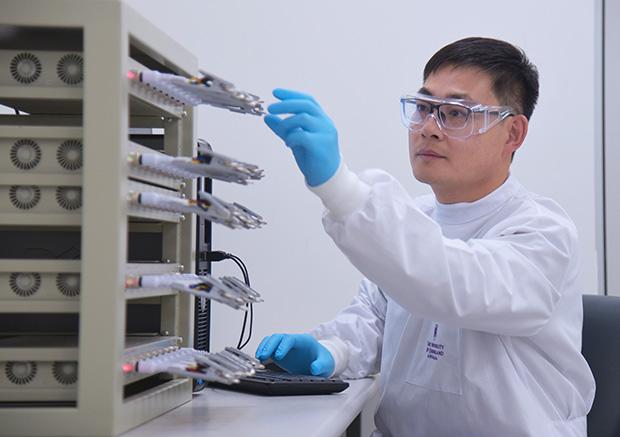
The future of energy is not only about how power is generated. It is increasingly about how it is stored, managed, and deployed when it is needed most. That reality is taking shape inside the Queensland Energy Storage Technology Hub, where work is underway to support local battery innovation and manufacturing. The hub offers a clear signal that Australia’s energy transition is entering a more industrial and capability driven phase.
Energy storage has moved from a supporting role to a central pillar of modern power systems. As renewable generation expands, the ability to store energy reliably becomes essential to maintaining grid stability and meeting demand. The Queensland hub is designed to address this challenge directly by accelerating research, testing, and commercial readiness for next generation battery technologies. It reflects a strategic shift from dependence on imported solutions toward building domestic expertise.
Inside the facility, researchers and engineers are focused on improving battery performance, safety, and scalability. This includes testing materials, refining manufacturing processes, and validating systems under real world conditions. These steps are critical to bridging the gap between laboratory innovation and commercial deployment. Without this intermediary capability, promising technologies often stall before reaching market.
The emphasis on local manufacturing is particularly significant. Global supply chains for batteries are increasingly competitive and geopolitically sensitive. By developing domestic capability, Australia reduces exposure to external disruption while creating new industrial opportunities. Battery manufacturing also supports skilled employment, knowledge transfer, and long term economic diversification, especially as traditional energy sectors evolve.
Queensland’s role in this effort reflects its broader energy ambitions. The state is positioning itself as a leader in clean energy infrastructure, supported by renewable resources and industrial capability. The hub complements this strategy by ensuring that storage technology keeps pace with generation growth. Energy systems are only as resilient as their weakest link, and storage is now a defining factor.
There is also a national dimension to the work being done. Australia’s energy transition is not uniform across states, yet storage solutions developed at the hub have relevance far beyond Queensland. Grid scale batteries, community storage, and industrial applications all stand to benefit from advances made here. The hub therefore acts as a shared asset within the broader national energy ecosystem.
From a policy perspective, the facility illustrates how targeted investment can unlock system wide benefits. Rather than relying solely on market adoption, governments are supporting enabling infrastructure that de risks innovation and accelerates commercial uptake. This approach recognises that energy transformation requires more than ambition. It requires practical platforms where ideas can be tested, refined, and scaled.
The work also responds to growing business demand. Energy intensive industries are seeking greater control over costs and reliability. Storage solutions offer the ability to smooth price volatility, manage peak demand, and support electrification. As these pressures increase, the value of locally developed and tested technology becomes more pronounced.
At TMFS, we observe similar patterns across sectors undergoing structural change. Long term resilience is built by investing early in capability rather than reacting late to constraint. The Energy Storage Technology Hub reflects this principle in action. It is not just preparing for future demand. It is shaping the conditions under which that future can be delivered.
The hub also highlights a shift in how Australia approaches innovation. Rather than exporting raw materials and importing finished technology, there is growing recognition of the value in moving further along the value chain. Energy storage provides a clear opportunity to do so, combining resources, research, and manufacturing into a coherent strategy.
As work continues inside the Queensland facility, its impact will be measured not only in prototypes and test results, but in confidence. Confidence that Australia can build the systems it needs. Confidence that innovation can translate into industry. And confidence that the energy transition can be supported by capability developed at home.
Queensland’s Energy Storage Technology Hub stands as a practical expression of that ambition. It shows how preparation, investment, and coordination can turn energy challenges into long term opportunity, strengthening Australia’s position in a rapidly evolving global energy landscape.
All rights belong to their respective owners. This article contains references and insights based on publicly available information and sources. We do not claim ownership over any third party content mentioned.
DAILY WA © 2025
Daily WA Online is an independent news and media platform covering Western Australia. Owned by TMFS International Pty Ltd., we publish local stories, business insights, lifestyle features, and community voices for the digital era.