
Inside the Western Harbour Tunnel Project Revealing the Scale of Australia’s Deepest Infrastructure Build
An exclusive underground look at the Western Harbour Tunnel project reveals vast caverns and complex engineering, highlighting the ambition and scale of one of Australia’s most significant transport developments.
TECHNOLOGY & INNOVATION
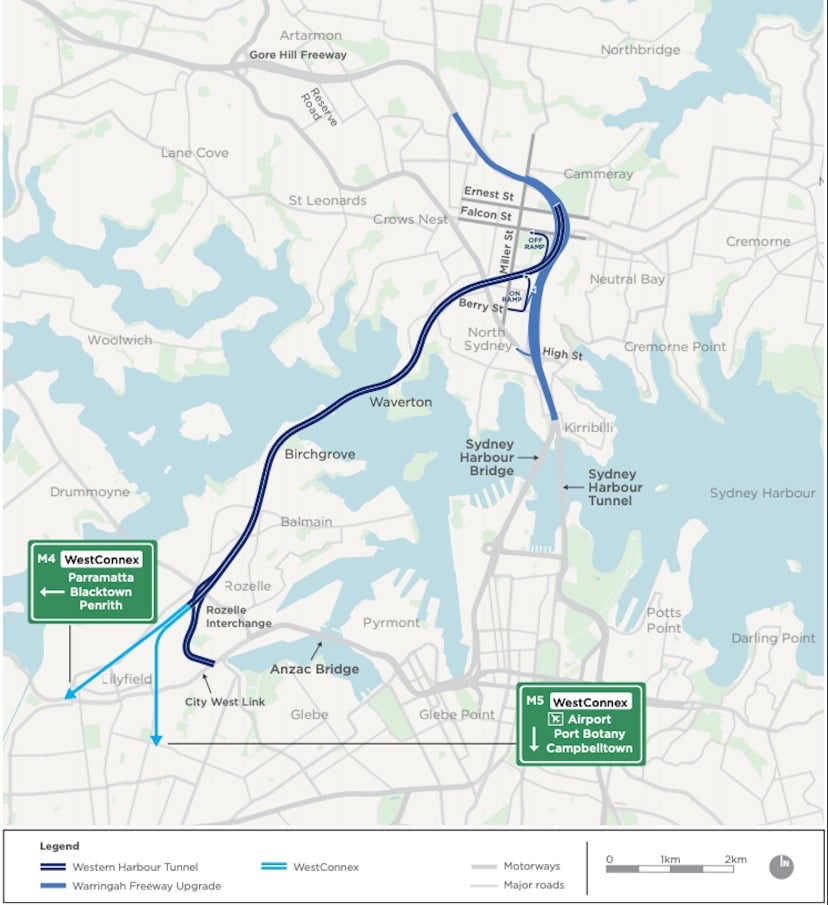
Some infrastructure projects are defined not by what is visible, but by what lies beneath. The Western Harbour Tunnel project belongs firmly in that category. With 7NEWS descending fifty metres underground to capture an exclusive view, the public has been offered a rare glimpse into the immense scale of construction unfolding far below the surface. What has been revealed is not just a tunnel, but one of the most ambitious feats of engineering ever undertaken in Australia.
Hidden beneath layers of rock and harbour floor, workers are carving out some of the largest man made caverns in the country. These underground chambers are vast in dimension, designed to house complex tunnel systems, safety infrastructure, and ventilation networks that will support traffic for decades to come. Standing inside them offers a sense of scale that challenges conventional understanding of construction. The caverns are closer in size to underground cathedrals than transport corridors.
The Western Harbour Tunnel is a cornerstone of Sydney’s long term transport strategy, intended to ease congestion, improve freight movement, and future proof the road network as population growth continues. Achieving this requires not only surface planning, but extraordinary subterranean precision. Excavation at such depth demands constant monitoring of ground stability, water pressure, and structural integrity, all while maintaining strict safety standards for workers operating in confined conditions.
Engineering teams are working within a geological environment shaped by millions of years of natural forces. Every blast, cut, and reinforcement must be calculated with exacting accuracy. The caverns being formed are the result of thousands of individual decisions made daily by geotechnical specialists, engineers, and construction crews. Industry experts note that projects of this scale represent the highest tier of construction capability, combining advanced modelling, heavy machinery, and human expertise.
The footage captured underground highlights how modern infrastructure is built with longevity in mind. These spaces are designed not just to accommodate vehicles, but to integrate safety systems, emergency access, and future maintenance requirements. Building at this depth reduces surface disruption while delivering capacity that could not be achieved above ground. It reflects a growing trend in global cities to expand downward as urban density increases.
There is also a workforce story embedded in the project. Hundreds of skilled workers operate below ground each day, many specialising in tunnel boring, rock reinforcement, and underground logistics. These roles demand rigorous training and a strong safety culture. Large scale infrastructure projects like this one help sustain high skill employment and transfer knowledge that strengthens national construction capability over time.
Beyond engineering, the project illustrates how infrastructure investment shapes economic resilience. Major transport links support productivity by reducing travel times, improving supply chain reliability, and connecting economic zones more efficiently. While the construction phase captures attention, the long term value lies in how the tunnel will support movement, trade, and growth well into the future.
From a strategic perspective, the Western Harbour Tunnel represents a commitment to building infrastructure that anticipates future demand rather than reacting to congestion once it becomes unmanageable. It demonstrates how planning horizons measured in decades require bold decisions today, often carried out in environments the public never sees.
At TMFS, we recognise the parallels between projects of this nature and effective long term strategy across all sectors. Success depends on foresight, disciplined execution, and investment in systems that may remain invisible but are essential to performance. Underground infrastructure embodies this principle perfectly. When done well, it supports daily life without demanding attention, yet its absence would be immediately felt.
As construction continues beneath Sydney Harbour, the images from fifty metres underground offer more than visual intrigue. They provide perspective on the scale of effort required to keep cities moving and economies functioning. The caverns taking shape are not just voids in rock. They are foundations for future mobility, built with patience, precision, and long term intent.
All rights belong to their respective owners. This article contains references and insights based on publicly available information and sources. We do not claim ownership over any third party content mentioned.
DAILY WA © 2025
Daily WA Online is an independent news and media platform covering Western Australia. Owned by TMFS International Pty Ltd., we publish local stories, business insights, lifestyle features, and community voices for the digital era.