
Iran Launches Retaliatory Attacks After US Strikes Over Helicopter Incident
Iran has launched drone and missile attacks against US-linked military targets following American retaliatory strikes related to the downing of a US Apache helicopter near the Strait of Hormuz.
NEWS & CURRENT AFFAIRS
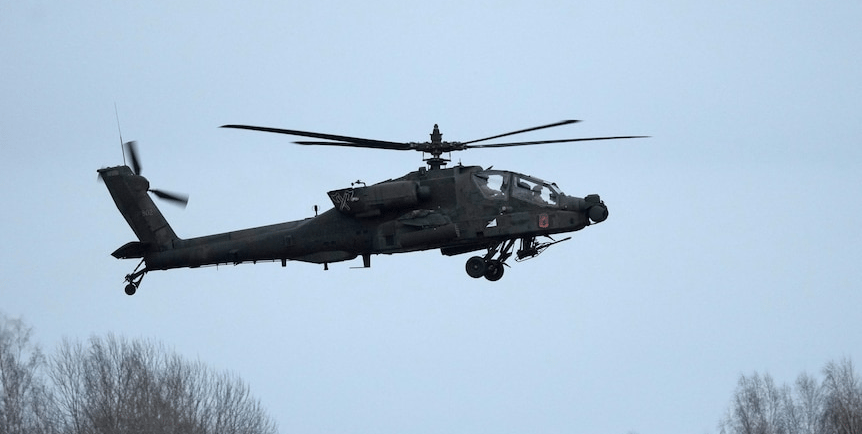
The conflict between Iran and the United States has intensified following a series of retaliatory military actions linked to the downing of a US Apache helicopter near the Strait of Hormuz. (Reuters)
According to US officials, the helicopter was brought down during operations near the strategically important waterway. Both crew members were rescued safely. In response, US Central Command carried out what it described as "self-defense" strikes against nearly 20 Iranian military-related targets, including radar installations, air-defense systems, and command facilities. (CBS News)
Iran subsequently launched retaliatory drone and missile attacks against US military facilities in the region. Iranian state media and military sources reported attacks targeting the US Navy's Fifth Fleet headquarters in Bahrain, as well as installations in Kuwait and Jordan. (ABC News)
What Happened?
The escalation unfolded rapidly:
A US Apache helicopter was downed near the Strait of Hormuz. (Business Insider)
The US launched retaliatory strikes against Iranian military targets. (CBS News)
Iran responded with missile and drone attacks on US-linked military sites across the Gulf region. (The Guardian)
Regional air defenses reportedly intercepted many incoming projectiles, and early reports indicated limited damage and no confirmed casualties at several targeted locations. (The Guardian)
Why the Strait of Hormuz Matters
The Strait of Hormuz is one of the world's most important energy corridors, carrying a significant share of global oil exports.
Any military confrontation in or around the strait has the potential to disrupt shipping, increase oil prices, and create broader economic consequences worldwide. Recent market reactions have already included rising oil prices and increased investor concern about inflation risks. (The Guardian)
Diplomatic Outlook
Despite the military exchanges, both Washington and Tehran have continued to signal some interest in avoiding a full-scale war. US President Donald Trump has described the strikes as a proportional response while still expressing support for diplomatic negotiations. Iranian officials have also indicated they remain open to diplomacy while warning of further retaliation if attacks continue. (Axios)
Global Concerns
Governments across the region and around the world are closely monitoring the situation amid fears that further escalation could destabilize the Gulf and affect global energy markets. Military analysts note that while both sides appear to be calibrating their responses, the risk of miscalculation remains significant. (Reuters)
The latest exchange marks one of the most serious direct confrontations between Iran and the United States in recent months. While both countries have so far described their actions as limited and retaliatory, the situation remains highly fluid.
The coming days will likely determine whether diplomatic efforts can contain the crisis or whether the conflict broadens further across the Middle East. (The Guardian)
This article is based on publicly reported developments available at the time of writing. Events may continue to evolve as new information emerges.
DAILY WA © 2025
Daily WA Online is an independent news and media platform covering Western Australia. Owned by TMFS International Pty Ltd., we publish local stories, business insights, lifestyle features, and community voices for the digital era.