
Iran Warns It Has ‘Not Even Started’ in Escalating Hormuz Standoff
Iran has issued a stark warning amid rising tensions in the Strait of Hormuz, signalling potential escalation as clashes with the US intensify and global markets react.
NEWS & CURRENT AFFAIRS
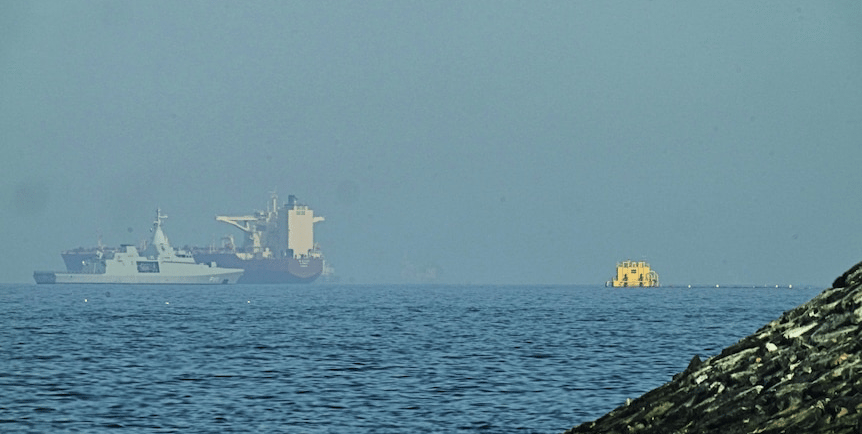
Tensions in the Middle East have taken another sharp turn, with Iranian officials warning that the current conflict in the Strait of Hormuz is only in its early stages.
Senior Iranian figure Mohammad Bagher Ghalibaf said the country has “not even started” in its confrontation with the United States, suggesting further escalation could be ahead.
The warning comes as clashes intensify between Iran and US-led forces over control of the Strait of Hormuz, one of the world’s most critical energy chokepoints. Roughly a fifth of global oil supply normally passes through the narrow waterway, making any disruption immediately felt worldwide.
Recent developments highlight how serious the situation has become:
The US has launched operations to escort ships through the strait
Iran has responded with threats, drone strikes, and maritime actions
Ships and ports in the region have reportedly been attacked or damaged
Multiple countries are now urging de-escalation
The crisis stems from the broader conflict that erupted earlier in 2026, with Iran effectively restricting or controlling access to the strait and the US attempting to reopen it through military operations.
Iran’s latest statement signals a shift in tone from warning to deterrence. By claiming it has “not even begun,” officials appear to be indicating that more aggressive actions remain on the table if pressure continues.
The implications go far beyond the region.
Oil prices have already shown volatility, and economists warn that prolonged disruption could drive global inflation higher and strain supply chains.
For countries like Australia, the effects are indirect but significant. Higher fuel costs, inflation pressures, and market instability are already feeding into economic decisions, including interest rate expectations.
At the same time, diplomatic efforts are struggling to keep pace. Mediation attempts involving regional and global powers have yet to produce a breakthrough, and both sides continue to trade accusations while preparing for further confrontation.
What makes this moment particularly fragile is the combination of military activity and economic stakes. The Strait of Hormuz is not just a strategic location. It is a pressure point for the global economy.
At TMFS, the key takeaway is simple. This is no longer just a regional dispute. It is a situation with global consequences, and the warning from Iran suggests the peak of escalation may not have been reached yet.
DAILY WA © 2025
Daily WA Online is an independent news and media platform covering Western Australia. Owned by TMFS International Pty Ltd., we publish local stories, business insights, lifestyle features, and community voices for the digital era.