
Local Chef Launches Free Cooking Classes to Support Low Income Families
A local chef has opened free cooking classes for low income families, aiming to improve food skills, confidence, and access to nutritious meals through practical, community focused education.
PEOPLE & COMMUNITY
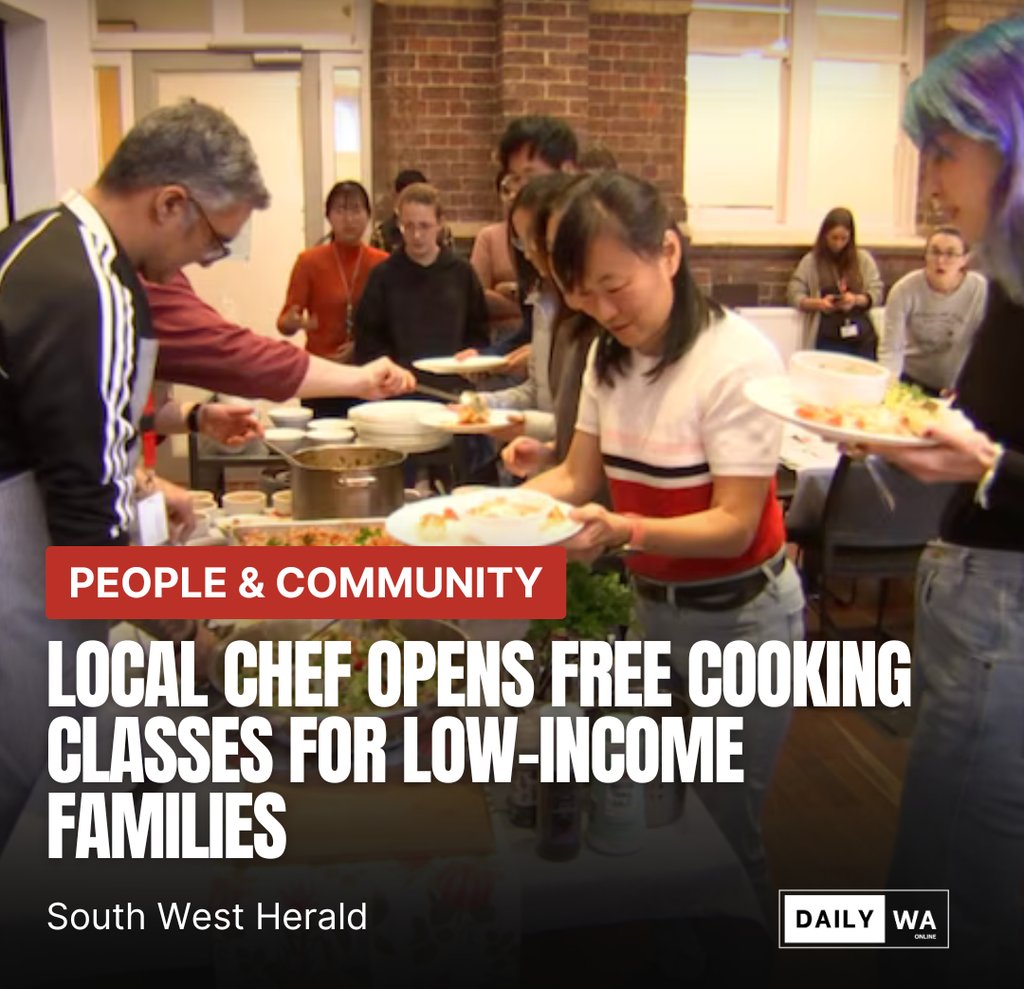
A simple idea is making a meaningful difference in the lives of families across Western Australia’s south west. A local chef has opened free cooking classes for low income households, transforming a professional skillset into a practical community resource focused on dignity, nutrition, and empowerment.
The classes are designed to remove common barriers that prevent families from cooking healthy meals at home. Cost, confidence, and time are frequent challenges, particularly as food prices rise and budgets tighten. By offering hands on instruction at no cost, the program creates space for learning without pressure or judgement.
Participants are taught how to prepare affordable, nutritious meals using basic ingredients and equipment. Sessions focus on practical techniques such as meal planning, reducing waste, stretching ingredients across multiple meals, and making healthier choices without increasing grocery bills. The emphasis is on realistic cooking for real households, not aspirational cuisine.
For many families, the benefits extend beyond the kitchen. Learning together builds confidence and routine, while shared meals strengthen family connection. Parents have described feeling more in control of household food choices, and children gain early exposure to cooking skills that can shape lifelong habits.
The initiative also addresses food insecurity in a preventative way. Rather than relying solely on emergency food relief, the classes equip families with tools that improve self sufficiency over time. This approach recognises that long term wellbeing is supported by skills and knowledge as much as by immediate assistance.
Community organisations have welcomed the program, noting its respectful and inclusive design. Participants are not required to disclose personal circumstances beyond eligibility, helping preserve privacy and dignity. The relaxed, supportive environment encourages attendance and repeat participation, which is critical for lasting impact.
The chef behind the program has said the motivation came from seeing how easily professional knowledge could be adapted to meet community need. By stepping outside traditional commercial settings, the classes redefine what local leadership can look like, grounded in service rather than scale.
There is also a wider health dimension. Poor nutrition is closely linked to chronic illness, particularly in communities facing economic pressure. Teaching families how to cook balanced meals contributes to better long term health outcomes, easing pressure on healthcare systems while improving quality of life.
Programs like this often rely on partnerships to succeed. Donations of ingredients, use of community kitchens, and volunteer support help keep costs low and access open. The collaborative model reinforces the idea that food security is a shared responsibility across community, business, and local networks.
At TMFS, we observe that the most effective community initiatives are those that combine practicality with respect. Empowerment based approaches build capability rather than dependency, creating resilience that lasts beyond the program itself.
As demand for the classes grows, organisers are exploring options to expand sessions and reach more families. Interest has already highlighted the scale of need, but also the appetite for solutions that are hands on and human centred.
The free cooking classes stand as a reminder that meaningful change does not always require large systems or complex policy. Sometimes it begins with shared space, practical knowledge, and the decision to use skills in service of others. For families taking part, the impact is measured one meal at a time, with benefits that reach far beyond the kitchen.
All rights belong to their respective owners. This article contains references and insights based on publicly available information and sources. We do not claim ownership over any third party content mentioned.
DAILY WA © 2025
Daily WA Online is an independent news and media platform covering Western Australia. Owned by TMFS International Pty Ltd., we publish local stories, business insights, lifestyle features, and community voices for the digital era.