
Local Logistics Firms Partner on Regional Freight Upgrade to Strengthen Supply Chains
Local logistics companies have formed a new partnership to deliver a regional freight upgrade, aimed at improving efficiency, reliability, and resilience across Western Australia’s remote supply networks.
BUSINESS & ECONOMY
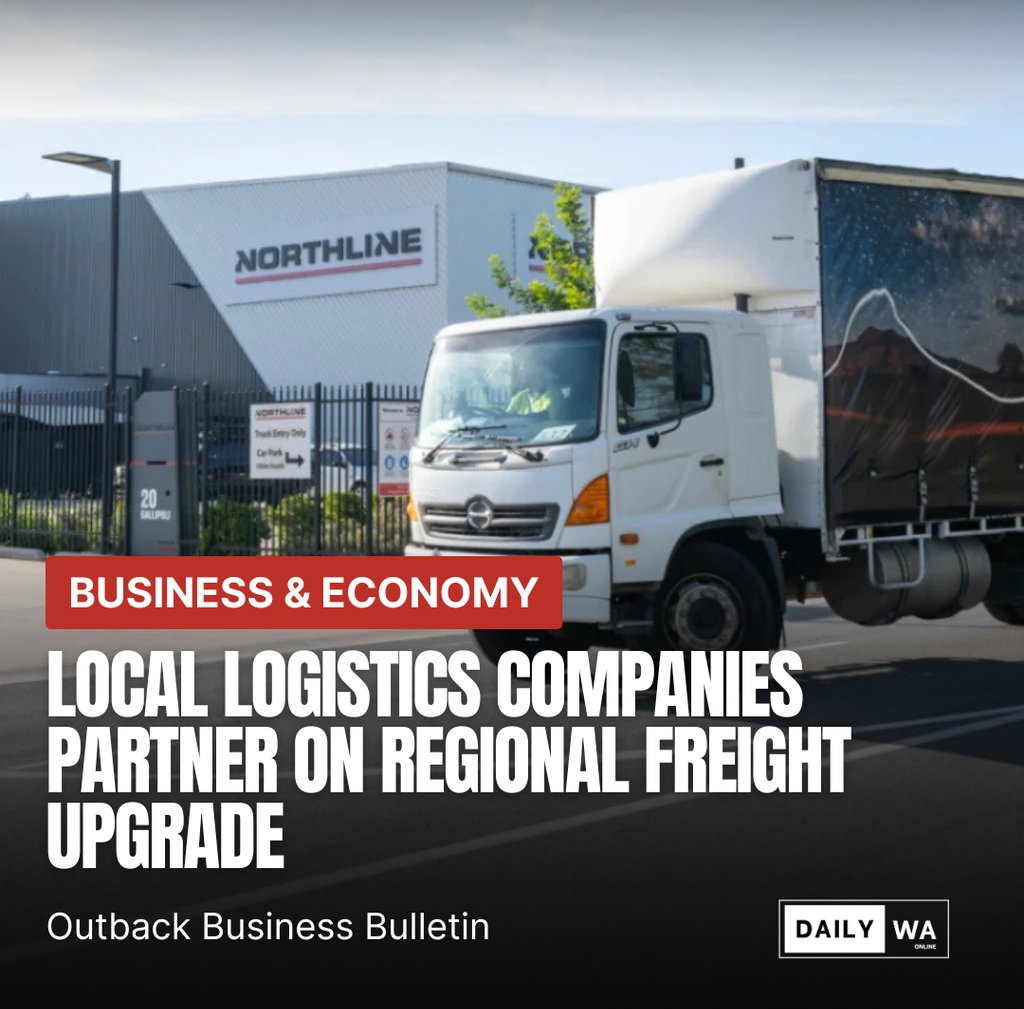
A new partnership between local logistics companies is set to strengthen regional freight capacity across Western Australia, marking a strategic response to growing demand and persistent supply chain challenges. The collaboration focuses on upgrading freight infrastructure and coordination in regional areas where distance, scale, and reliability play a decisive role in economic viability.
Regional freight networks are the backbone of remote economies. From agricultural inputs and mining equipment to food, fuel, and medical supplies, efficient logistics underpin daily life far beyond metropolitan centres. The planned upgrade aims to improve transit times, reduce bottlenecks, and enhance reliability across key regional corridors.
The partnership brings together operators with complementary capabilities, combining local knowledge with operational scale. By aligning scheduling, asset use, and distribution hubs, the companies intend to reduce duplication and improve service consistency. This cooperative approach reflects a broader shift in the logistics sector, where collaboration is increasingly viewed as a competitive advantage rather than a constraint.
Industry representatives say the upgrade will focus on modernising depots, improving fleet utilisation, and integrating digital tracking systems. Better visibility across freight movements allows operators to anticipate disruptions, optimise routes, and respond more quickly to changing conditions. In regions where weather and road access can shift rapidly, this capability is critical.
For businesses operating in regional and remote areas, freight reliability directly affects cost and confidence. Delays can halt production, disrupt exports, and erode margins already under pressure from fuel prices and labour shortages. Strengthening logistics infrastructure helps stabilise these operations, supporting broader regional growth.
The upgrade also carries implications for workforce development. Expanded freight activity supports jobs in driving, warehousing, maintenance, and logistics management. In regional towns, these roles contribute to economic diversity and provide employment pathways that do not rely solely on a single industry.
Local governments have welcomed the partnership, noting that private sector investment complements public spending on roads and transport corridors. While government infrastructure provides the foundation, efficient logistics systems determine how effectively that infrastructure is used. Partnerships like this help close the gap between asset provision and real world performance.
Sustainability considerations are also shaping the upgrade. More efficient routing and shared assets can reduce fuel use and emissions per tonne of freight. While logistics remains energy intensive, incremental efficiency gains deliver both cost and environmental benefits over time.
From a strategic perspective, the partnership reflects growing recognition that regional resilience depends on cooperation. Fragmented freight services can struggle to scale or absorb shocks. Integrated networks are better positioned to handle demand spikes, supply disruptions, and emergency response requirements.
At TMFS, we observe that resilient supply chains are built through alignment rather than isolation. When local operators coordinate rather than compete at every interface, systems become more adaptable and reliable. This principle is particularly relevant in regions where redundancy is limited and failure has outsized impact.
As the freight upgrade progresses, attention will turn to performance outcomes. Reduced delivery times, improved reliability, and stronger service coverage will be key indicators of success. For regional businesses and communities, these improvements translate directly into stability and opportunity.
The partnership between local logistics companies sends a clear signal. Regional freight is not a peripheral issue. It is a central pillar of economic function. Investing in its upgrade strengthens not only supply chains, but the communities and industries that depend on them every day.
All rights belong to their respective owners. This article contains references and insights based on publicly available information and sources. We do not claim ownership over any third party content mentioned.
DAILY WA © 2025
Daily WA Online is an independent news and media platform covering Western Australia. Owned by TMFS International Pty Ltd., we publish local stories, business insights, lifestyle features, and community voices for the digital era.