
Lost in Translation: How Australian Language Turns Everyday Talk into Comedy
A stand up comedy clip playfully unpacks the quirks of Australian language, showing how everyday expressions can confuse, amuse, and completely change meaning depending on who is listening.
PEOPLE & COMMUNITY
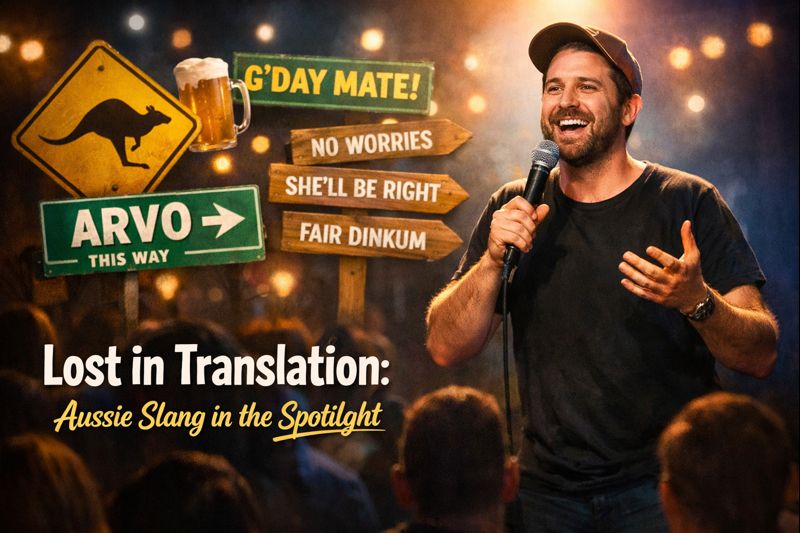

Language is one of the most powerful social tools we have, yet it is also one of the easiest to misunderstand. Nowhere is this more evident than in Australian everyday speech. A recent stand up comedy clip leans into this reality, exploring how local expressions, slang, and tone can turn ordinary conversations into moments of confusion, especially when heard through unfamiliar ears. What begins as humour quickly reveals something deeper about identity, communication, and cultural shorthand.
Australian language is famously informal. Words are shortened, meanings are implied, and context often matters more than grammar. The comedy works because it exposes how phrases that feel completely normal to locals can sound baffling, blunt, or even alarming to outsiders. Expressions intended as friendliness or understatement can easily be misread when stripped of cultural context. The joke lands because the audience recognises the truth behind it.
The clip highlights how much Australian communication relies on shared understanding. Phrases can carry multiple meanings depending on tone, timing, and relationship. Sarcasm is often subtle. Compliments may sound like insults. Serious situations are softened with humour. This creates a linguistic environment that feels effortless to those raised within it, yet surprisingly complex to those encountering it for the first time.
Comedy thrives in this space because misunderstanding is universal. Everyone has experienced a moment where words failed to land as intended. By focusing on everyday expressions rather than exaggerated stereotypes, the clip connects across backgrounds. It shows that language is not just vocabulary. It is culture in motion, shaped by history, environment, and social norms.
There is also an unspoken workplace dimension to the humour. Australian offices often blend casual language with professional settings, creating ambiguity for newcomers. What sounds relaxed to one person may feel unclear or inappropriate to another. The comedy gently exposes how meaning can shift when informal language meets formal expectation, without resorting to criticism or instruction.
The strength of the clip lies in its restraint. It does not explain the jokes. It lets recognition do the work. Laughter comes from familiarity rather than spectacle. This mirrors how language itself operates. Meaning is rarely spelled out. It is inferred, negotiated, and occasionally misunderstood.
From a broader cultural perspective, the clip reinforces how language shapes belonging. Understanding local expressions signals inclusion. Missing the meaning can create distance. Comedy becomes a bridge here, offering a shared space where misunderstanding is safe, acknowledged, and even celebrated. It reminds audiences that confusion is not failure. It is part of learning how people connect.
At TMFS, we often observe how communication styles influence trust and effectiveness across organisations and communities. Language choices shape perception long before intent is clarified. Humour that brings these dynamics to the surface encourages reflection without judgement. It helps people recognise the invisible rules they follow and the assumptions they make about others.
The clip ultimately succeeds because it captures something ordinary and makes it visible. Australian language, with all its quirks, works because people agree on its meaning most of the time. Comedy steps in during the moments when that agreement breaks down. In doing so, it reveals how fragile and fascinating everyday communication really is.
When meanings get lost in translation, laughter often fills the gap. And sometimes, that laughter is what helps people understand each other better than words ever could.
All rights belong to their respective owners. This article contains references and insights based on publicly available information and sources. We do not claim ownership over any third party content mentioned.
DAILY WA © 2025
Daily WA Online is an independent news and media platform covering Western Australia. Owned by TMFS International Pty Ltd., we publish local stories, business insights, lifestyle features, and community voices for the digital era.