
Major Delays Follow Crash on Roe Highway in Perth’s South East
A serious crash on Roe Highway has caused significant traffic delays in Perth’s south east, disrupting peak hour travel and prompting warnings for motorists to expect extended congestion.
TECHNOLOGY & INNOVATION
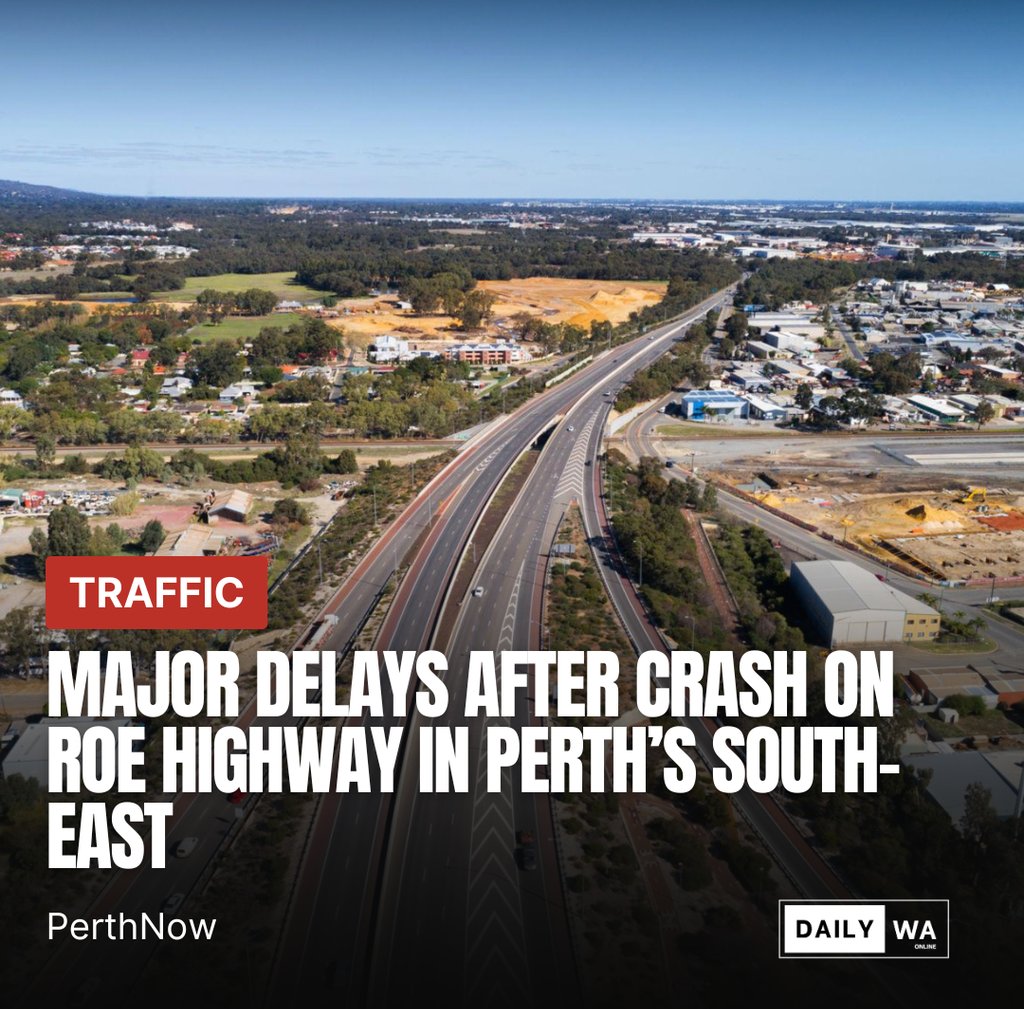
A routine commute quickly turned into gridlock for motorists travelling through Perth’s south east after a crash on Roe Highway triggered major delays.
Emergency services responded to the incident during a busy traffic period, with lanes affected and vehicles forced to slow or divert. Congestion built rapidly, extending beyond the immediate crash site and impacting connecting routes. For many drivers, what would normally be a predictable journey became an exercise in patience.
Authorities have not yet released full details regarding the number of vehicles involved or the extent of injuries, but traffic management crews were deployed to control flow and clear debris. Motorists were urged to seek alternative routes where possible and allow additional travel time.
Roe Highway is a critical arterial road linking industrial zones, freight corridors, and residential suburbs. Disruption along this stretch often has ripple effects, particularly during peak hours when traffic volumes are already high. Even a single lane closure can create bottlenecks that take hours to ease.
Incidents like this highlight the fragility of urban traffic networks. When a key artery is compromised, surrounding roads absorb overflow, placing additional strain on intersections and feeder routes. Delays cascade quickly, affecting not only private motorists but also commercial transport and public services.
Road safety authorities consistently remind drivers to reduce speed, maintain safe following distances, and remain alert, especially during high traffic periods. Sudden braking and lane changes in congested conditions can increase the risk of secondary collisions.
Weather and road surface conditions are also factors often examined following crashes. Even minor environmental changes can alter braking distances and visibility, compounding risk on busy highways.
For businesses reliant on timely deliveries, traffic disruptions carry financial implications. Freight delays, missed appointments, and disrupted schedules demonstrate how interconnected urban mobility has become.
In Perth, continued population growth has intensified traffic demand across major corridors. Infrastructure upgrades have expanded capacity in some areas, yet peak period congestion remains a persistent challenge.
Authorities typically review serious traffic incidents to assess contributing factors and identify potential safety improvements. These can range from signage adjustments to intersection redesigns or speed management strategies.
At TMFS, we observe that transport resilience depends not only on infrastructure investment but also on driver behaviour and responsive incident management. Quick coordination between emergency services and traffic controllers often determines how rapidly conditions return to normal.
As crews work to clear the scene on Roe Highway, motorists are advised to remain cautious and monitor official traffic updates. Delays may ease gradually, but residual congestion can persist even after lanes reopen.
Today’s disruption serves as a reminder of how swiftly routine travel can shift. In a city built around movement, safety and patience remain essential companions on the road.
All rights belong to their respective owners. This article contains references and insights based on publicly available information and sources. We do not claim ownership over any third party content mentioned.
DAILY WA © 2025
Daily WA Online is an independent news and media platform covering Western Australia. Owned by TMFS International Pty Ltd., we publish local stories, business insights, lifestyle features, and community voices for the digital era.