
Major Retail Investment Announced for Perth’s Fast Growing Suburban Corridor
A significant new retail investment has been announced for one of Perth’s fastest growing suburban corridors, signalling confidence in population growth, consumer demand, and long term urban expansion.
BUSINESS & ECONOMY
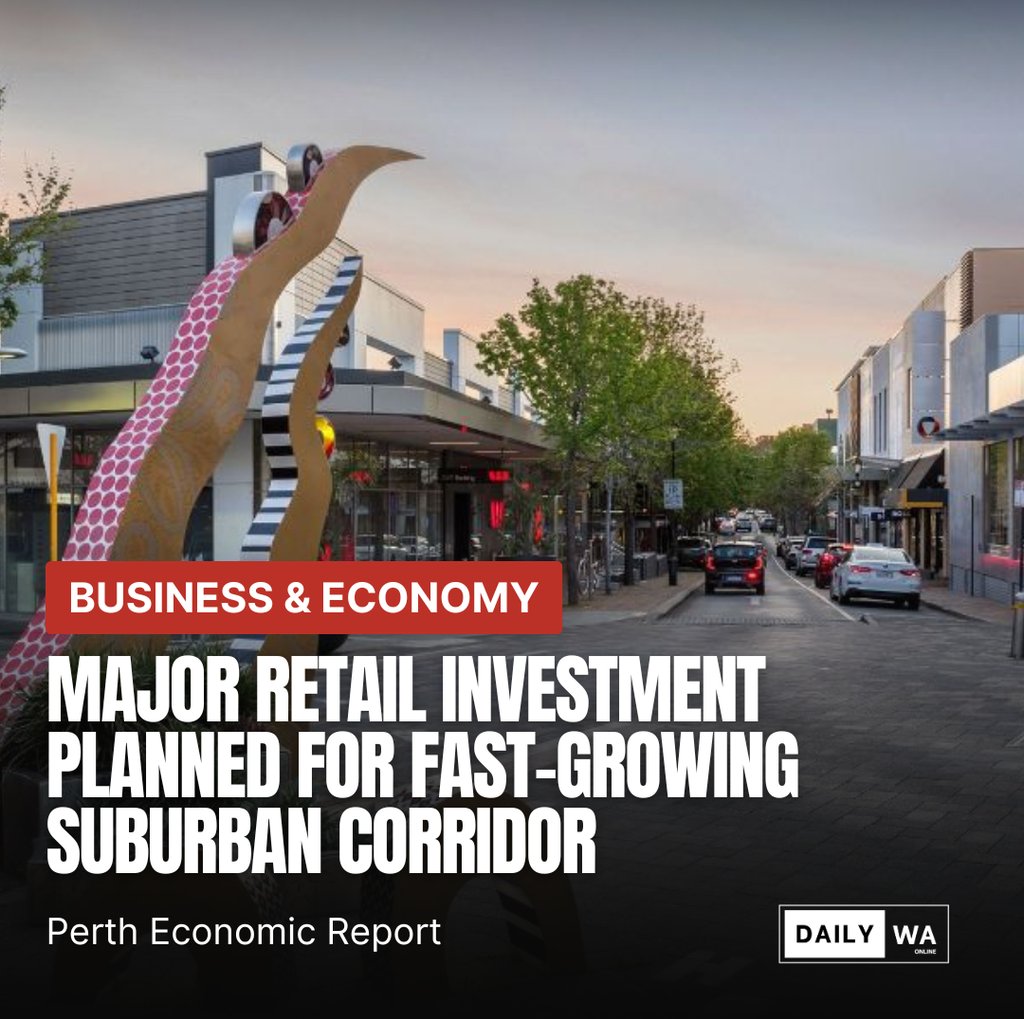
Perth’s outer suburbs are emerging as the next frontier for large scale commercial development, with a major retail investment planned for a rapidly expanding suburban corridor. The project reflects growing confidence in population growth, household spending, and the long term economic potential of areas once considered peripheral to the metropolitan core.
Developers say the investment is designed to meet rising demand driven by sustained residential growth, new housing estates, and improved transport links. As families move further from the city in search of affordability and space, retail and service infrastructure must follow. This project aims to anchor that shift, bringing employment, convenience, and economic activity closer to where people live.
The proposed development is expected to include a mix of retail outlets, dining precincts, and essential services, creating a local commercial hub rather than a single purpose shopping destination. This approach aligns with broader urban planning trends that prioritise walkability, accessibility, and community centred design.
For the local economy, the investment carries immediate and long term benefits. Construction activity will support jobs and suppliers, while ongoing operations are expected to create permanent employment across retail, hospitality, and management roles. These opportunities are particularly important in growth corridors where job creation often lags residential expansion.
Retail analysts note that suburban investment decisions are increasingly data driven. Population density, household income trends, and spending patterns now shape where capital is deployed. Fast growing corridors that demonstrate stable demand and infrastructure readiness are attracting attention from major investors seeking long horizon returns.
The project also reflects a shift in consumer behaviour. Post pandemic patterns have reinforced the value of local centres that reduce travel time and integrate services. Suburban residents are spending more locally, favouring convenience and community connection over distant, large scale retail trips. Investment that responds to this preference is more likely to deliver sustainable returns.
Local governments have welcomed the announcement, viewing it as validation of planning strategies aimed at balancing housing growth with economic infrastructure. Retail and commercial development helps reduce pressure on transport networks by limiting the need for long commutes, while also strengthening local revenue bases.
However, challenges remain. Rapid growth can strain existing roads, utilities, and community services if development is not carefully coordinated. Authorities have indicated that planning approvals will focus on ensuring the project integrates with transport, parking, and public space requirements to avoid congestion and amenity loss.
From a broader perspective, the investment highlights Perth’s evolving urban geography. Economic activity is no longer concentrated solely around the CBD. Growth corridors are becoming self sustaining nodes with their own employment centres, services, and identity. Retail development often acts as a catalyst for this transition.
At TMFS, we observe that successful suburban investment depends on alignment between demographics, infrastructure, and long term planning. Projects that anticipate how communities will live, work, and spend over decades are better positioned to endure beyond initial growth phases.
As planning progresses, attention will turn to timelines, tenant mix, and community engagement. Residents will be watching closely to see how the development complements local character while delivering promised benefits.
The major retail investment planned for this fast growing suburban corridor signals more than commercial confidence. It reflects a broader shift in how Perth grows, decentralising opportunity and embedding economic activity closer to where communities are forming. In a city shaped by expansion, such investments help determine whether growth feels connected or fragmented.
All rights belong to their respective owners. This article contains references and insights based on publicly available information and sources. We do not claim ownership over any third party content mentioned.
DAILY WA © 2025
Daily WA Online is an independent news and media platform covering Western Australia. Owned by TMFS International Pty Ltd., we publish local stories, business insights, lifestyle features, and community voices for the digital era.