
Major Upgrade Planned for Perth’s Water Infrastructure as Demand and Climate Pressure Rise
A major upgrade to Perth’s water infrastructure grid has been announced, aimed at strengthening supply reliability, reducing system strain, and preparing the city for long term population growth and climate driven challenges.
NEWS & CURRENT AFFAIRS
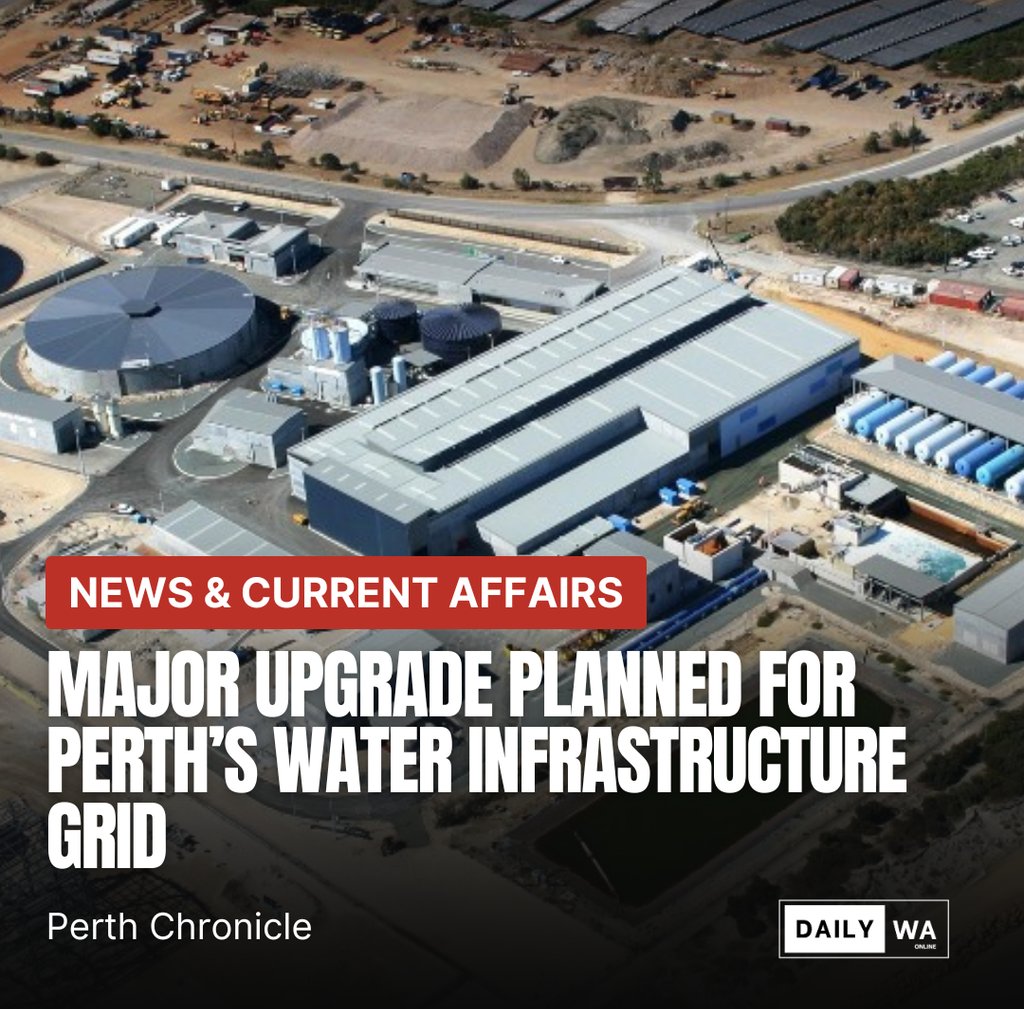
Perth’s water system is entering a critical phase of renewal as authorities outline plans for a major upgrade to the city’s core water infrastructure grid. The move reflects growing recognition that systems built for past demand must now adapt to a future defined by population growth, climate variability, and increasing pressure on existing assets.
Perth’s water network has long been shaped by scarcity. Declining rainfall, reduced inflows to dams, and greater reliance on alternative sources have fundamentally changed how water is captured, treated, and delivered. The planned upgrades aim to strengthen resilience across the grid, ensuring that supply remains reliable even as conditions become more complex.
The works are expected to focus on modernising ageing pipelines, boosting treatment capacity, and improving system efficiency through smarter monitoring and control technology. Much of Perth’s underground water infrastructure has been in place for decades, operating largely unseen until failures occur. Proactive investment is designed to reduce the risk of major disruptions while extending the life of critical assets.
Authorities have indicated that the upgrade will also improve the integration of different water sources, including groundwater, desalination, and recycled water. Diversification has become a cornerstone of Perth’s water strategy, reducing dependence on any single source. Enhancing the grid’s ability to balance and move water between these systems increases flexibility during peak demand and extreme weather events.
The project carries significance beyond engineering. Water security underpins public health, economic activity, and liveability. Construction, industry, and residential development all depend on confidence that essential services will keep pace with growth. For a city projected to continue expanding, infrastructure that lags demand becomes a constraint rather than a support.
Climate change is a central driver of the upgrade. Longer dry periods and more intense heat increase water consumption while limiting natural replenishment. Infrastructure designed for historical climate patterns is increasingly misaligned with current reality. By reinforcing the grid now, planners aim to reduce vulnerability to future shocks rather than responding after failures occur.
Community impact has also been considered in the planning process. Large scale water upgrades can involve roadworks, temporary service interruptions, and construction activity across multiple suburbs. Authorities say staging and communication will be prioritised to minimise disruption, acknowledging that public trust depends on transparency as much as technical delivery.
From a policy perspective, the investment reflects a shift toward preventative infrastructure spending. Water systems rarely attract attention until they break, yet failure carries immediate and widespread consequences. Upgrading before crisis aligns with a broader trend toward resilience focused planning rather than reactive repair.
The economic dimension is equally important. Infrastructure projects of this scale support local employment, engineering capability, and long term operational efficiency. While upfront costs are significant, delayed investment often results in higher repair costs, emergency responses, and lost productivity when systems fail under stress.
Perth’s experience also offers lessons for other cities facing similar pressures. As climate conditions shift, water infrastructure across Australia is being tested. Strategies that combine diversification, modernisation, and demand management are increasingly viewed as essential rather than optional.
At TMFS, we observe that infrastructure resilience is built quietly, long before it is noticed. Effective systems are those that rarely make headlines because they continue to function under pressure. Water infrastructure, perhaps more than any other service, exemplifies this principle.
As planning progresses, attention will turn to timelines, funding, and delivery. The success of the upgrade will be measured not just in capacity added, but in reliability maintained. For Perth residents and businesses, confidence in water security is foundational to daily life and future growth.
The planned upgrade signals a clear intent. Perth is choosing to invest ahead of risk, reinforcing a system that supports every household and industry. In a drying climate, that decision reflects long horizon thinking grounded in practical necessity.
All rights belong to their respective owners. This article contains references and insights based on publicly available information and sources. We do not claim ownership over any third party content mentioned.
DAILY WA © 2025
Daily WA Online is an independent news and media platform covering Western Australia. Owned by TMFS International Pty Ltd., we publish local stories, business insights, lifestyle features, and community voices for the digital era.