
NASA Voyager 1 spacecraft update: How the 49-year-old probe is still alive in deep space
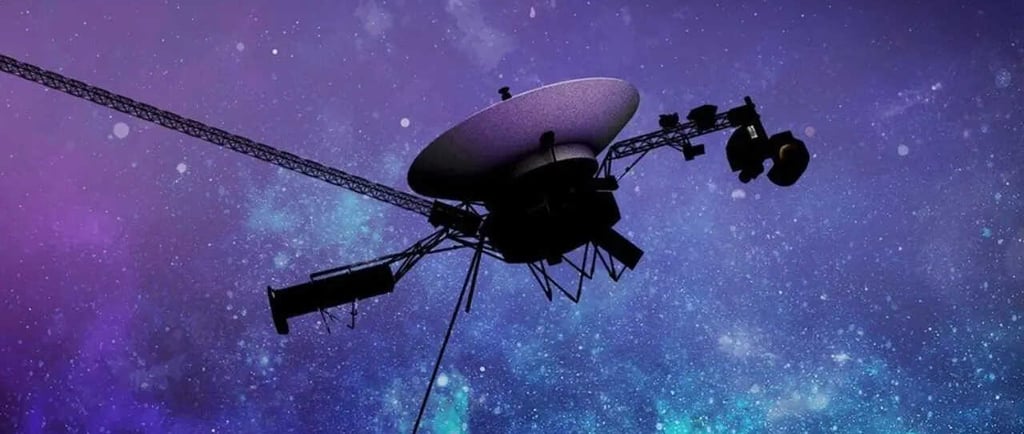
The Voyager 1 spacecraft update continues to amaze scientists, as the nearly 49-year-old probe remains operational while traveling through deep space far beyond our solar system.
TECHNOLOGY & INNOVATION
Voyager 1 Spacecraft Update: How the 49-Year-Old NASA Probe Is Still Alive in Deep Space
The Voyager 1 spacecraft update continues to amaze scientists, as the nearly 49-year-old probe remains operational while traveling through deep space far beyond our solar system.
Launched by NASA in 1977, Voyager 1 has become one of humanity’s most extraordinary engineering achievements. Despite its age, the Voyager 1 spacecraft update shows that the probe is still sending valuable data back to Earth, defying expectations.
Voyager 1 Spacecraft Update Explained
The latest Voyager 1 spacecraft update confirms that the probe is still functioning, even after decades in the harsh environment of space. It is currently located in interstellar space, billions of kilometres away from Earth.
Communication with Voyager 1 takes over 20 hours for a single message to travel one way, highlighting the incredible distance it has covered.
How Voyager 1 Is Still Working
One of the main reasons behind the continued Voyager 1 spacecraft update is its robust engineering. The probe was built with redundancy and long-term durability in mind.
Voyager 1 is powered by a radioisotope thermoelectric generator (RTG), which converts heat from radioactive decay into electricity. This allows it to operate without relying on solar power.
Engineers have also managed power carefully, shutting down non-essential systems to keep the most important instruments running. This strategy has been key to sustaining the Voyager 1 spacecraft update.
Challenges in Deep Space
The Voyager 1 spacecraft update also highlights the challenges of maintaining a spacecraft so far from Earth. Extreme temperatures, radiation, and aging hardware all pose risks.
In recent years, NASA engineers have had to troubleshoot issues remotely, including communication glitches and instrument failures. Each successful fix has extended the life of the mission.
What Voyager 1 Is Discovering
Even after nearly five decades, the Voyager 1 spacecraft update shows that the probe is still contributing to science. It is studying cosmic radiation, magnetic fields, and the environment beyond the heliosphere.
These observations are helping scientists understand the boundary between our solar system and interstellar space, providing insights that were once impossible to obtain.
How Long Can It Last?
The Voyager 1 spacecraft update suggests that the probe may continue operating for a few more years, depending on available power. As its energy supply gradually decreases, more systems will be shut down.
Eventually, Voyager 1 will fall silent, but it will continue traveling through space indefinitely.
A Legacy That Goes Beyond Science
The Voyager 1 spacecraft update is not just about science, it’s also about human curiosity and ambition. The probe carries the famous Golden Record, a message intended for any potential extraterrestrial life.
Voyager 1 represents one of humanity’s greatest achievements, showing what is possible with innovation and determination.
Conclusion
The Voyager 1 spacecraft update is a powerful reminder of the durability of human engineering and the desire to explore beyond our planet. Even after 49 years, the probe continues to operate and expand our understanding of the universe.
As it journeys further into deep space, Voyager 1 remains a symbol of exploration that will outlast generations.
All rights belong to their respective owners. This article contains references and insights based on publicly available information and sources. We do not claim ownership over any third party content mentioned.
DAILY WA © 2025
Daily WA Online is an independent news and media platform covering Western Australia. Owned by TMFS International Pty Ltd., we publish local stories, business insights, lifestyle features, and community voices for the digital era.