New Inspector Tony Brown Granted Powers to Investigate WA Councils and Strengthen Transparency
The appointment of Inspector Tony Brown marks a significant shift in oversight, with expanded powers designed to investigate WA councils and reinforce accountability across local government.
NEWS & CURRENT AFFAIRS
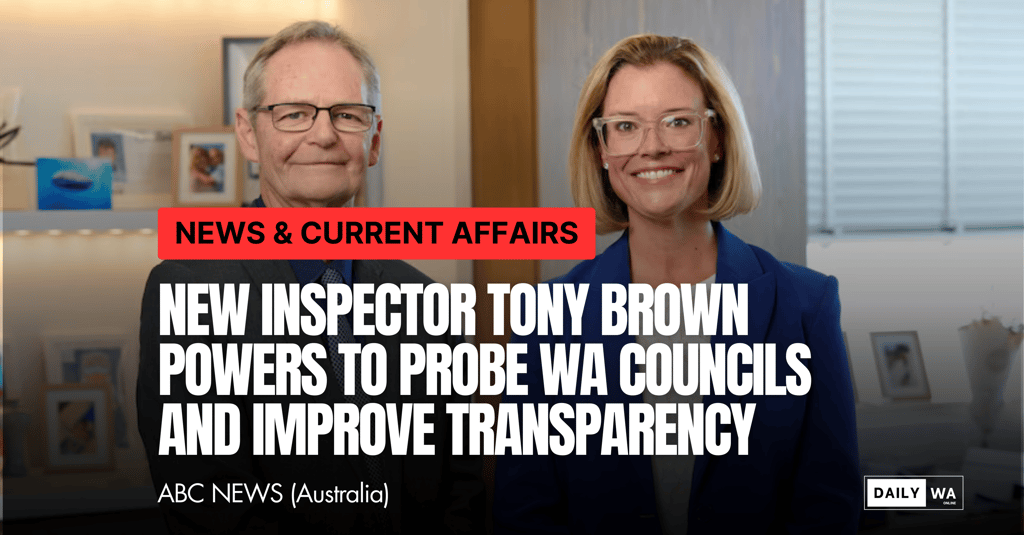
Transparency is the foundation upon which public trust is built. When governance systems operate in the open, confidence grows. When they do not, uncertainty and scepticism take hold. In Western Australia, the appointment of Tony Brown as the new Inspector of Local Government, with strengthened powers to probe council operations, signals a decisive step toward restoring and reinforcing trust in local governance. This development reflects a broader recognition that accountability is not optional. It is essential to the health of democratic institutions and the communities they serve.
Local councils occupy a unique position within the public sector. They are closest to the people, responsible for decisions that directly affect daily life, from planning and infrastructure to community services and local amenities. Yet this proximity also means that failures in governance are felt quickly and personally. Allegations of misconduct, poor decision making, or lack of transparency can erode confidence not only in individual councils but in the system as a whole. The enhanced role of the Inspector is designed to address these risks with greater clarity and authority.
Tony Brown’s appointment comes with expanded investigative powers intended to strengthen oversight and ensure councils operate within both the letter and spirit of the law. These powers enable deeper examination of council conduct, financial management, and compliance with governance standards. The move primes both councils and communities to expect a more rigorous approach to accountability, one that prioritises transparency over discretion and proactive intervention over reactive response.
The importance of this shift cannot be overstated. Reviews into local government performance across Australia have consistently found that strong oversight frameworks reduce the likelihood of systemic failure. When councils know that independent scrutiny is robust and empowered, governance standards improve. Decision making becomes more disciplined. Documentation is more thorough. Risk management is taken seriously. These outcomes benefit not only ratepayers but also council staff and elected members who operate within clearer expectations.
The new Inspector role also responds to growing public demand for visibility into how decisions are made and how public funds are used. Communities increasingly expect openness, clear communication, and accountability from all levels of government. By strengthening investigative capacity, the state is acknowledging that transparency must be supported by mechanisms that can enforce it. Without enforcement, transparency risks becoming symbolic rather than substantive.
From a governance perspective, the Inspector’s powers serve as both safeguard and signal. They safeguard communities by providing an avenue for independent investigation when concerns arise. At the same time, they signal to councils that governance standards are not static. They evolve in line with public expectations and contemporary risk environments. This aligns with broader trends in public sector reform, where integrity frameworks are being strengthened to reflect the complexity and scrutiny of modern governance.
Importantly, the role is not solely about intervention. It also provides an opportunity for improvement. Effective oversight identifies weaknesses early, enabling corrective action before issues escalate into crises. Councils that engage constructively with oversight processes often emerge stronger, with improved systems, clearer governance structures, and renewed public confidence. In this sense, the Inspector’s work contributes to capability building as much as accountability.
The appointment also raises the bar for leadership within local government. Elected officials and senior executives are being asked to operate with heightened awareness of their responsibilities and the long term consequences of their decisions. This cultural shift reinforces the principle that public office carries an obligation to act transparently, ethically, and in the best interests of the community at all times.
From a strategic standpoint, strengthened oversight reflects the same principles that underpin effective organisations in any sector. Clear authority, independent review, and defined accountability create resilience. At TMFS, we see these principles applied across industries facing complex regulatory and reputational risk. Systems that embed transparency and independent scrutiny are better equipped to maintain trust and adapt to emerging challenges.
As Tony Brown steps into the Inspector role, expectations will naturally be high. Communities will be watching closely to see how these powers are exercised and whether they translate into tangible improvements in governance standards. Councils, in turn, will need to demonstrate readiness to engage with scrutiny in a constructive and open manner.
This development represents more than a personnel appointment. It is a statement of intent from the state. Transparency, accountability, and public confidence in local government matter. Strengthening oversight is not about undermining councils. It is about ensuring they can operate with integrity, clarity, and legitimacy in the eyes of the communities they serve.
As WA continues to evolve, trust in public institutions will remain a critical asset. The enhanced Inspector role is a step toward protecting that trust and reinforcing the systems that support democratic governance. TMFS will continue to support approaches that strengthen accountability, improve governance capability, and build confidence in institutions that serve the public interest.
All rights belong to their respective owners. This article contains references and insights based on publicly available information and sources. We do not claim ownership over any third party content mentioned.
DAILY WA © 2025
Daily WA Online is an independent news and media platform covering Western Australia. Owned by TMFS International Pty Ltd., we publish local stories, business insights, lifestyle features, and community voices for the digital era.