
Offshore Energy Developers Commit to New Wind Farm Feasibility Study in Western Australia
Offshore energy developers have committed to a new wind farm feasibility study in Western Australia, signalling growing confidence in the state’s renewable energy potential and long term clean power strategy.
BUSINESS & ECONOMY
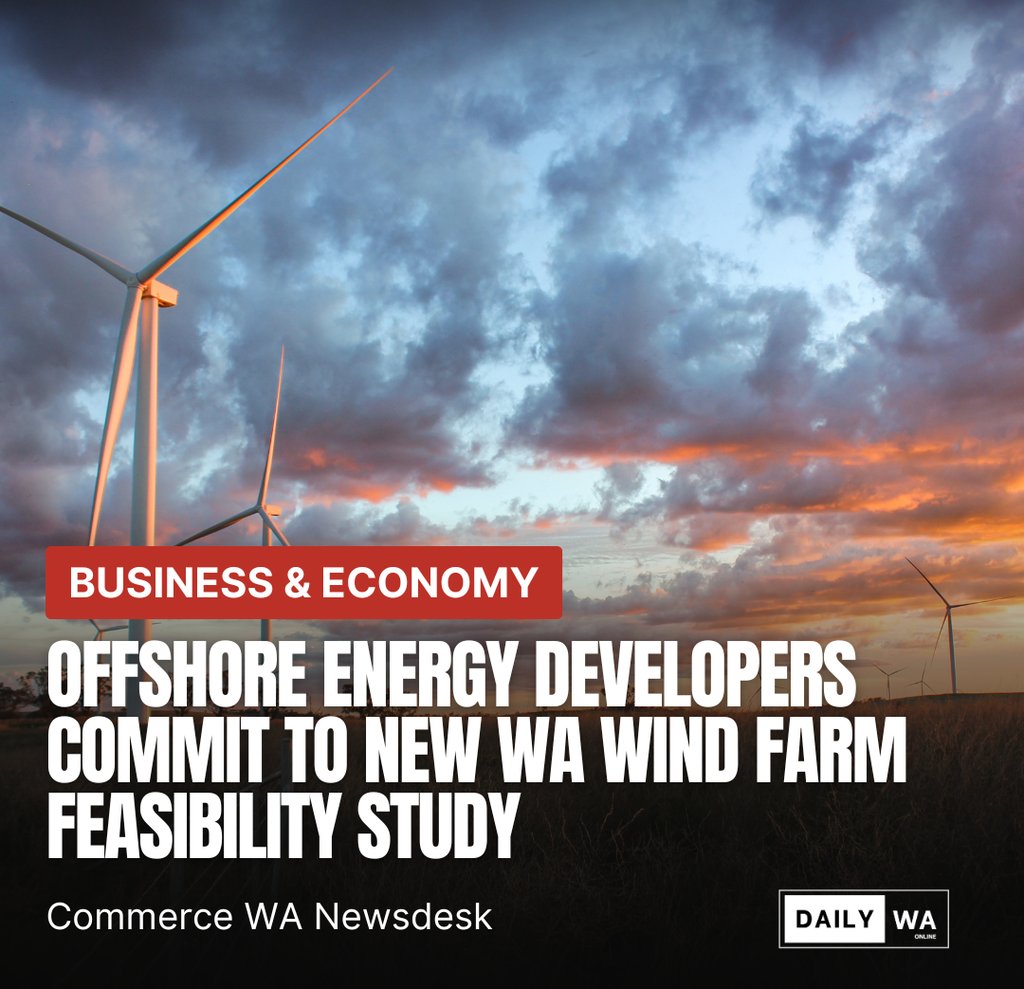
Western Australia’s energy transition is taking another step forward as offshore energy developers commit to a new wind farm feasibility study, reinforcing momentum behind large scale renewable investment. The study will assess technical, environmental, and commercial viability, providing a clearer picture of how wind energy could contribute to the state’s future power mix.
The decision reflects increasing interest in Western Australia as a renewable energy destination. Strong and consistent wind resources, expansive coastlines, and proximity to industrial demand centres position the state as a compelling candidate for wind development. Offshore projects, in particular, offer the potential for higher capacity generation with less land use conflict than onshore alternatives.
Developers involved in the study say feasibility work is essential before moving to investment decisions. Factors such as wind consistency, seabed conditions, grid connection, environmental impact, and construction logistics must be carefully evaluated. Offshore wind projects require significant upfront planning, but when executed well, they can deliver long term, reliable power at scale.
The study will also examine how a new wind farm could integrate with existing and planned energy infrastructure across Western Australia. Grid capacity, transmission upgrades, and storage solutions are increasingly central considerations as renewable penetration grows. Effective integration determines not only output, but system stability and cost efficiency.
Renewable energy developers view feasibility studies as signals to markets and policymakers. They demonstrate intent while allowing risks to be identified early. In Western Australia, where energy systems are evolving alongside decarbonisation targets, such studies help align private capital with public strategy.
There are also broader economic implications. Large wind projects support employment across engineering, construction, maintenance, and supply chains. Regional areas often benefit most, particularly where ports, fabrication facilities, and service industries can support offshore construction activity. Over time, these projects can anchor new clean energy precincts.
Environmental assessment will be a key component of the study. Offshore wind development must consider marine ecosystems, coastal impacts, and coexistence with fishing and shipping activity. Developers have indicated that early engagement with regulators, Traditional Owners, and local stakeholders will form part of the feasibility process.
The timing of the commitment reflects shifting global energy dynamics. As industries electrify and demand for clean power rises, jurisdictions capable of delivering large scale renewables gain strategic advantage. Offshore wind is increasingly viewed as a cornerstone technology for meeting industrial demand without relying on fossil fuels.
From a policy perspective, the study aligns with broader efforts to diversify Western Australia’s energy mix. Wind complements solar by generating power at different times and under different conditions, improving overall system resilience. Combined with storage and firming technologies, it strengthens energy security while reducing emissions.
At TMFS, we observe that feasibility studies often mark the quiet but critical phase of infrastructure transformation. Before announcements of construction and capacity, there is disciplined analysis, risk testing, and alignment building. These steps determine whether ambition translates into delivery.
As the study progresses, outcomes will shape decisions on investment scale, project location, and timelines. While feasibility does not guarantee development, commitment at this stage signals confidence that the fundamentals are worth exploring.
The move by offshore energy developers underscores a broader trend. Western Australia is no longer being viewed solely as a resource exporter, but as a future clean energy powerhouse. Wind, alongside solar and storage, is becoming part of a long horizon strategy to power industry, communities, and economic growth sustainably.
The feasibility study represents preparation rather than promise. Yet in energy transitions, preparation is often the most telling indicator of what comes next.
All rights belong to their respective owners. This article contains references and insights based on publicly available information and sources. We do not claim ownership over any third party content mentioned.
DAILY WA © 2025
Daily WA Online is an independent news and media platform covering Western Australia. Owned by TMFS International Pty Ltd., we publish local stories, business insights, lifestyle features, and community voices for the digital era.