
Pauline Hanson’s monoculture comments spark backlash as Albanese and FECCA defend multicultural Australia
Pauline Hanson’s call for a “monocultural” Australia has drawn criticism from Prime Minister Anthony Albanese, FECCA and the Greens, reigniting debate over multiculturalism, identity and immigration.
OPINION & VOICES
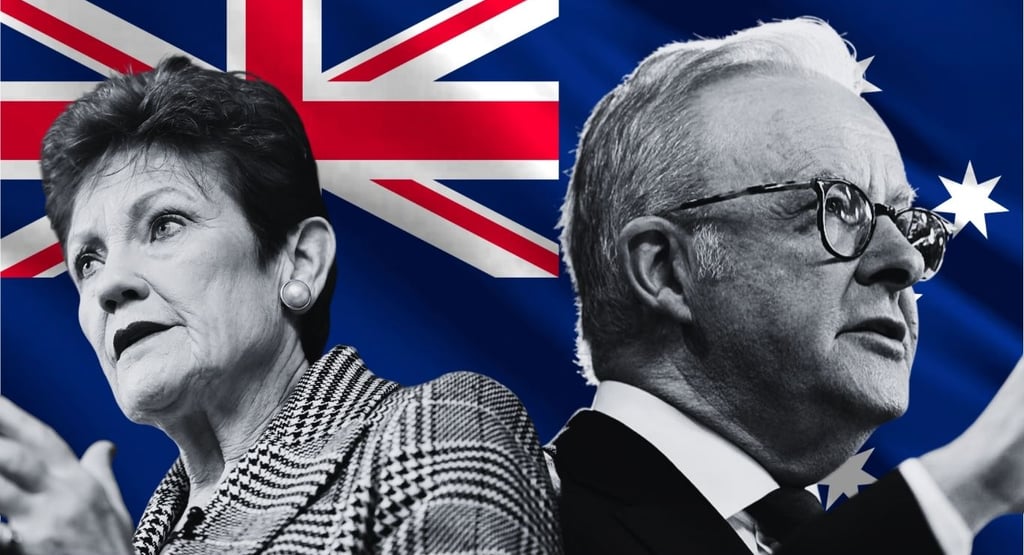
Pauline Hanson has reignited one of Australia’s most sensitive political debates after telling the National Press Club that the country should be “monocultural,” prompting a fast backlash from Prime Minister Anthony Albanese, the Greens and multicultural advocacy groups who say the nation’s identity has long been shaped by diversity.
Hanson, the One Nation leader, said Australia “cannot be a multicultural society” and argued that it should instead be “monocultural,” adding that “Australians must live under the one cultural umbrella”. In later interviews, she defended the message by saying monoculturalism meant Australians “working together towards the same goal under the same flag, regardless of skin colour, ethnicity or background”. She also said her broader aim was to tighten immigration and confront what she described as radical Islam, linking the speech to concerns about social cohesion, housing and national security.
Albanese dismissed the claim that Australia should become a monoculture, saying: “Modern Australia is not a monoculture and it never has been”. He added that the argument was “really a nonsense argument to go back to something that was never actually there,” and said cultural division is not the path forward. The prime minister pointed to First Nations history, the First Fleet and the multicultural make-up of modern Australia as evidence that the country has always been more complex than Hanson’s framing suggests.
The Greens also attacked Hanson’s speech, with leader Larissa Waters calling it “incoherent hatred” and accusing Hanson of recycling “the same tired Islamophobia, transphobia, racism and protection racket for fossil fuel”. Waters said Hanson was trying to make Australians “angry, divided and scared of our neighbours,” arguing that attacks on multiculturalism do not solve the housing or cost-of-living crisis. The Greens said the speech was a distraction from structural issues and accused One Nation of serving corporate interests rather than ordinary voters.
FECCA, the Federation of Ethnic Communities’ Councils of Australia, issued one of the strongest responses, saying Hanson’s idea of a monocultural nation was a “complete fabrication”. FECCA chair Peter Doukas OAM said: “There has never, at any stage in Australia’s history, been a monocultural society”. He added that Australia has been shaped by First Nations peoples and successive waves of migration, and argued that diversity has helped build a “prosperous and cohesive society”. FECCA also said Hanson’s position echoed exclusionary politics from Australia’s past.
The controversy widened further after reports that the National Press Club speech was interrupted by a stunt later referred to the Australian Federal Police, adding a security and protest dimension to an already heated political moment. Coverage from multiple outlets described the speech as “shameful” and said it echoed “rubbish” from right-wing figures in the UK and US. Together, the reactions show that Hanson’s remarks landed not simply as a policy argument, but as a symbolic fight over what kind of nation Australia believes itself to be.
All rights belong to their respective owners. This article contains references and insights based on publicly available information and sources. We do not claim ownership over any third party content mentioned.
DAILY WA © 2025
Daily WA Online is an independent news and media platform covering Western Australia. Owned by TMFS International Pty Ltd., we publish local stories, business insights, lifestyle features, and community voices for the digital era.