
Perth Airport Security Upgrades Set to Strengthen Passenger Safety Ahead of Holiday Travel Peak
Major security enhancements at Perth Airport aim to streamline travel, reinforce protection, and prepare Western Australia for a surge in holiday passengers.
NEWS & CURRENT AFFAIRS
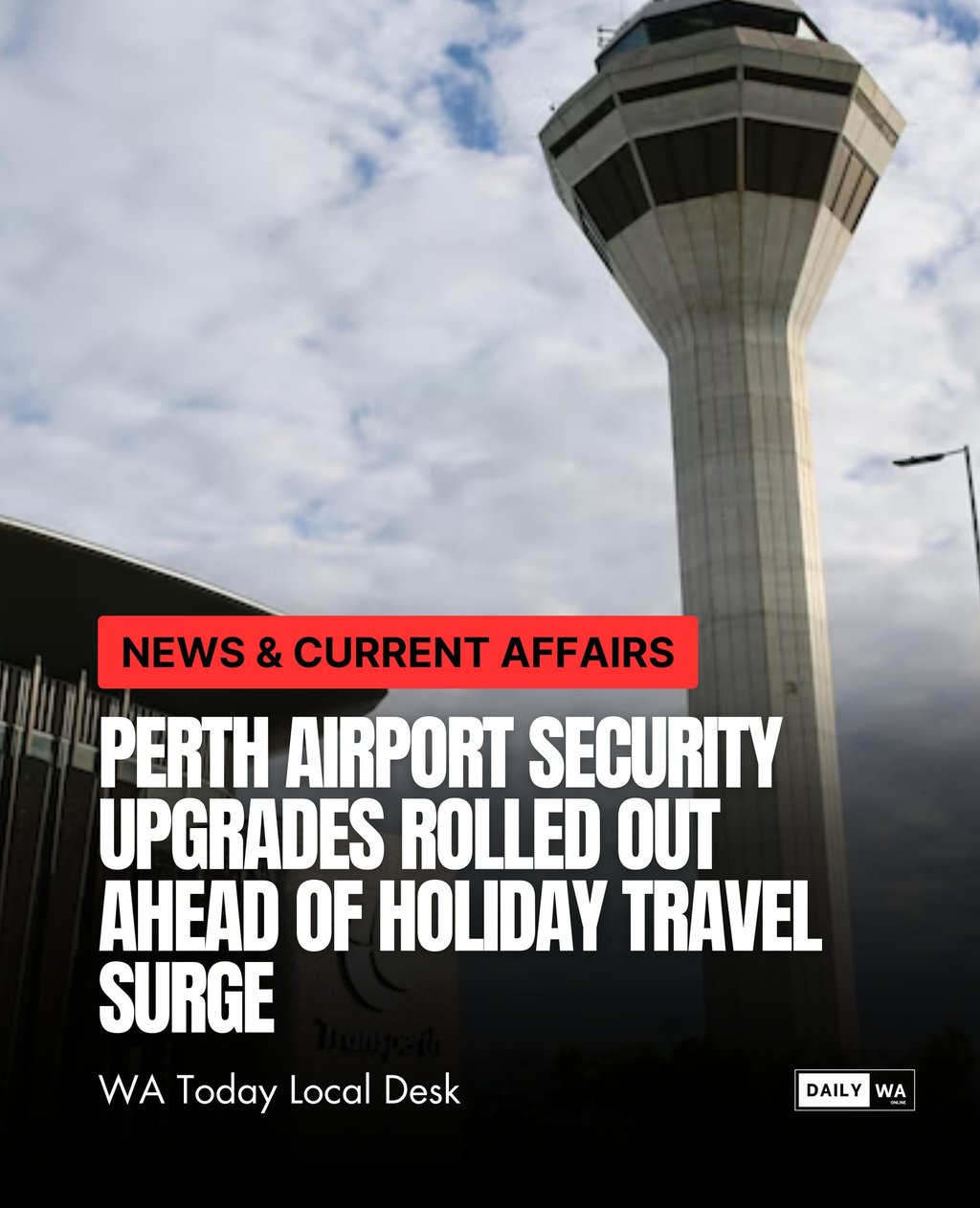
The holiday season is a moment many look forward to, yet it also brings a level of pressure that can transform an ordinary airport journey into a complex logistical challenge. As millions prepare to travel across Australia and beyond, the ability of an airport to maintain secure, efficient movement becomes not just a convenience but a critical expectation. This is why the latest security upgrades announced for Perth Airport have captured widespread attention. They represent more than technological improvements. They form part of a broader commitment to ensuring that Western Australians can travel with confidence during one of the busiest periods of the year.
Airports today must navigate a unique intersection of rising passenger volumes and evolving security risks. Perth Airport has experienced consistent annual growth, driven by tourism, interstate mobility, and expanding international routes. As holidays approach, those pressures multiply. The decision to introduce enhanced screening systems and modernised monitoring technology reflects an understanding of these realities. It primes the travelling public to expect a smoother, more resilient experience that keeps pace with global standards of aviation security.
Central to the upgrade is the rollout of advanced screening lanes designed to increase throughput without compromising accuracy. Studies in aviation logistics report that modern lane technology can accelerate passenger processing speeds by up to forty percent. For travellers, this translates to shorter queues, reduced stress, and a more predictable pre flight experience. For security teams, it means sharper insights driven by improved scanning capabilities and data enhanced decision making. Each improvement strengthens the entire ecosystem that keeps air travel safe.
To appreciate the practical impact, consider the typical morning rush during peak travel weeks. Previously, long lines might have stretched across terminal spaces, creating frustration for passengers and adding pressure to staff. With upgraded systems, screening becomes more efficient and less prone to bottleneck scenarios. Instead of reacting to congestion, airport teams can proactively manage flow and prevent delays from escalating. This shift from reactive to anticipatory operations mirrors the principles adopted by leading international airports.
Another critical development is the introduction of advanced surveillance and perimeter monitoring tools. These technologies support real time detection and rapid response to potential incidents. In a modern aviation setting, situational awareness is indispensable. The ability to identify risks early and coordinate response actions quickly is what defines world class security performance. Perth Airport’s investment signals an understanding that safety must evolve in parallel with emerging threats and passenger expectations.
Behind these systems are the people responsible for operating them. Training programs are being expanded to ensure staff can confidently navigate new equipment, interpret enhanced data sets, and maintain a high level of vigilance even during peak periods. When technology and human capability grow together, airports achieve stronger outcomes. Research from global transport agencies reinforces that well trained personnel remain the most influential factor in maintaining safe and efficient operations, particularly when handling surging passenger numbers.
These upgrades also play a significant role in strengthening Western Australia’s economic resilience. The state relies heavily on efficient connectivity for tourism, business travel, and international engagement. A secure and reliable airport experience supports these sectors by reinforcing trust and reducing the risk of travel disruption. Stakeholders across aviation, hospitality, and regional development understand that smooth holiday travel contributes to broader economic stability during a pivotal time of year.
From a community perspective, the improvements reflect a commitment to care and accountability. Travellers want reassurance that their wellbeing is being prioritised. Families, frequent flyers, and first time travellers all seek reliability in their journey. The alignment of modern technology, improved processes, and skilled personnel helps restore a sense of control in an environment that can often feel unpredictable.
For organisations analysing operational readiness or planning for peak demand scenarios, Perth Airport’s approach offers a compelling reminder. Strategic upgrades must be timely, intentional, and forward looking. They require a deep understanding of how people move, how systems interact, and how resilience can be built before pressure arrives. These same principles underpin the advisory and strategic planning work TMFS delivers across complex environments. When systems are strengthened early, they empower teams to perform at their best when it matters most.
As the holiday surge approaches, Perth Airport’s security enhancements arrive at the right moment. They set the stage for a more confident travel season, one where passengers feel supported and stakeholders feel assured that the state’s foremost travel gateway is prepared. These upgrades represent not only an operational improvement but a message of progress, responsibility, and readiness.
Western Australians will soon experience these changes firsthand. The upgrades invite travellers to move into the holiday period with a sense of calm and anticipation. They also remind us that strong systems are built through thoughtful decisions made long before the crowds arrive. TMFS will continue to support organisations seeking clarity, resilience, and strategic alignment as they prepare for moments where performance and trust converge.
All rights belong to their respective owners. This article contains references and insights based on publicly available information and sources. We do not claim ownership over any third party content mentioned.
DAILY WA © 2025
Daily WA Online is an independent news and media platform covering Western Australia. Owned by TMFS International Pty Ltd., we publish local stories, business insights, lifestyle features, and community voices for the digital era.