
Perth Council Launches Recycling Incentive Reward Program
A Perth council has introduced a recycling incentive reward scheme aimed at boosting household participation and reducing landfill waste across the local community.
OPINION & VOICES
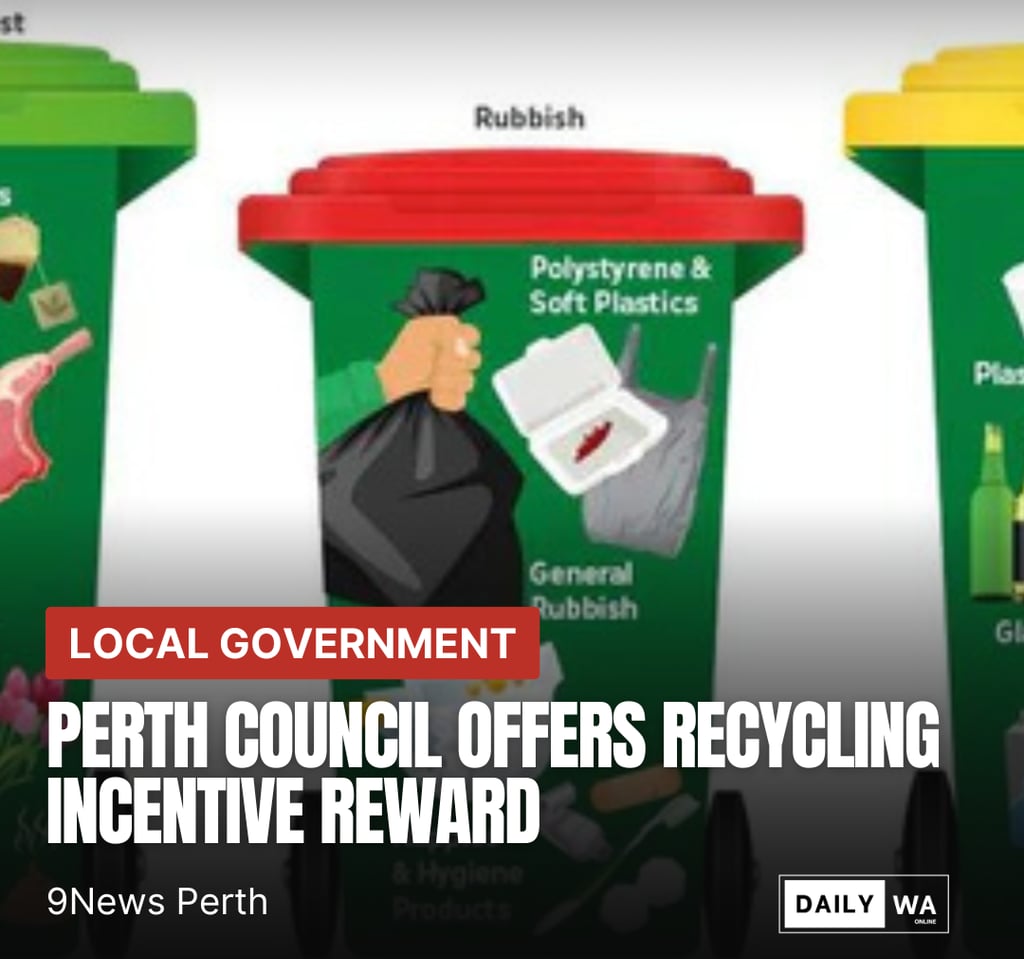
A local council in Perth is taking a new approach to waste reduction, launching a recycling incentive reward program designed to encourage stronger household participation.
The initiative offers residents tangible rewards for consistent and correct recycling, shifting environmental responsibility from obligation to opportunity. Rather than relying solely on education campaigns, the council is introducing positive reinforcement to influence behaviour at scale.
Under the scheme, households that demonstrate improved recycling practices may become eligible for vouchers, discounts, or community based prizes. Participation is expected to be tracked through bin audits or digital registration systems, ensuring accountability alongside incentive.
Waste management remains a pressing issue across metropolitan Perth. Growing populations generate higher volumes of household waste, placing pressure on landfill capacity and processing facilities. Recycling offers a pathway to divert materials from landfill, yet contamination and low participation rates continue to challenge efficiency.
Incentive based models draw on behavioural economics principles. Small rewards can significantly influence habits, particularly when participation feels visible and acknowledged. Councils adopting such approaches aim to make sustainable action routine rather than occasional.
Local officials have indicated that the program also includes education components, helping residents understand what can and cannot be placed in recycling bins. Contamination remains one of the largest barriers to effective recycling. Incorrect items increase processing costs and reduce recovery rates.
Community response has been largely positive, with residents welcoming initiatives that combine environmental responsibility with practical benefit. Schools and neighbourhood groups are also expected to engage, turning recycling into a shared local objective.
The council’s move aligns with broader sustainability strategies across Western Australia, where local governments are under increasing pressure to meet waste reduction targets. Incentive programs may complement infrastructure upgrades and policy reform aimed at improving recycling outcomes statewide.
Critics sometimes question whether rewards should be necessary for environmentally responsible behaviour. However, councils argue that measurable improvement justifies innovative engagement methods. Where traditional messaging has plateaued, incentives may provide renewed momentum.
From an economic perspective, reducing landfill reliance can lower long term waste management costs. Diverting recyclable materials also supports circular economy goals, keeping resources in productive use rather than discarding them.
At TMFS, we observe that community participation strengthens when accountability and motivation intersect. Programs that recognise positive behaviour often accelerate cultural shift more effectively than penalties alone.
The success of the recycling incentive reward scheme will depend on uptake and sustained engagement. If participation grows and contamination falls, the model could inform similar initiatives across other councils.
Recycling may seem routine, but its cumulative impact is substantial. By attaching value to everyday action, the council is betting that small behavioural nudges can drive meaningful environmental progress.
All rights belong to their respective owners. This article contains references and insights based on publicly available information and sources. We do not claim ownership over any third party content mentioned.
DAILY WA © 2025
Daily WA Online is an independent news and media platform covering Western Australia. Owned by TMFS International Pty Ltd., we publish local stories, business insights, lifestyle features, and community voices for the digital era.