
Perth Court Lifts Suppression Order on Bombing Suspect
A Perth court has lifted a suppression order preventing the identification of a bombing suspect, allowing previously restricted details to be made public as legal proceedings continue.
BUSINESS & ECONOMY
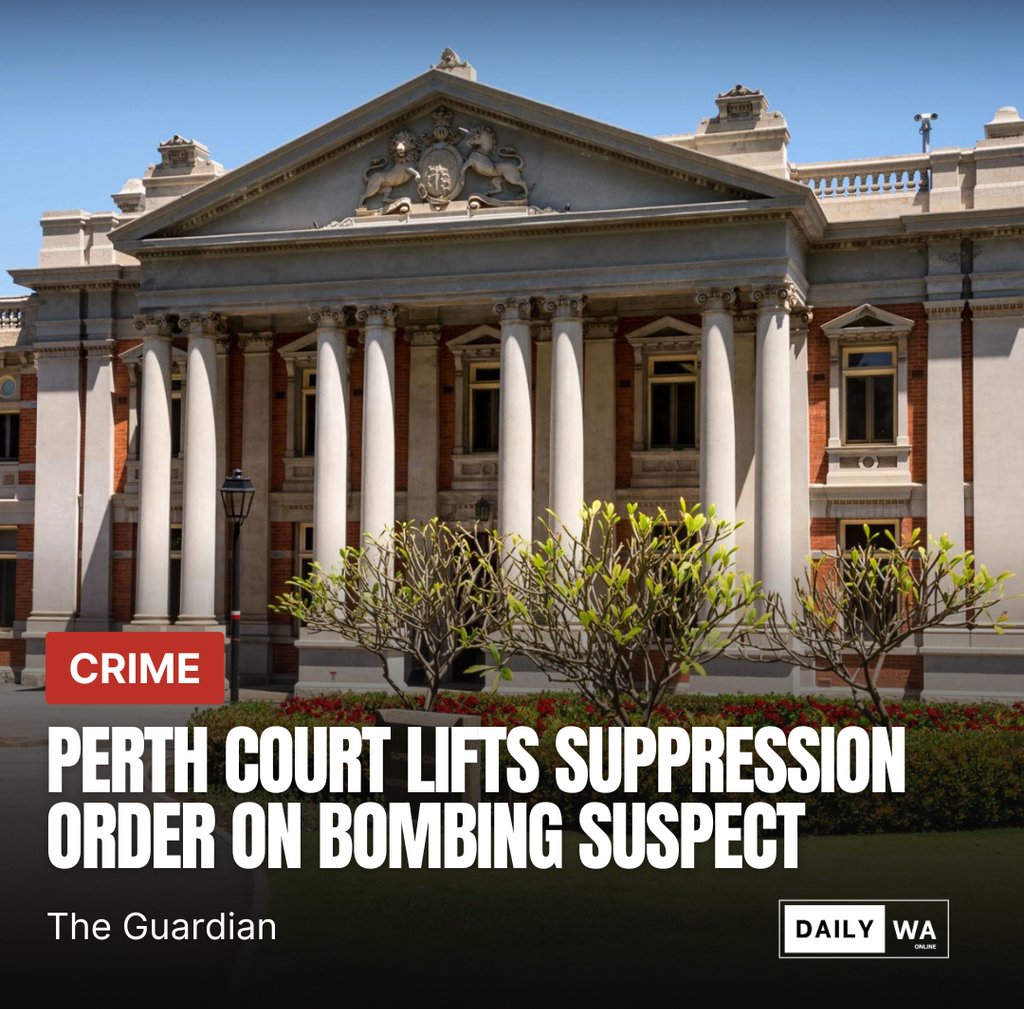
Transparency has moved back to the forefront in a high profile criminal matter after a Perth court lifted a suppression order that had prevented the identification of a bombing suspect.
The decision, handed down in Perth, means details previously withheld from publication can now be reported. Suppression orders are typically granted to protect the integrity of investigations, safeguard fair trial rights, or ensure the safety of individuals involved. Their removal signals a shift in legal circumstances.
Court suppression orders are not unusual in serious criminal matters. They are designed to balance competing interests. On one side sits the public’s right to know. On the other rests the accused’s right to a fair trial and the prosecution’s obligation to conduct proceedings without prejudice. Judges assess whether ongoing restrictions remain necessary as cases progress.
In this instance, the court determined that the factors justifying suppression no longer outweighed the principles of open justice. Open courts are a cornerstone of the Australian legal system. Except in exceptional circumstances, proceedings are conducted publicly to ensure accountability and confidence in judicial processes.
While the suspect’s identity can now be reported, legal proceedings remain active. The lifting of a suppression order does not alter the presumption of innocence, which remains fundamental to criminal law. Allegations must still be tested through evidence and argument before a final determination is made.
Bombing related allegations carry significant public concern due to the potential risk to community safety. Authorities have previously indicated that investigative processes were complex and required careful handling. The court’s decision suggests that those processes have reached a stage where transparency will not compromise fairness.
Legal experts note that suppression orders are frequently revisited throughout proceedings. Circumstances evolve. Witness evidence may be secured, jury considerations may shift, or procedural milestones may reduce risk of prejudice. Courts retain discretion to impose, maintain, or remove restrictions as required.
The development underscores how judicial oversight operates as a dynamic mechanism rather than a static rule. Judges must continually weigh the impact of publicity against the rights of the accused and the integrity of proceedings.
In Western Australia, serious criminal matters often attract heightened media scrutiny. The removal of suppression expands reporting scope but also reinforces responsibility. Accurate, balanced coverage is essential to prevent misinformation while proceedings remain underway.
For the public, the lifting of the order restores visibility into a case that has drawn attention. However, legal timelines can be lengthy. Charges, committal hearings, and potential trials follow structured stages designed to ensure due process.
At TMFS, we observe that open justice strengthens institutional trust when applied with measured judgment. Transparency and fairness are not competing values. They are interdependent principles that guide democratic legal systems.
As the matter proceeds, further court appearances are expected. The focus will now turn to evidence, legal argument, and the procedural path ahead. While the suppression order has been lifted, the outcome of the case remains to be determined through established judicial processes.
All rights belong to their respective owners. This article contains references and insights based on publicly available information and sources. We do not claim ownership over any third party content mentioned.
DAILY WA © 2025
Daily WA Online is an independent news and media platform covering Western Australia. Owned by TMFS International Pty Ltd., we publish local stories, business insights, lifestyle features, and community voices for the digital era.