
Perth Diving Company Fined After Divers Left at Sea
A Perth based diving company has been fined after leaving divers at sea, with authorities reinforcing the importance of strict safety compliance in commercial marine operations.
PEOPLE & COMMUNITY
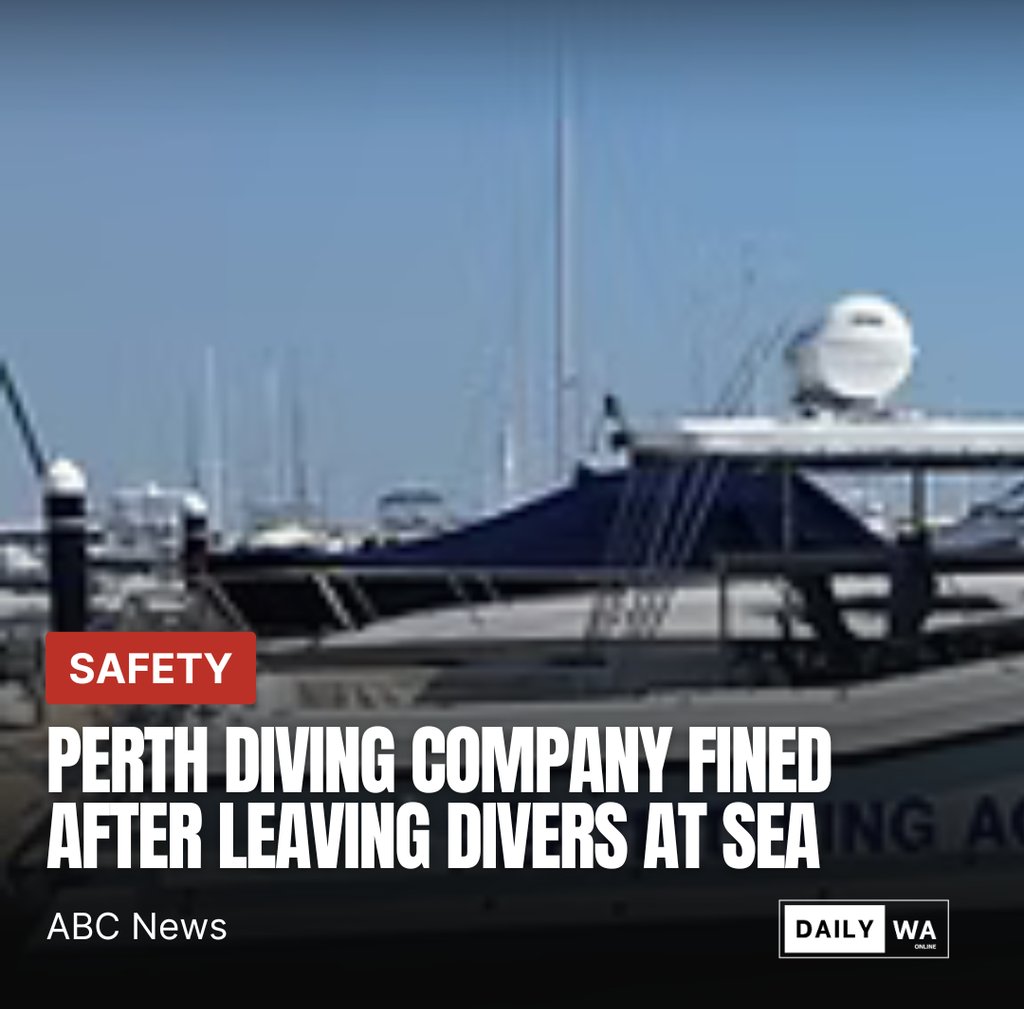
A Perth diving company has been fined after an incident in which divers were left at sea, prompting renewed scrutiny of safety procedures within the commercial marine tourism sector.
The case, reported by ABC News, centred on failures in headcount and supervision that resulted in divers being unintentionally left behind following a charter operation. While the individuals were later recovered, the incident exposed gaps in operational safeguards that regulators deemed serious.
Commercial dive operators are bound by strict safety standards. These include mandatory diver counts before departure, continuous supervision, and documented risk management procedures. In environments where currents shift and visibility changes rapidly, precision is not optional. It is essential.
The court heard that the company’s processes fell short of required compliance thresholds. Even brief lapses in verification can escalate into life threatening situations in open water. Authorities emphasised that marine safety protocols are designed specifically to prevent such occurrences.
Western Australia’s coastline attracts thousands of recreational and commercial divers each year. From reef systems to offshore wrecks, the appeal of marine exploration is strong. With that popularity comes responsibility for operators to maintain rigorous oversight.
Regulators have reiterated that fines serve both punitive and deterrent purposes. Financial penalties underscore the seriousness of safety obligations and reinforce that procedural shortcuts carry consequences. In marine environments, the margin for error is narrow.
Industry bodies note that most operators adhere to comprehensive safety frameworks. However, incidents of this nature can affect public confidence broadly. Transparency in enforcement helps reassure participants that oversight mechanisms remain active and effective.
Divers rely on operators not only for transport but for situational awareness. Skippers and dive masters are responsible for tracking descent and ascent times, monitoring environmental conditions, and confirming all participants are accounted for before moving vessels.
In Perth, marine tourism forms a valued part of the recreational economy. Safety performance therefore carries both ethical and commercial weight. A single failure can influence perception across the sector.
Authorities have indicated that compliance monitoring will continue, with audits and inspections forming part of standard regulatory practice. Lessons from incidents are often integrated into updated training guidance to prevent recurrence.
At TMFS, we observe that risk management is most effective when systems are treated as non negotiable rather than routine. Checklists, headcounts, and communication protocols may appear procedural, yet they are the safeguards that protect lives.
The fine imposed on the diving company reflects the gravity of leaving divers unattended at sea. While no lasting harm was reported, the potential consequences were significant.
For operators and participants alike, the case reinforces a simple principle. In open water, preparation and accountability are inseparable from adventure.
All rights belong to their respective owners. This article contains references and insights based on publicly available information and sources. We do not claim ownership over any third party content mentioned.
DAILY WA © 2025
Daily WA Online is an independent news and media platform covering Western Australia. Owned by TMFS International Pty Ltd., we publish local stories, business insights, lifestyle features, and community voices for the digital era.