
Progress Meets Reality as Women Athletes Speak Out on Pay, Discrimination, and Sexism
ABC’s latest Elite Athletes in Women’s Sport Survey reveals that despite growing visibility and investment, low pay, discrimination, and sexism remain entrenched challenges shaping careers and wellbeing across women’s sport.
NEWS & CURRENT AFFAIRS
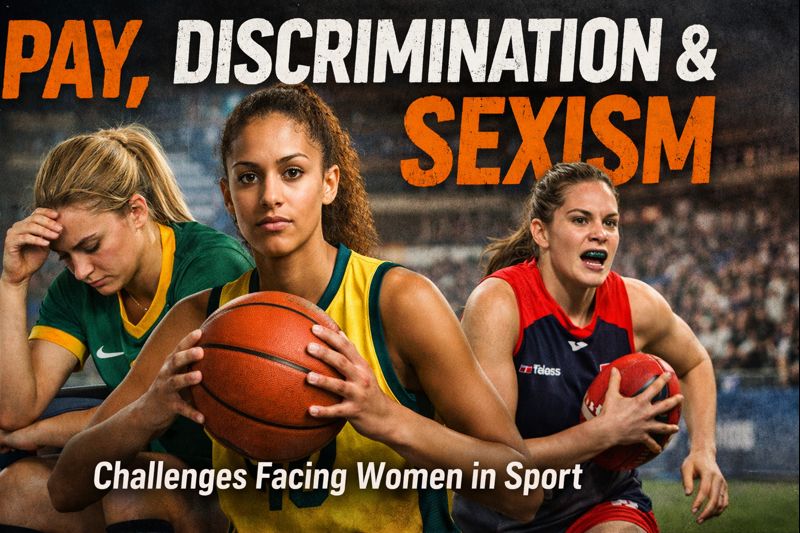
The narrative around women’s sport has shifted in recent years. Crowds are growing, broadcast coverage is expanding, and elite athletes are increasingly recognised as professionals rather than novelties. Yet beneath this progress, long standing structural issues continue to shape daily reality. Findings from the latest Elite Athletes in Women’s Sport Survey by Australian Broadcasting Corporation reveal a sector still grappling with low pay, discrimination, and sexism across multiple sporting codes.
The survey highlights a striking gap between public perception and lived experience. While women’s sport is often framed as being in a period of breakthrough, many athletes report that financial insecurity remains a defining feature of their careers. Low wages force athletes to juggle training with secondary employment, limiting recovery, performance, and long term career planning. For a profession that demands full commitment, this imbalance places women at a systemic disadvantage.
Discrimination also remains a persistent concern. Athletes surveyed describe unequal access to facilities, medical support, and development pathways when compared with male counterparts. These disparities are rarely accidental. They are the result of legacy systems built around men’s competitions, with women’s programs added later and often under resourced. The consequence is an uneven playing field that affects not just performance, but confidence and opportunity.
Sexism, both overt and subtle, continues to shape sporting environments. Respondents point to dismissive attitudes, gendered expectations, and a lack of representation in leadership roles. Such dynamics influence how athletes are treated, how concerns are addressed, and how seriously women’s sport is taken within organisations. Even where progress has been made, cultural change is often slower than policy reform.
Wellbeing emerges as a central theme in the survey. Financial pressure, insecure contracts, and limited career longevity contribute to stress and burnout. For many athletes, the end of a playing career arrives without adequate transition support, leaving them vulnerable despite years of elite performance. This raises broader questions about duty of care and the sustainability of professional pathways in women’s sport.
Importantly, the survey does not dismiss recent gains. Increased media exposure, sponsorship growth, and stronger fan engagement are acknowledged by athletes as meaningful steps forward. However, these advances are not yet translating consistently into structural security. Visibility without stability risks creating a surface level success that masks deeper inequities.
The findings also underscore the interconnected nature of the challenges. Pay, discrimination, and sexism do not exist in isolation. They reinforce one another, shaping who stays in the sport, who advances into leadership, and whose voices are heard. Addressing one without the others limits the impact of reform.
From a governance perspective, the survey reinforces the need for long term planning rather than incremental fixes. Equal pay models, transparent contracting, leadership diversity, and investment in development pathways are not symbolic gestures. They are mechanisms that determine whether women’s sport can sustain its current momentum or plateau under unresolved pressure.
There is also a broader cultural dimension. Public support for women’s sport has grown rapidly, yet expectations of professionalism now outpace the structures supporting athletes. Fans, sponsors, and institutions increasingly demand excellence. Meeting that demand requires systems that recognise athletes as professionals in practice, not just in branding.
At TMFS, we see parallels across sectors where progress creates new expectations faster than institutions adapt. Sustainable success depends on aligning visibility with capability and investment with responsibility. Women’s sport now sits at that inflection point. The opportunity is clear, but so is the risk of complacency.
The voices captured in the ABC survey serve as a reminder that change is not complete because it has begun. Structural inequality is resilient, and dismantling it requires persistence, transparency, and leadership willing to move beyond celebration toward reform.
Women’s sport in Australia has earned its place in the national spotlight. The next phase will be defined by whether that spotlight is matched with systems that protect wellbeing, reward excellence, and offer genuine equality of opportunity. The survey makes one thing clear. Progress is real, but so is the work still ahead.
All rights belong to their respective owners. This article contains references and insights based on publicly available information and sources. We do not claim ownership over any third party content mentioned.
DAILY WA © 2025
Daily WA Online is an independent news and media platform covering Western Australia. Owned by TMFS International Pty Ltd., we publish local stories, business insights, lifestyle features, and community voices for the digital era.