
Rare Pygmy Blue Whale Sighting Near Busselton Highlights the Rich Life of Geographe Bay
Locals have captured rare vision of a pygmy blue whale swimming near Busselton Jetty, offering a powerful reminder of Western Australia’s unique marine environment during the annual migration season.
NEWS & CURRENT AFFAIRS
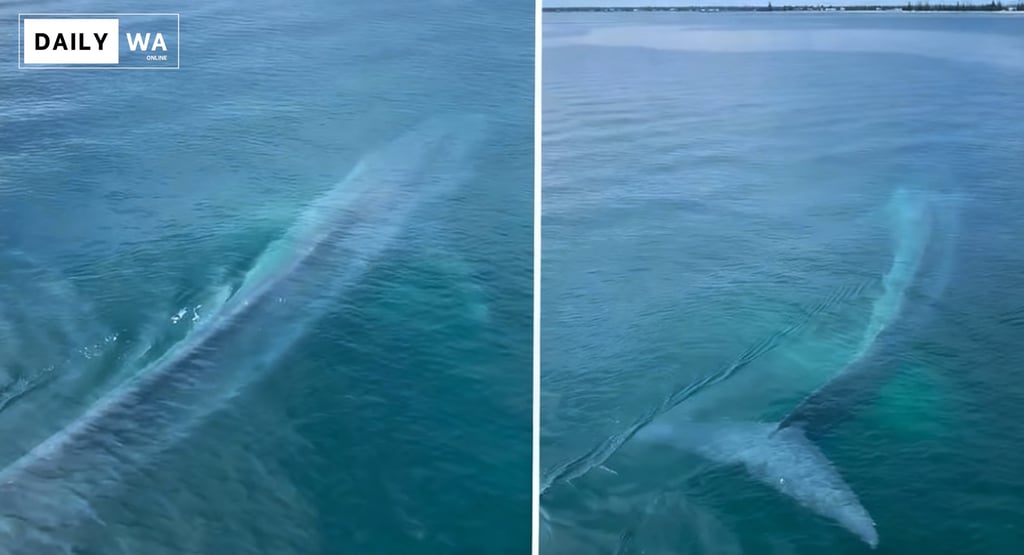
Moments of natural wonder have a way of stopping time. Along the South West coast, locals watching the calm waters of Geographe Bay recently experienced one of those moments as a pygmy blue whale was spotted swimming close to shore near Busselton Jetty. Vision of the whale moving steadily through the bay has quickly drawn attention, not only for its rarity but for what it represents about the health and significance of Western Australia’s marine corridors.
The pygmy blue whale is among the largest animals ever to exist, yet sightings near populated coastal areas remain uncommon. Observing one so close to the iconic jetty underscores the importance of Geographe Bay as a migration pathway and feeding ground. Each year, these whales travel vast distances, moving between feeding areas in the Southern Ocean and warmer northern waters. Their presence in the bay is a quiet indicator that the ecosystem continues to support complex and sensitive marine life.
Marine experts note that pygmy blue whales rely on specific conditions to navigate safely along the coast. Calm waters, sufficient food supply, and minimal disruption are critical during migration. Sightings such as this suggest that parts of WA’s coastline remain viable and supportive habitats, even as environmental pressures increase globally. For coastal communities, this is both a privilege and a responsibility.
The reaction from locals has been one of awe and pride. Many who witnessed the whale described a deep sense of connection to the natural environment, heightened by the contrast between the massive scale of the animal and the stillness of the bay. These encounters reinforce the value of living alongside nature rather than apart from it. They also remind communities that extraordinary wildlife moments often unfold quietly, without warning, in familiar places.
From a conservation perspective, public sightings play an important role. Recorded vision and eyewitness reports help researchers track migration timing and behaviour patterns. Over time, this data contributes to broader understanding of how climate variability, shipping activity, and coastal development affect whale movements. Knowledge gathered through community observation complements scientific monitoring and strengthens marine protection strategies.
The sighting also draws attention to the need for responsible coastal activity. Authorities consistently urge boaters and water users to maintain safe distances from whales, reduce speed, and avoid sudden movements that may disturb them. Protecting these animals during migration is essential, not only for their wellbeing but for the integrity of the marine systems they depend on.
There is a wider significance to moments like this. Western Australia’s identity is closely tied to its natural environment, from its red earth landscapes to its expansive coastline. Encounters with rare marine species reinforce the idea that economic growth, tourism, and conservation must coexist thoughtfully. When ecosystems thrive, they enrich community life in ways that cannot be measured solely in economic terms.
At TMFS, we recognise the importance of stewardship in complex environments. Whether managing natural assets, infrastructure, or communities, long term value is created through respect, planning, and balance. Events like the pygmy blue whale sighting remind us that some of the most valuable indicators of success are not found in reports or metrics, but in the quiet continuation of life systems that have existed for thousands of years.
As the whale continues its journey through WA waters, the sighting leaves behind a sense of perspective. It highlights the scale of the natural world and the small but meaningful role people play within it. For those who witnessed the moment, it is likely to remain a lasting reminder of the remarkable environment that surrounds them and the shared responsibility to protect it.
All rights belong to their respective owners. This article contains references and insights based on publicly available information and sources. We do not claim ownership over any third party content mentioned.
DAILY WA © 2025
Daily WA Online is an independent news and media platform covering Western Australia. Owned by TMFS International Pty Ltd., we publish local stories, business insights, lifestyle features, and community voices for the digital era.