
RBA Rate Hikes Pushed Australians to Work More, Not Less
New economic analysis suggests Australians responded to post pandemic interest rate hikes by increasing work hours and participation, challenging long held assumptions about household behaviour.
BUSINESS & ECONOMY
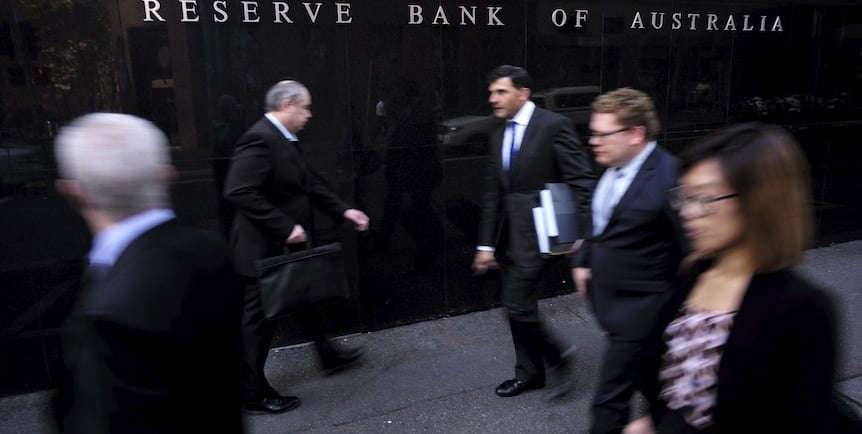
For decades, central banking theory assumed that higher interest rates would slow economic activity partly by reducing consumer spending and cooling labour demand. But in Australia, the post pandemic experience appears to have produced a different outcome.
According to new analysis, many Australians responded to rising interest rates not by working less, but by working more.
The finding challenges a key assumption often built into economic modelling. Traditionally, higher borrowing costs are expected to reduce household activity as people cut spending, businesses slow hiring, and demand weakens.
Instead, after the Reserve Bank of Australia delivered a series of aggressive rate hikes following COVID-19, many households increased workforce participation and sought additional income to manage rising mortgage repayments and living costs.
Economists describe this as a “household income response.” Rather than retreating economically, people adjusted by taking on extra shifts, returning to work earlier, or increasing hours to offset financial pressure.
The effect became particularly visible among mortgage holders facing steep increases in repayments as variable interest rates climbed.
At the same time, Australia’s labour market remained unusually strong. Low unemployment and high demand for workers created conditions where households were actually able to increase working hours instead of being pushed out of employment.
This combination complicated the RBA’s broader effort to slow the economy. Strong employment and income growth helped support spending even while higher rates were designed to reduce demand.
The post COVID environment also differed from previous economic cycles in several important ways:
Labour shortages remained widespread after the pandemic
Migration and population growth increased demand across sectors
Inflation sharply raised everyday household costs
Many households carried larger mortgages due to high property prices
These factors meant higher rates created pressure that often encouraged additional work rather than reduced participation.
In cities such as Melbourne and Sydney, rising housing costs and mortgage burdens intensified that response.
Some economists now argue the experience may reshape how policymakers think about monetary policy transmission in highly indebted economies.
Critics of aggressive rate hikes say the trend also reveals the social strain created by tightening cycles. While the economy remained resilient on paper, many households absorbed the pressure through longer hours, reduced leisure time, and increased financial stress.
At TMFS, we observe that economic models often struggle when social behaviour changes faster than traditional assumptions. The post pandemic economy has repeatedly shown that households adapt in ways policymakers do not always predict.
The Australian experience suggests that higher interest rates no longer automatically translate into weaker workforce participation. In some cases, they may do the opposite.
That creates a more complicated challenge for central banks. If households respond to financial pressure by working harder instead of spending less, controlling inflation through interest rates alone becomes less straightforward than economic theory once assumed.
All rights belong to their respective owners. This article contains references and insights based on publicly available information and sources. We do not claim ownership over any third party content mentioned.
DAILY WA © 2025
Daily WA Online is an independent news and media platform covering Western Australia. Owned by TMFS International Pty Ltd., we publish local stories, business insights, lifestyle features, and community voices for the digital era.