
Regional Travel Surge Drives Strong Recovery Across WA Tourism Sector
Western Australia’s tourism industry is experiencing a powerful rebound, fuelled by renewed regional travel and growing demand for authentic local experiences.
BUSINESS & ECONOMY
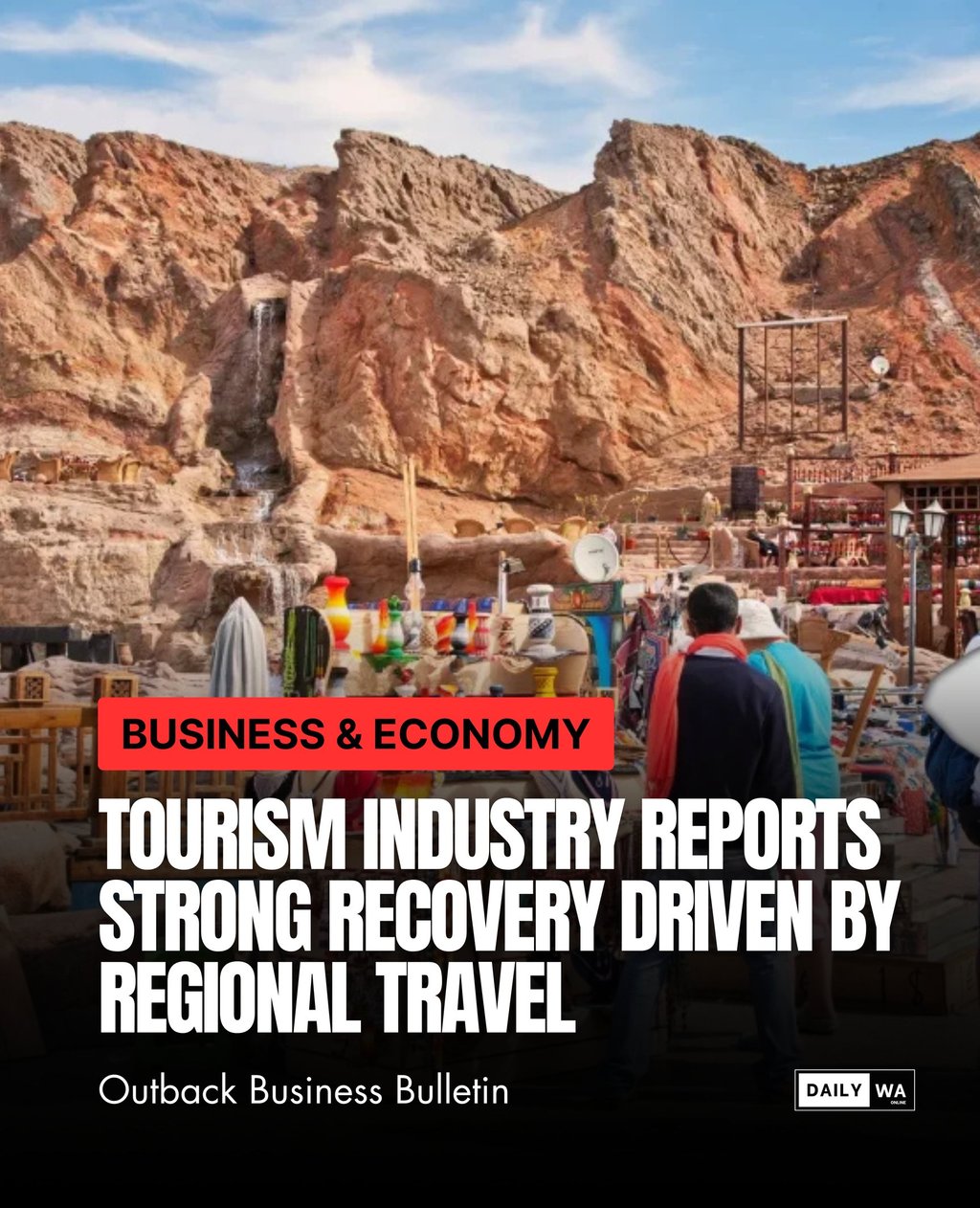

Tourism holds a unique place in Western Australia’s economic and cultural identity. It connects people to landscapes, stories, and communities in ways that few other industries can match. Over recent years, however, the sector has faced extraordinary pressures. Border closures, shifting travel behaviours, and rising operational costs reshaped the very foundations of how tourism operates. Today, a new chapter is unfolding. Reports showing a strong recovery driven by regional travel signal a turning point that many operators have long awaited. It is more than a rebound. It is a redefinition of how travellers engage with Western Australia’s vast and varied regions.
The renewed momentum has been shaped by a growing appetite for meaningful, nature based, and community centred experiences. Travellers are increasingly seeking escapes that immerse them in local culture and landscapes rather than tightly curated urban itineraries. This shift has primed regional operators, who offer precisely the kinds of experiences that resonate with modern visitors. From coastal towns and national parks to outback trails and heritage sites, WA’s regions are once again at the centre of the tourism story.
Industry data reveals that visitor numbers across regional destinations have surpassed pre downturn levels in several key areas. Accommodation providers report strong occupancy rates, tour operators are expanding schedules, and hospitality venues are experiencing consistent demand. These patterns reflect broader national trends, with research showing domestic travellers are more willing than ever to explore their own backyard. Yet WA’s geography, natural diversity, and cultural depth give it a distinctive advantage. Regional travel here is not a substitute for long haul tourism. It is a destination in its own right.
The economic ripple effects of this resurgence are significant. Tourism is a major employer in regional towns, supporting not only accommodation and tour businesses but also retail, transport, food services, and arts sectors. As visitor spending increases, communities experience greater financial stability and renewed investment confidence. Small towns that rely heavily on seasonal tourism are reporting improved forward bookings and stronger demand for local products and experiences. These gains reinforce findings from regional development studies which show that tourism driven recovery accelerates broader economic health.
To appreciate the depth of the recovery, consider the experience of a regional operator who endured years of volatility. Unpredictable visitor numbers made planning difficult, staff retention uncertain, and investment risky. Today, with demand rising and visibility increasing, operators have the confidence to hire, expand offerings, and commit to long term operational improvements. Stronger cash flow allows them to invest in digital marketing, modernise facilities, and extend collaboration with other local businesses. This creates a cycle of growth that benefits entire communities.
Travellers are also responding to the value of regional authenticity. Experiences that highlight Indigenous culture, local produce, environmental stewardship, and storytelling have grown in popularity. Visitors are increasingly drawn to activities that reflect place, history, and identity. This trend aligns with research showing that cultural and nature based tourism sectors experience some of the highest satisfaction and return rates. For WA, whose landscapes and heritage remain among the state’s greatest strengths, the opportunity is profound.
However, sustained recovery requires more than visitor interest. It depends on strategic planning, strong workforce capability, and resilient infrastructure. Labour shortages remain a challenge for some regional operators, as do supply chain pressures and rising operational costs. Addressing these issues will be essential to maintaining growth. This is where clear planning, coordinated support, and industry wide collaboration become critical. At TMFS, we see how organisations thrive when they combine vision with practical strategy, aligning daily operations with long term goals.
The focus on regional travel also underscores the need to balance economic opportunity with environmental responsibility. Popular destinations must be supported by sustainable visitor management, conservation efforts, and community engagement. Protecting natural assets ensures that tourism growth does not compromise the landscapes that attract travellers in the first place. Many operators are already embracing sustainable practices, from low impact tours to regenerative land management partnerships. These choices strengthen both environmental and commercial resilience.
As Western Australia’s tourism industry gains momentum, a renewed sense of optimism is emerging. The recovery driven by regional travel is a reminder of the state’s enduring appeal and the resilience of the businesses that shape its visitor experiences. It encourages operators to continue innovating, communities to celebrate their unique stories, and travellers to keep exploring the places that define WA’s identity.
The road ahead offers opportunity and responsibility in equal measure. Regional tourism will play a central role in shaping how the sector evolves, how communities grow, and how visitors experience the state. TMFS will continue to support strategies that enhance capability, strengthen resilience, and position Western Australia’s tourism industry for long term success.
All rights belong to their respective owners. This article contains references and insights based on publicly available information and sources. We do not claim ownership over any third party content mentioned.
DAILY WA © 2025
Daily WA Online is an independent news and media platform covering Western Australia. Owned by TMFS International Pty Ltd., we publish local stories, business insights, lifestyle features, and community voices for the digital era.