
Renewable Energy Projects Accelerate Job Growth Across WA’s South West Corridor
A wave of renewable energy developments is driving strong employment growth in the South West, signalling a decisive shift toward a cleaner and more resilient regional economy.
BUSINESS & ECONOMY

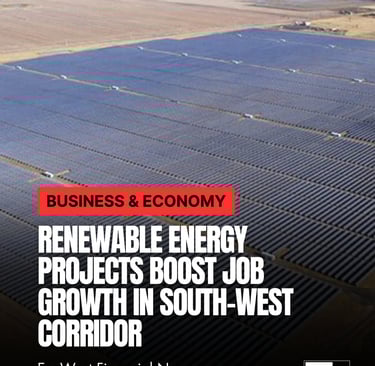
The transition toward renewable energy is reshaping economies around the world, yet its most profound impacts are often felt at the regional level where new industries take root and new opportunities emerge. In Western Australia’s South West corridor, this transformation is unfolding with growing momentum. A series of renewable energy projects, from wind and solar installations to advanced battery storage facilities, is generating significant job growth and redefining the region’s economic outlook. This surge marks more than an industrial shift. It reflects a broader movement toward sustainability, innovation, and long term community resilience.
The South West has always been a region of natural abundance, known for its forests, coastlines, and agricultural strength. Today, it is becoming equally recognised for its role in driving the state’s clean energy future. As new projects come online and existing operations expand, local employment is rising steadily. These jobs span a wide range of skills including engineering, construction, environmental assessment, electrical trades, logistics, and site operations. For many residents, the growth provides new career pathways and renewed optimism about the region’s future. It primes the community to view renewable energy not as a distant global concept but as a tangible force shaping daily life and economic stability.
Recent studies in green industry development show that renewable energy projects create more jobs per dollar invested than traditional energy sectors. This is due to diverse labour needs during planning, construction, commissioning, and maintenance phases. The South West is experiencing this firsthand. Project timelines often span multiple years, allowing businesses to expand staff, training providers to increase enrolments, and local supply chains to build long term capability. The presence of sustained project work contributes not only to employment but to population retention, business diversification, and regional economic confidence.
Beyond direct job creation, many local industries are feeling the benefits of increased activity. Transport operators, fabrication workshops, accommodation providers, and food service businesses are seeing heightened demand as workers move through the region. These secondary effects reinforce findings from economic modelling, which consistently highlight that renewable energy investments generate broad and durable regional benefits. As money circulates locally, communities experience stronger commercial activity and improved stability even during periods of broader economic fluctuation.
Another promising development is the rise in specialised training programs tailored to renewable energy careers. TAFEs and private training providers have begun expanding courses that equip local workers with skills in turbine maintenance, solar installation, energy storage systems, and environmental compliance. These programs help ensure the region can supply the skilled workforce required to sustain industry growth. They also provide existing workers with pathways to transition into emerging roles. Workforce capability becomes a defining strength when regions can train and retain their own talent.
The growth in renewable energy projects is also strengthening the South West’s strategic importance. As the global demand for cleaner energy intensifies, WA has an opportunity to position itself as a leader in sustainable power generation and green technology. Large scale battery installations and grid modernisation efforts underway in the region demonstrate how innovation and infrastructure must work together to support long term transformation. These developments reflect a broader trend in which resilience, environmental responsibility, and economic opportunity converge.
Yet the momentum brings responsibility as well. Successful renewable transitions require thoughtful planning, community engagement, and environmental stewardship. Residents expect transparency around land use, ecosystem impacts, and long term project management. Many developers in the South West are responding with community consultation programs, environmental monitoring, and partnerships with local organisations. This approach builds trust and ensures that projects align with community values. Research consistently shows that early engagement and collaborative planning lead to stronger project outcomes and sustained public support.
From a strategic perspective, the growth of renewable energy in the South West corridor offers a powerful example of future focused regional development. It demonstrates the value of aligning economic resilience with environmental leadership. At TMFS, we recognise these dynamics across the work we support. Strong systems are built through foresight and interdisciplinary planning. When stakeholders work together to integrate technology, community priorities, and long term capability, regions position themselves to thrive in a rapidly shifting global landscape.
As renewable energy projects continue to expand, the South West community is stepping into a period defined by opportunity and innovation. Families gain access to new jobs, businesses benefit from increased activity, and the region strengthens its contribution to WA’s broader sustainability goals. Most importantly, the community is witnessing the early stages of a new economic identity shaped by clean energy and long term resilience.
The months and years ahead will bring continued growth, new partnerships, and evolving possibilities. TMFS remains committed to supporting strategies that foster sustainable development, strengthen regional capability, and empower organisations navigating the transition toward a cleaner and more dynamic future.
All rights belong to their respective owners. This article contains references and insights based on publicly available information and sources. We do not claim ownership over any third party content mentioned.
DAILY WA © 2025
Daily WA Online is an independent news and media platform covering Western Australia. Owned by TMFS International Pty Ltd., we publish local stories, business insights, lifestyle features, and community voices for the digital era.