
Rescued Divers Urge Community Support for Lifesavers After Night Lost at Sea
Divers who survived a night lost at sea are calling on the community to support the rescue teams who brought them to safety, highlighting the vital role of volunteer responders.
NEWS & CURRENT AFFAIRS
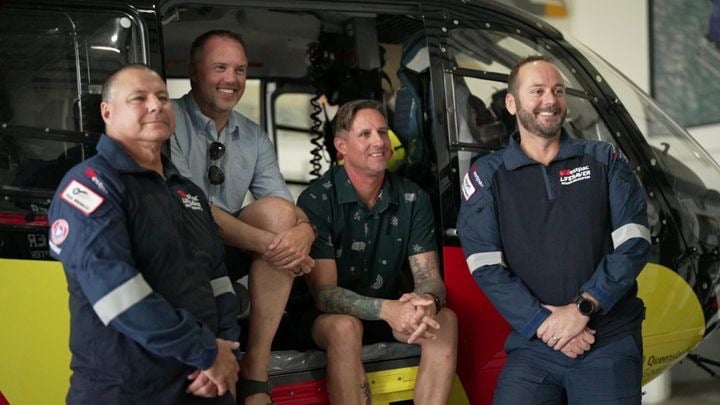
Survival stories often shine a light not only on those rescued, but on the people who make rescue possible. After spending a harrowing night lost at sea, a group of divers has publicly thanked their rescuers and urged the community to support the teams who carried out the operation.
The incident unfolded off the coast of Western Australia, where the divers became separated from their vessel during what began as a routine outing. As conditions changed and darkness fell, the situation escalated into a serious emergency.
Search efforts were launched involving multiple agencies, including marine rescue crews, volunteers, and aerial support. Coordinated operations continued through the night, with teams scanning large stretches of ocean in challenging conditions.
The divers were eventually located and brought to safety, ending an ordeal that could have had far more serious consequences. Their survival has been credited to both their own resilience and the persistence of rescue teams who continued searching despite limited visibility and open water conditions.
Following the rescue, the group has spoken about the experience, describing the uncertainty of drifting at sea overnight and the relief of being found. They have emphasised that without the efforts of trained responders, the outcome may have been very different.
In their message to the public, the divers have encouraged greater support for volunteer rescue organisations. Many marine and coastal response teams rely on community funding, donations, and volunteer commitment to maintain operations.
Across coastal regions, including areas near Perth, volunteer marine rescue groups play a critical role in responding to emergencies involving boats, swimmers, and divers. These teams often operate alongside official emergency services, extending response capability across vast coastal areas.
Ocean environments present unique challenges. Changing weather, currents, and visibility can complicate search operations, requiring both specialised equipment and experienced personnel. Rescue missions can extend for hours or even days depending on conditions.
Authorities have also used the incident to remind the public of the importance of preparation before heading out to sea. Carrying communication devices, informing others of travel plans, and monitoring weather conditions are essential precautions.
For the divers involved, the experience has reshaped their understanding of risk and safety. Their focus now extends beyond their own survival to recognising the people who made it possible.
At TMFS, we observe that emergency response systems depend not only on professional services but also on dedicated volunteers who give their time and expertise to protect others.
The call from the rescued divers highlights a broader truth. Behind every successful rescue is a network of individuals willing to act when it matters most.
As communities reflect on the incident, the message remains clear. Supporting rescue organisations helps ensure that when emergencies occur at sea, help is never too far away.
All rights belong to their respective owners. This article contains references and insights based on publicly available information and sources. We do not claim ownership over any third party content mentioned.
DAILY WA © 2025
Daily WA Online is an independent news and media platform covering Western Australia. Owned by TMFS International Pty Ltd., we publish local stories, business insights, lifestyle features, and community voices for the digital era.