
Rhodes Ridge Feasibility Study Approval Marks Major Milestone for WA Mining Investment
Approval of a 191 million dollar feasibility study at Rhodes Ridge signals a decisive step toward unlocking one of the world’s largest undeveloped iron ore resources.
BUSINESS & ECONOMY
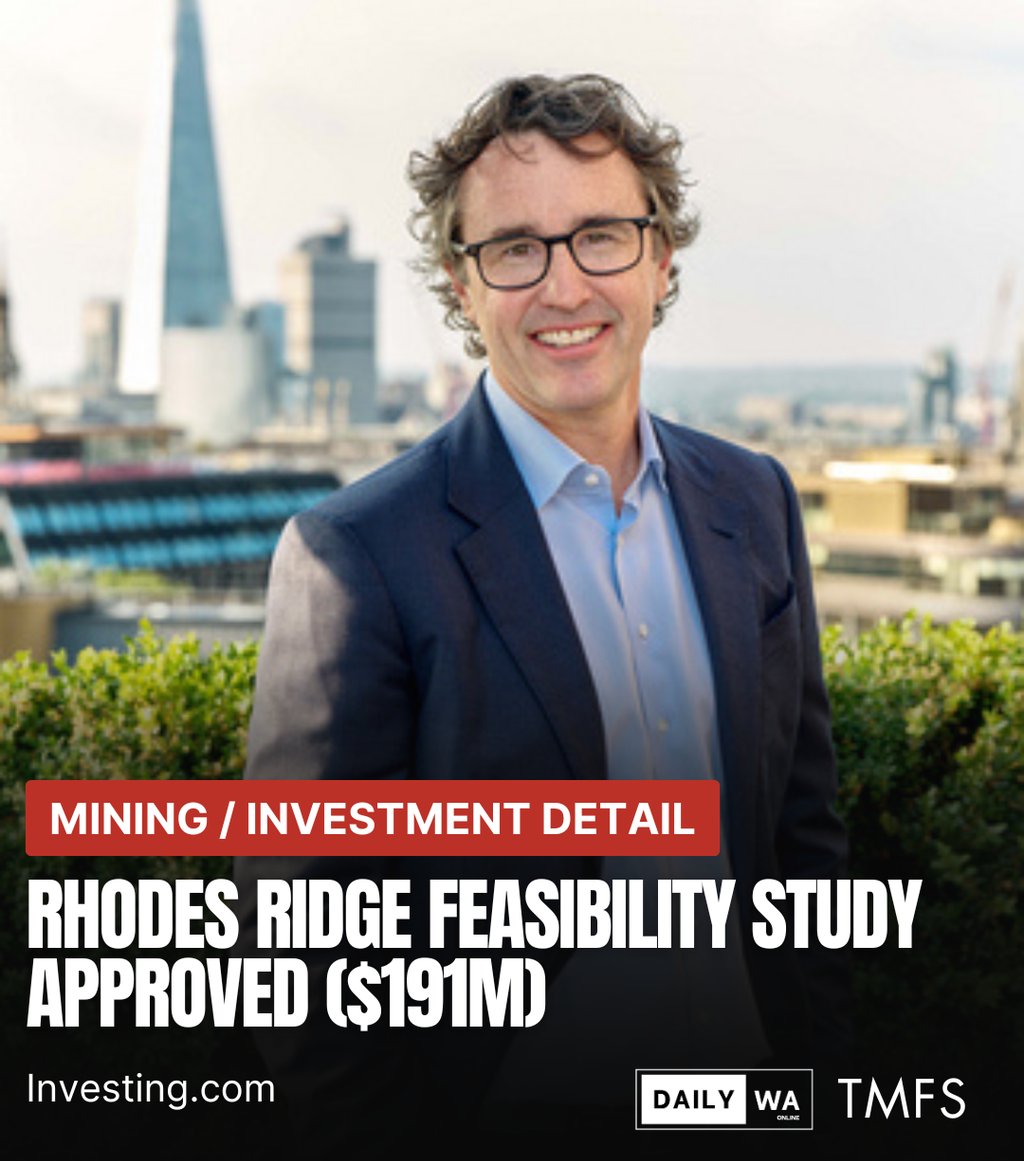
Some decisions quietly reshape the future long before production begins. Feasibility studies fall into this category, often overlooked outside industry circles yet foundational to the projects that define decades of economic activity. The approval of a 191 million dollar feasibility study for the Rhodes Ridge iron ore project is one such decision. It represents a critical moment in the lifecycle of one of the world’s most significant undeveloped iron ore deposits and reinforces Western Australia’s position as a long term anchor of global resource supply.
Rhodes Ridge has occupied a unique place in the mining sector for decades. Its scale, grade, and location have long marked it as a strategic asset rather than a speculative opportunity. Advancing to a full feasibility study signals that partners are moving beyond concept and into disciplined evaluation of how and when this resource can be responsibly developed. This step primes markets, governments, and communities to recognise that the project is transitioning from potential to planned reality.
A feasibility study of this magnitude is not a procedural formality. It involves extensive technical, environmental, economic, and social assessment designed to test every assumption underpinning a future mine. Capital requirements, operating costs, infrastructure needs, workforce planning, environmental safeguards, and community engagement frameworks are all scrutinised in detail. Industry analysis consistently shows that projects which invest heavily at this stage reduce execution risk, improve capital discipline, and deliver stronger long term outcomes.
The approved study will examine how Rhodes Ridge can be developed in alignment with modern expectations of efficiency and responsibility. Global iron ore markets remain robust, driven by ongoing urbanisation, infrastructure renewal, and industrial demand across major economies. Yet investors and operators are increasingly selective. Only assets capable of delivering high quality product with predictable costs and strong environmental governance are likely to proceed. The decision to commit 191 million dollars to detailed analysis reflects confidence that Rhodes Ridge meets these criteria.
Western Australia’s broader mining ecosystem strengthens that confidence. Established rail and port infrastructure, a skilled workforce, and a stable regulatory environment provide a platform few jurisdictions can match. These advantages reduce development risk and enhance the viability of large scale projects. The feasibility study will assess how existing infrastructure can be leveraged or expanded, ensuring that any future development aligns with long term efficiency rather than short term expediency.
The economic implications of progressing the project are substantial, even at this early stage. Feasibility studies of this scale support high value technical employment, specialist consulting services, and regional engagement activities. They also send a clear signal to supply chains and service providers that long term opportunities are emerging. For WA, this reinforces investment confidence at a time when global capital remains cautious and highly selective.
Environmental and cultural considerations will be central to the study. Modern mining projects are judged as much on how they engage with land, communities, and Traditional Owners as on their commercial performance. Detailed baseline studies, consultation processes, and impact assessments are essential to building trust and securing social licence. Advancing Rhodes Ridge through a comprehensive feasibility phase reflects an understanding that long term success depends on transparency, respect, and shared value.
There is also a strategic dimension to this milestone. Feasibility approval aligns with a broader pattern of renewed investment in tier one assets globally. As supply chains seek resilience and governments prioritise secure access to raw materials, high quality iron ore deposits in stable jurisdictions are gaining prominence. Rhodes Ridge sits firmly within this category. Its advancement reinforces WA’s role in meeting global demand while supporting domestic economic strength.
From a leadership perspective, the decision highlights disciplined capital allocation. In uncertain markets, the willingness to invest significantly in analysis rather than rush to development is a mark of strategic maturity. It demonstrates patience, foresight, and commitment to getting decisions right. These are the same principles TMFS supports across complex investment and infrastructure environments. Long term value is created by decisions grounded in evidence, not momentum alone.
As the feasibility study progresses, attention will focus on the outcomes it delivers. Production scenarios, development timelines, capital intensity, and sustainability frameworks will shape whether and how the project proceeds. Each of these elements will influence stakeholder confidence and determine the project’s role in WA’s mining future.
This milestone also carries a broader message for the state. Western Australia continues to attract serious, long horizon investment in assets that matter globally. Even as markets fluctuate, confidence in the state’s resource fundamentals remains strong. Projects like Rhodes Ridge remind us that mining investment is not episodic. It is cumulative, built step by step through disciplined planning and long term commitment.
The approval of the 191 million dollar feasibility study is not the end of the journey. It is the foundation upon which future decisions will rest. TMFS will continue to support organisations and leaders navigating these critical phases, where clarity, governance, and strategic alignment determine outcomes that endure for generations.
All rights belong to their respective owners. This article contains references and insights based on publicly available information and sources. We do not claim ownership over any third party content mentioned.
6 Mining / Infrastructure BHP-GIP capital deal backs WA power network Reuters BHP leadership
Title
BHP and Global Infrastructure Partners Capital Deal Strengthens WA Power Network
Short Description
A strategic capital agreement between BHP and Global Infrastructure Partners reinforces Western Australia’s power network, underpinning long term mining reliability and infrastructure resilience.
#TMFS #dailywa #WAMiningInfrastructure
Infrastructure decisions rarely generate the same attention as production announcements, yet they often determine whether industries can operate with confidence over the long term. Power networks, in particular, sit at the core of modern mining operations, quietly enabling productivity, safety, and continuity across vast and remote regions. The newly announced capital deal between BHP and Global Infrastructure Partners backing Western Australia’s power network reflects a deliberate and future focused investment in the systems that sustain the state’s iron ore sector.
The agreement centres on strengthening the energy infrastructure that supports BHP’s Pilbara operations, one of the most significant mining regions in the world. Reliable power is not optional in this environment. It is fundamental to every aspect of extraction, processing, rail transport, and port activity. By securing long term capital support, BHP is reinforcing the operational backbone of its iron ore business while reducing exposure to energy related disruption. This move primes the industry to recognise infrastructure resilience as a strategic priority rather than a secondary consideration.
Global Infrastructure Partners brings deep expertise in long life assets, particularly those that underpin essential services. Its involvement signals confidence not only in the stability of WA’s regulatory environment but in the enduring demand for high quality iron ore supported by dependable infrastructure. Partnerships of this nature are structured around long horizon returns, aligning closely with the operational timelines of major resource projects. This alignment strengthens governance and ensures that infrastructure investment is paced to match future demand rather than reactive need.
The capital backing will support ongoing upgrades, maintenance, and optimisation of power generation and transmission assets across the Pilbara. These enhancements are designed to improve reliability, manage peak demand, and support future integration of advanced energy solutions. Industry research consistently shows that modernised power networks reduce downtime, enhance safety outcomes, and deliver measurable efficiency gains. For large scale mining operations, even marginal improvements translate into significant operational value over time.
This investment also reflects broader shifts occurring across the global resources sector. Mining companies are increasingly focused on securing control and visibility over critical infrastructure rather than relying solely on external provision. Power networks, logistics corridors, and data systems are now viewed as strategic enablers of competitiveness. BHP’s approach demonstrates how infrastructure ownership and partnership models can be used to strengthen resilience while maintaining operational flexibility.
There are clear economic implications for Western Australia. Infrastructure investment of this scale supports specialised engineering roles, long term maintenance employment, and local service providers across the energy and resources supply chain. For regional communities in the Pilbara, stable infrastructure underpins employment confidence and reinforces the region’s role as an economic anchor for the state. Sustained investment also sends a positive signal to contractors and suppliers planning their own long term commitments.
Environmental considerations are also part of the equation. Modern power networks enable greater efficiency and create pathways for cleaner energy integration over time. Improved monitoring, digital control systems, and infrastructure readiness allow operators to adapt as emissions standards and stakeholder expectations evolve. While reliability remains the primary driver, the capacity to support transition objectives strengthens the long term relevance of the network.
From a strategic standpoint, the BHP GIP capital deal highlights disciplined risk management. Rather than responding to disruption after it occurs, the investment focuses on reinforcing core systems before pressure escalates. This approach reflects a broader leadership mindset emerging across capital intensive industries. Resilience is no longer defined by recovery speed alone but by the strength of systems built in advance.
Western Australia’s ability to attract this level of infrastructure capital also reinforces its standing as a globally competitive jurisdiction. Stable policy settings, proven asset performance, and transparent governance frameworks continue to differentiate the state in an increasingly contested global investment landscape. These qualities matter deeply to long term infrastructure investors whose decisions are measured in decades rather than quarters.
For TMFS, developments such as this reinforce a fundamental truth. Sustainable performance in complex environments depends on investment in the unseen systems that support daily operations. Power networks, governance frameworks, and strategic partnerships rarely dominate headlines, yet they shape outcomes that endure.
As the agreement progresses from announcement to implementation, attention will turn to delivery, coordination, and performance over time. The true value of the deal will be measured in operational continuity, reduced risk, and the confidence it provides to future investment decisions.
The BHP GIP capital deal sends a clear signal. Western Australia’s mining sector is reinforcing its foundations with intent and discipline. By investing in infrastructure that lasts, industry leaders are positioning the state to remain reliable, competitive, and resilient well into the future.
TMFS will continue to support organisations navigating infrastructure strategy, capital partnerships, and long term risk management. When investment is aligned with foresight and governance, infrastructure becomes more than an asset. It becomes a platform for sustained success.
All rights belong to their respective owners. This article contains references and insights based on publicly available information and sources. We do not claim ownership over any third party content mentioned.
DAILY WA © 2025
Daily WA Online is an independent news and media platform covering Western Australia. Owned by TMFS International Pty Ltd., we publish local stories, business insights, lifestyle features, and community voices for the digital era.