
State Budget Review Highlights Significant Expansion of Rural Health Investment Across Western Australia
A renewed focus on rural health funding aims to strengthen essential services, improve access, and support long term wellbeing for regional communities.
NEWS & CURRENT AFFAIRS
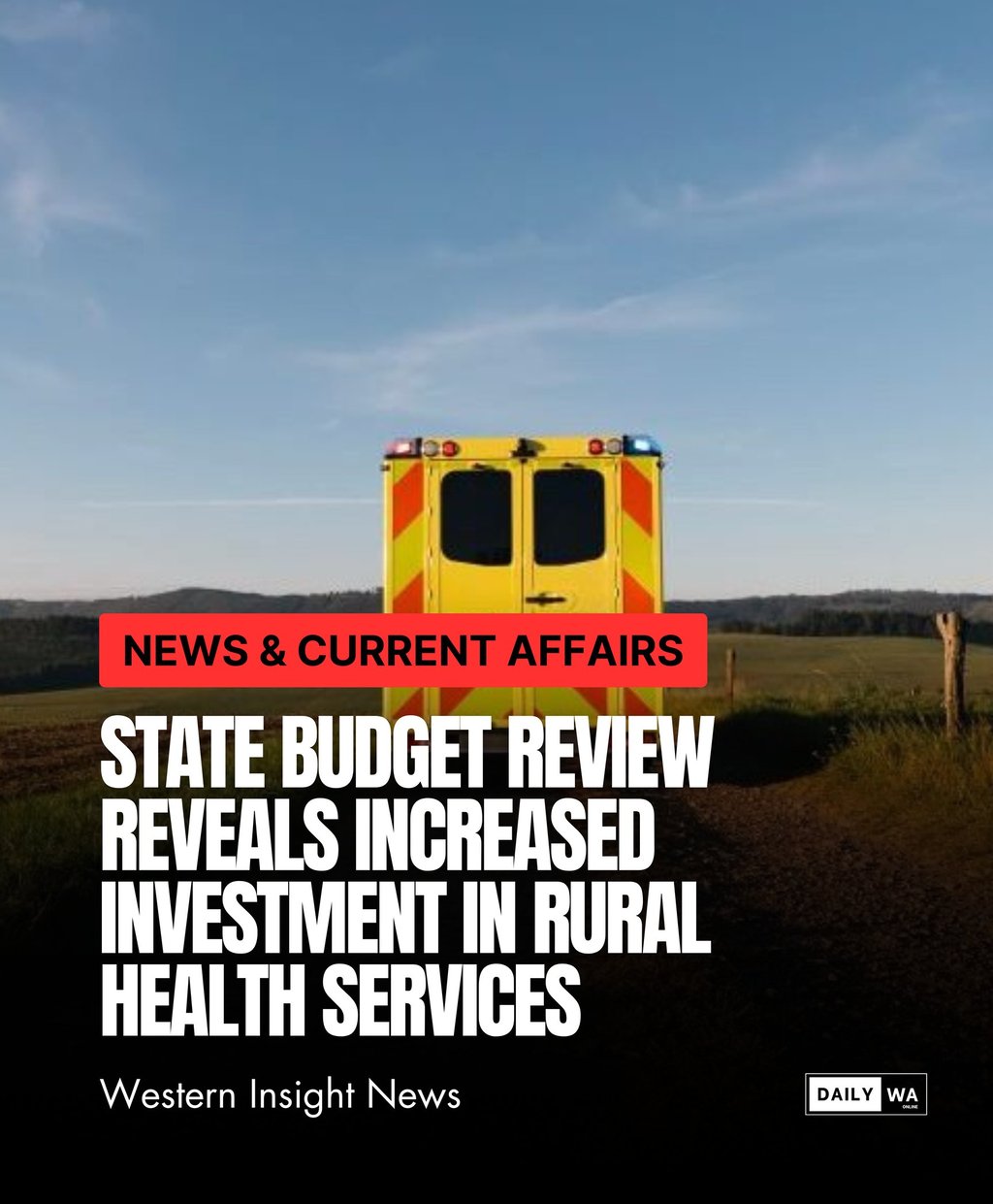
Across Western Australia, regional communities carry a deep resilience shaped by distance, climate, and a shared commitment to local wellbeing. Yet the strength of these communities depends heavily on the accessibility and quality of their health services. When people must travel hours for medical care or wait months for essential appointments, the consequences are felt not only in individual health outcomes but in community confidence and stability. That is why the latest state budget review, revealing a marked increase in rural health investment, stands as one of the most impactful developments of the year.
Budget reviews often go unnoticed by the wider public, yet they hold the power to redefine priorities and reshape the foundations of community support. This year’s findings signal a clear shift toward addressing longstanding gaps in regional healthcare, reinforcing the idea that every resident, regardless of postcode, deserves reliable and timely access to medical services. The announcement primes communities to anticipate meaningful change anchored in improved infrastructure, workforce development, and modernised systems of care.
One of the most significant commitments centres on upgrading regional hospitals and health centres. Many of these facilities were built for smaller populations and limited service demands. Growth across rural towns has outpaced available resources, resulting in pressure on emergency departments, diagnostic services, and specialist care. The new funding aims to expand clinical capacity, improve facility technology, and ensure that regional health centres can support contemporary models of care. Research from national health agencies consistently shows that infrastructure investment of this nature leads to measurable improvements in patient outcomes and retention of skilled staff.
Another key focus is workforce support. Recruiting and retaining healthcare professionals in rural areas remains a persistent challenge. Long distances, isolation, and high patient demand often lead to burnout or short staffing. The budget review outlines new incentives for rural placements, expanded training pathways, and programs to support nurses, doctors, and allied health professionals who choose to work in regional Western Australia. These investments acknowledge a foundational truth. Buildings and equipment can only achieve their purpose when there are capable, well supported people inside them.
The review also points to increased funding for telehealth services, which have become essential in bridging the distance between rural patients and metropolitan specialists. Over recent years, telehealth utilisation has grown rapidly and has proven invaluable for chronic condition management, mental health care, and follow up consultations. Expanded investment will strengthen connectivity, improve platform accessibility, and equip regional clinics with tools that reduce the need for costly and time consuming travel. Studies across remote health networks demonstrate that effective telehealth implementation can reduce appointment wait times and significantly enhance patient satisfaction.
Community health initiatives form another pillar of the expanded budget. Programs addressing mental health, preventive care, maternal support, and Indigenous community services are set to receive increased resourcing. These initiatives recognise that health systems must reach beyond treatment and into the broader social factors that shape wellbeing. In regions where economic pressures or environmental challenges compound daily life, community based support programs offer both stability and empowerment.
This level of investment also carries broader economic implications. Strong health systems make rural communities more attractive to families, professionals, and industry. They support workforce productivity, reduce the burden on emergency departments, and help retain young people who might otherwise relocate in search of better access to care. As Western Australia continues to develop regional industries such as agriculture, mining, and tourism, the need for reliable health infrastructure becomes even more pronounced.
At a strategic level, the budget review reinforces the value of long term planning. Allocating funding is only one part of the equation. Ensuring that investments translate into meaningful, measurable improvements requires coordinated implementation and ongoing evaluation. This is where leadership, clarity, and disciplined planning become essential. At TMFS, we support organisations facing these same requirements. The path to stronger systems is built on sound strategy, data informed decision making, and the ability to navigate complex operational landscapes.
The increased investment in rural health is more than a financial commitment. It is a statement of intent that recognises the dignity of every community and the importance of equitable care. It invites regional residents to envision a future where healthcare is accessible, modern, and tailored to their needs. It also invites leaders and stakeholders to remain proactive, collaborative, and engaged as these initiatives unfold.
As rural communities look to the future, the message is clear. Change is underway, and the opportunity now lies in ensuring that investment becomes impact. TMFS will continue to advocate for strategies that elevate community wellbeing, strengthen essential services, and build resilience across all regions of Western Australia.
All rights belong to their respective owners. This article contains references and insights based on publicly available information and sources. We do not claim ownership over any third party content mentioned.
DAILY WA © 2025
Daily WA Online is an independent news and media platform covering Western Australia. Owned by TMFS International Pty Ltd., we publish local stories, business insights, lifestyle features, and community voices for the digital era.