
State Parliament Reviews Updated Wildlife Conservation Bill as Pressure Grows to Modernise Protections
State Parliament has begun reviewing an updated Wildlife Conservation Bill, aimed at strengthening protections for native species while modernising how Western Australia responds to biodiversity loss and environmental risk.
NEWS & CURRENT AFFAIRS
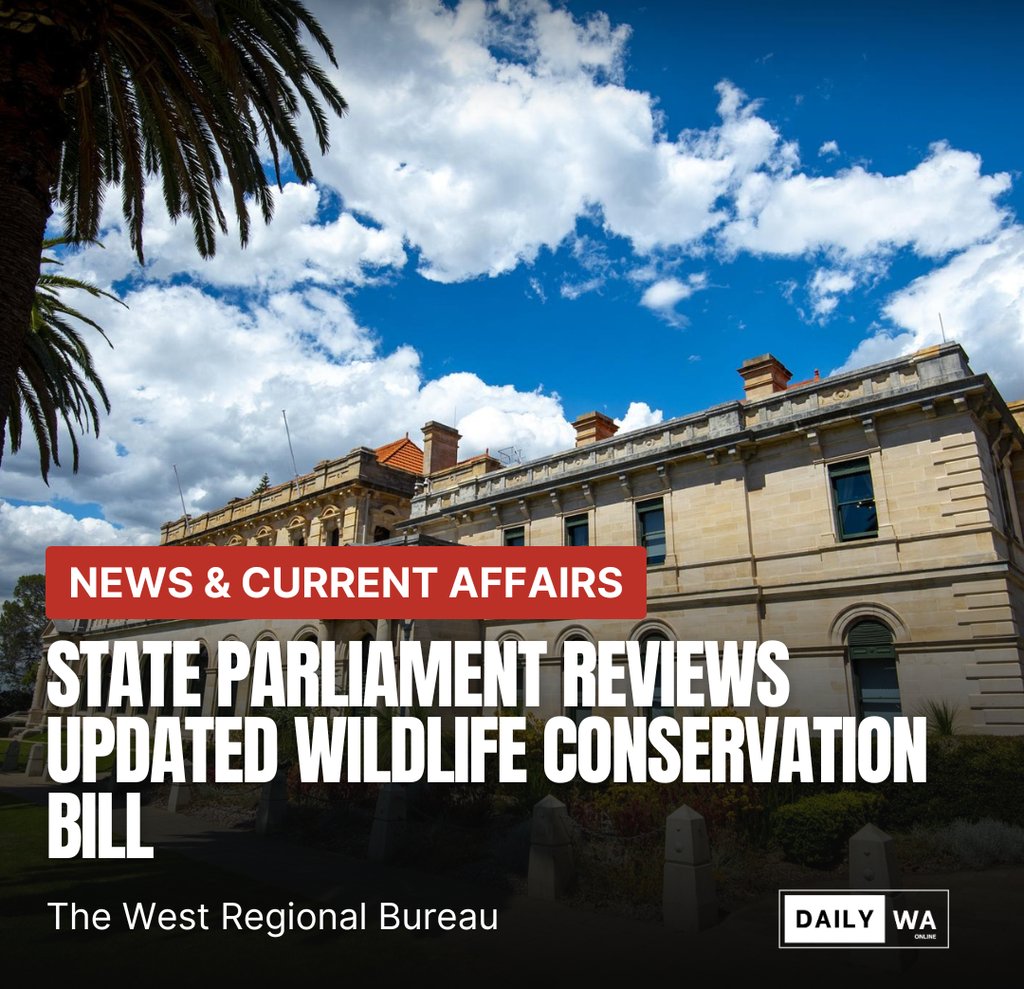
The future of Western Australia’s native wildlife is back under parliamentary scrutiny as state lawmakers begin reviewing an updated Wildlife Conservation Bill. The proposed legislation is being positioned as a long overdue overhaul of conservation frameworks that were designed for a very different environmental era. With biodiversity loss accelerating and climate pressures intensifying, the review signals a recognition that existing laws may no longer be fit for purpose.
Debate in Western Australia Parliament has centred on how the bill balances stronger environmental protection with practical land and resource management. Supporters argue the reforms are essential to safeguard threatened species and ecosystems, while critics caution against unintended consequences for regional industries and landholders. The review process reflects the complexity of legislating for conservation in a state defined by vast geography and competing economic interests.
Western Australia is home to some of the world’s most unique flora and fauna, much of it found nowhere else. Yet habitat loss, invasive species, land clearing, and climate driven events have placed increasing strain on ecosystems. Conservation experts have warned that without updated legal tools, the state risks losing species faster than current systems can respond. The revised bill aims to address this gap by strengthening protections and improving how threats are assessed and managed.
Key elements under consideration include updated definitions of threatened species, stronger enforcement powers, and clearer processes for environmental approvals. Lawmakers are also examining how the bill aligns with national conservation frameworks, ensuring consistency while retaining state specific flexibility. Proponents say clearer rules will improve outcomes by reducing ambiguity and strengthening accountability.
One of the most closely watched aspects of the review is how the bill treats development approvals. Conservation legislation often sits at the intersection of environmental protection and economic activity. Industry groups have raised concerns about regulatory certainty, warning that unclear or overly restrictive provisions could delay projects and increase costs. In response, the government has emphasised that the bill is designed to provide clarity rather than constraint, setting transparent standards that reduce conflict over time.
Environmental organisations have welcomed the parliamentary review, arguing that modernised laws are critical as environmental risks compound. They point to rising extinction rates and recent ecological damage from fires, drought, and extreme weather as evidence that incremental change is no longer sufficient. From this perspective, the bill represents an opportunity to move from reactive conservation toward prevention and long term stewardship.
Community input is also shaping the debate. Traditional Owners, regional communities, and land managers have a direct stake in how wildlife laws are applied. The review process includes consultation aimed at ensuring conservation objectives respect cultural knowledge, local conditions, and on ground realities. Effective conservation, stakeholders argue, depends on cooperation rather than compliance alone.
The timing of the review is significant. Globally, governments are under pressure to demonstrate progress on biodiversity protection, following international commitments to halt species decline. State level legislation plays a crucial role in translating those commitments into practical outcomes. How Western Australia updates its framework will influence both environmental credibility and policy alignment.
From a governance perspective, the bill highlights a broader shift in environmental policy. Conservation is increasingly framed not as a constraint on growth, but as a form of risk management. Healthy ecosystems underpin agriculture, tourism, water security, and community wellbeing. Legislating for their protection is therefore as much an economic decision as an environmental one.
At TMFS, we observe that durable policy reform often emerges when systems acknowledge changed conditions rather than defend outdated models. Wildlife conservation laws written decades ago did not anticipate current population pressures, climate volatility, or land use intensity. Updating them is less about ideology and more about relevance.
As parliamentary review continues, attention will turn to amendments and final wording. The outcome will shape how wildlife is protected, how development is assessed, and how environmental responsibility is shared across government, industry, and community.
The updated Wildlife Conservation Bill represents a pivotal moment for Western Australia. It is a chance to reset legal foundations in line with contemporary environmental reality. Whether it achieves that ambition will depend on the balance struck during review, and the willingness of lawmakers to prioritise long term ecological resilience alongside immediate interests.
All rights belong to their respective owners. This article contains references and insights based on publicly available information and sources. We do not claim ownership over any third party content mentioned.
DAILY WA © 2025
Daily WA Online is an independent news and media platform covering Western Australia. Owned by TMFS International Pty Ltd., we publish local stories, business insights, lifestyle features, and community voices for the digital era.